 blog
Dump Trailer Rental Alternatives to Fondy
Table of Contents
- Why Homeowners and Contractors Look for Dump Trailer Rental Alternatives
- Dump Trailer Rental Duration: How Long Can You Keep a Trailer?
- Dump Trailer vs Dumpster Rental: Which Works for Your Project?
- Understanding Dump Trailer Rental Cost and What's Included
- Dump Trailer Rental for Home Cleanout: Load at Your Own Pace
- Key Differences Between Self-Service Trailer Rental and Full-Service Hauling
- Choosing the Right Dump Trailer Rental for Your Needs
- Conclusion
- Frequently Asked Questions
Last Updated: October 12, 2026
Why Homeowners and Contractors Look for Dump Trailer Rental Alternatives
For a major cleanout, an attic, a bathroom renovation, a property turnover, finding the right dump trailer rental alternative matters. Homeowners and contractors want flexibility, affordability, and convenience that fits the project.
At Fill and Dump Trailers, we know a dump trailer rental alternative has to solve real pain points: driveway damage, uncertain rental length, hidden fees. Our approach is driveway-safe equipment, and a loading schedule that fits your timeline.
Some homeowners want more control over loading, others need flexibility beyond standard rental periods, and many are comparing total waste removal costs. Knowing what's available lets you decide based on your actual needs.
Dump Trailer Rental Duration: How Long Can You Keep a Trailer?
A dump trailer rental duration typically ranges from one day to several weeks. The standard period is three days, giving you a reasonable window to load at your own pace.
Three days suits most household cleanouts and moderate construction debris projects, enough time to gather, organize, and load without a tight deadline. Extended periods are available.
Duration directly affects your total dump trailer rental cost: a three-day rental with included disposal differs from a daily rate stretched over two weeks. Clarify the terms before you rent.
Dump Trailer vs Dumpster Rental: Which Works for Your Project?
A dump trailer rental and a dumpster rental serve similar purposes but operate very differently. The right choice depends on debris type, volume, timeline, and space.
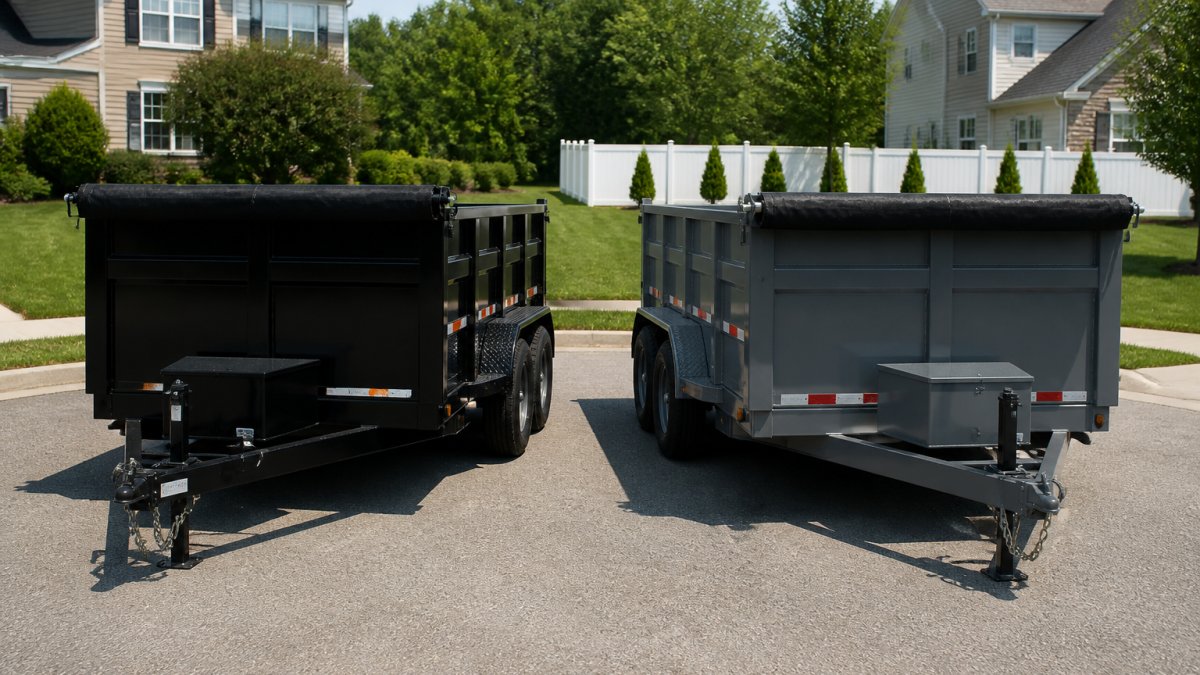
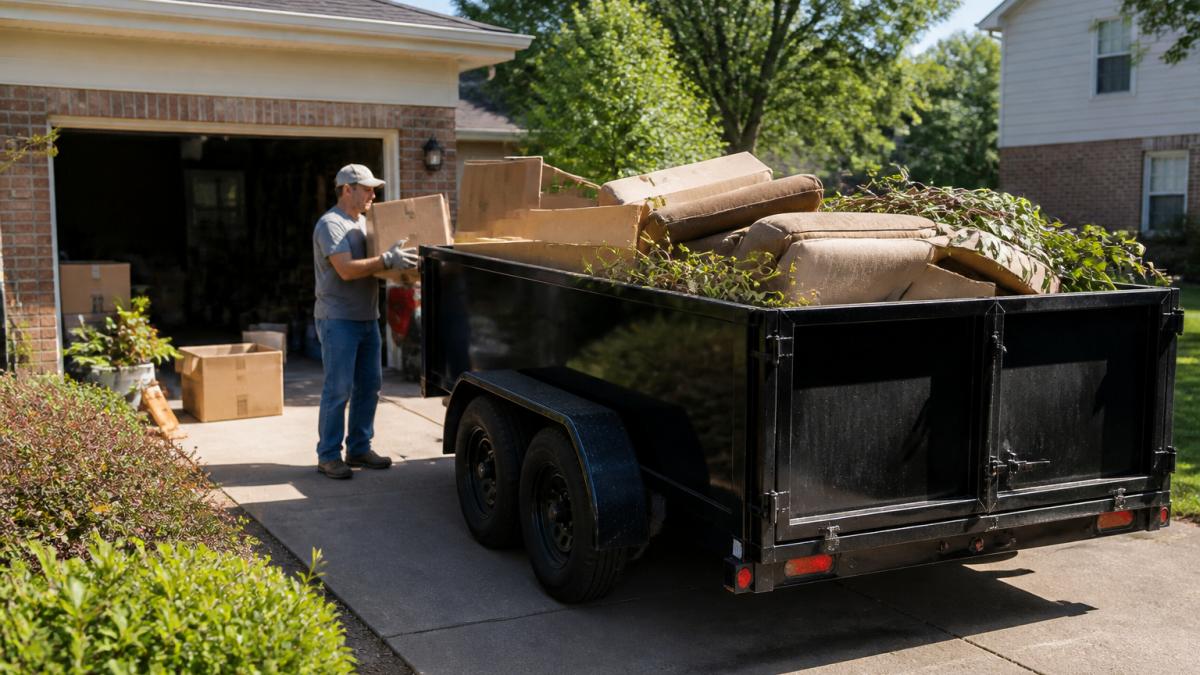
Dump trailers are towed to your property, parked in your driveway, loaded at your pace, and hauled away after the rental period. A well-designed 12-yard dump trailer is driveway-safe when weight is distributed properly, important on older asphalt or pavers. You control the schedule and can sort donations and recyclables first.
Dumpsters are roll-off containers dropped on your property. They need a clear, level footprint, and loaded roll-offs can crack driveways or rut lawns. Best for continuous debris generation, like an active jobsite.
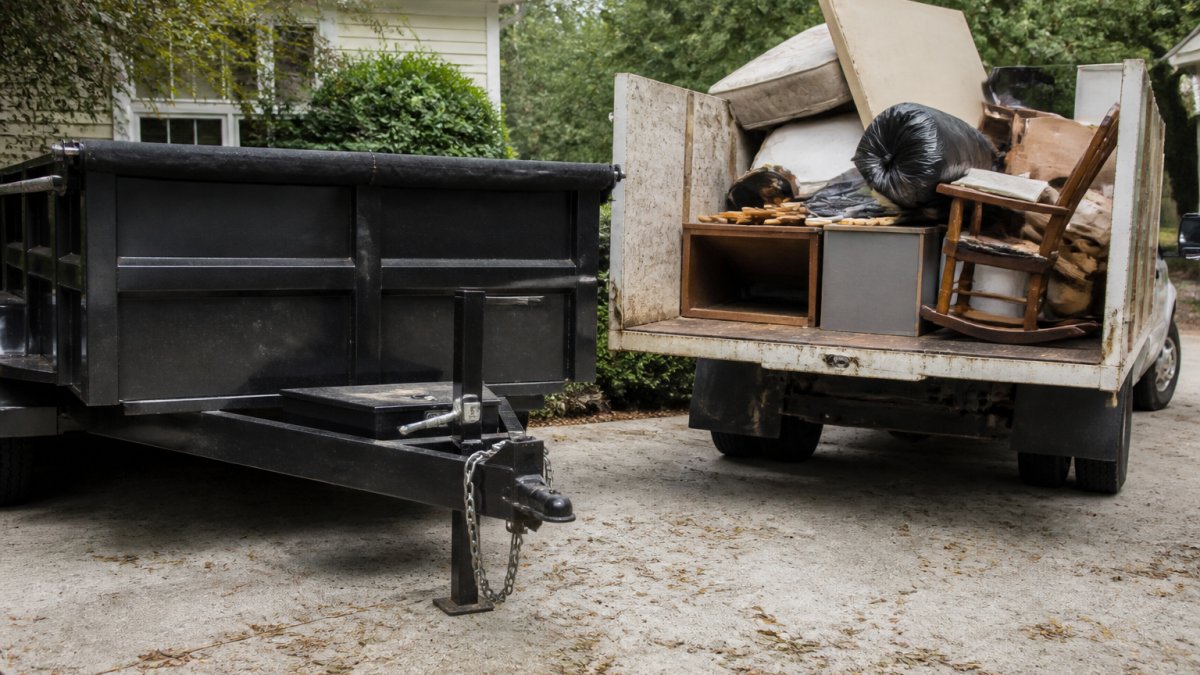
Dump trucks are full-service: a crew loads and hauls in one trip. Fastest for heavy, dense material like concrete or soil, but you pay for labor and lose the ability to sort over multiple days.
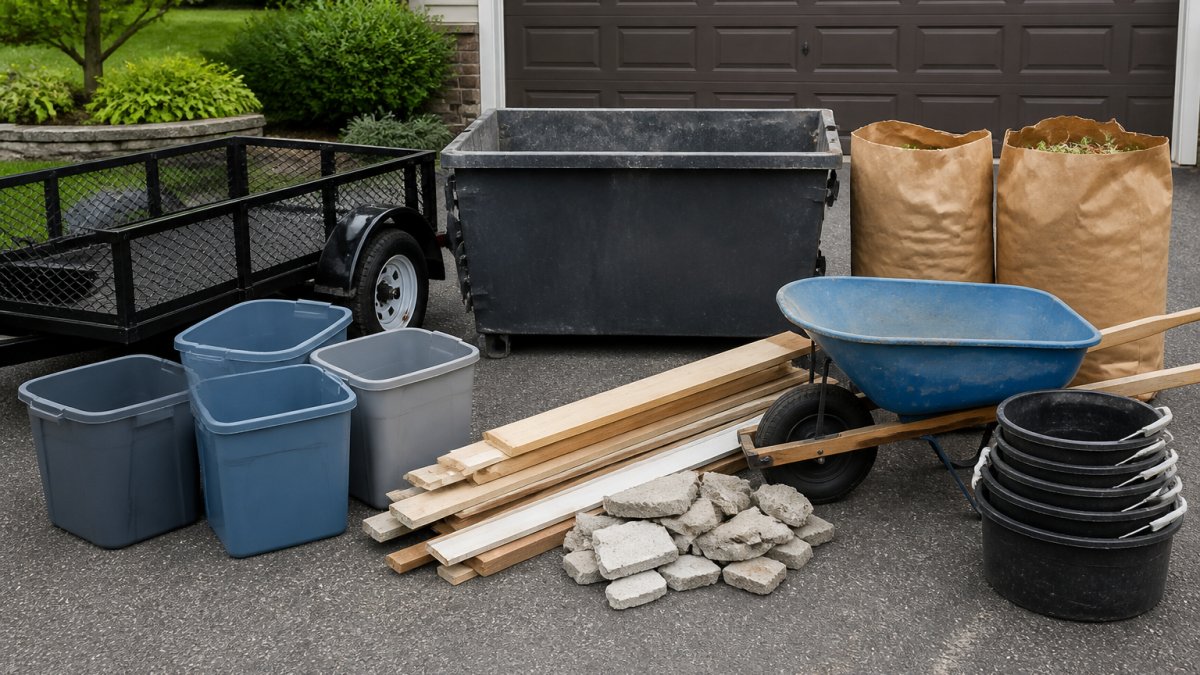
Bagster-style bags and self-haul are the low-volume, low-cost end. A bag holds roughly 3 cubic yards, fine for a single bathroom tear-out. Self-haul means loading your own truck and driving to a transfer station, which only makes sense with a capable tow vehicle and time for multiple trips.
| Option | Typical Capacity | Best For | Loading | Space Needed |
|---|---|---|---|---|
| 12-yard dump trailer | ~12 cu yd | Home cleanouts, renovations, yard waste | You load over several days | Fits most driveways |
| Roll-off dumpster | 10-40 cu yd | Active jobsites, continuous debris | You toss in anytime | Level, clear footprint |
| Dump truck (full-service) | Varies | Heavy, dense material; fast turnaround | Crew loads | None on your property |
| Bagster-style bag | ~3 cu yd | Small single-room projects | You load | Small, flat spot |
| Self-haul to transfer station | Your vehicle's limit | Small loads, tight budgets | You load and drive | Tow vehicle required |
Match the option to the job:
- Attic or basement cleanout: Dump trailer. Light, bulky debris that you want to sort over a weekend.
- Bathroom or kitchen remodel: Dump trailer for mixed debris; a bag for a small tear-out.
- Concrete, brick, or soil: Dump truck or a heavy-duty dumpster. These materials are dense and can exceed trailer payload limits fast.
- Active construction site: Roll-off dumpster. Crews add debris continuously and you do not want to manage a rental window.
- Yard waste and landscaping: Dump trailer. Green waste is light and bulky, which is exactly what a 12-yard trailer handles well.
- Single-item removal: Bag or self-haul. Renting a trailer for one couch is overkill.
Understanding Dump Trailer Rental Cost and What's Included
Dump trailer rental cost is a a stack of line items, and the only fair comparison is pricing the same stack across every option. Most online quotes show only the base rate, which is why two seemingly identical rentals can differ once the trailer is picked up.
The line items that make up a real quote:
- Base rental rate, daily, weekly, or flat. Weekly rates are usually cheaper per day, so a 5-day project is often cheaper as a week rental.
- Delivery and pickup, a flat fee each way, or bundled. Rural addresses often pay more.
- Mileage, some providers cap free miles and charge beyond that. Ask whether mileage is measured from the yard or your address.
- Disposal / tonnage allowance, the most overlooked line. Many quotes include a set tonnage (often the first ton) then charge per ton over that. Concrete, soil, and shingles blow through a ton allowance quickly.
- Overage tonnage, the per-ton rate after your allowance is used up. This is where 'cheap' rentals become expensive.
- Deposit, usually refundable, but it ties up cash and can be forfeited for damage or excessive cleaning.
- Cleaning fee, applied if the trailer returns with loose debris, liquids, or odors.
- Damage fee, bent ramps, broken lights, dented panels, or a damaged tarp. Document condition at drop-off with photos.
- Prohibited-material surcharges, tires, paint, chemicals, and appliances with refrigerant often carry extra fees or are refused.
- Extension fees, the daily rate if you keep the trailer past the return window.
How to build an apples-to-apples comparison:
- Estimate your volume in cubic yards and weight in tons. If weight is unclear, use a conservative rule: light household debris runs 100-200 lb per cubic yard, while soil or concrete can exceed 2,000 lb per cubic yard.
- Ask every provider for the same five numbers: base rate, delivery, pickup, included tonnage, and overage per ton.
- Add the deposit and note whether it is refundable.
- Ask what happens if you finish early or need an extra day, and what triggers a cleaning or damage fee.
A common pattern: a low base rate paired with small included tonnage and a high overage rate. That quote may win for a light attic cleanout, but for a bathroom tear-out with tile and drywall it can cost more than a higher base rate that includes more tonnage.
Location affects pricing. Rural addresses often pay higher delivery fees; urban addresses may have shorter delivery but higher disposal costs. The only reliable comparison is a quote tied to your address and debris type.
EPA guidance on construction and demolition debris disposal
Dump Trailer Rental for Home Cleanout: Load at Your Own Pace
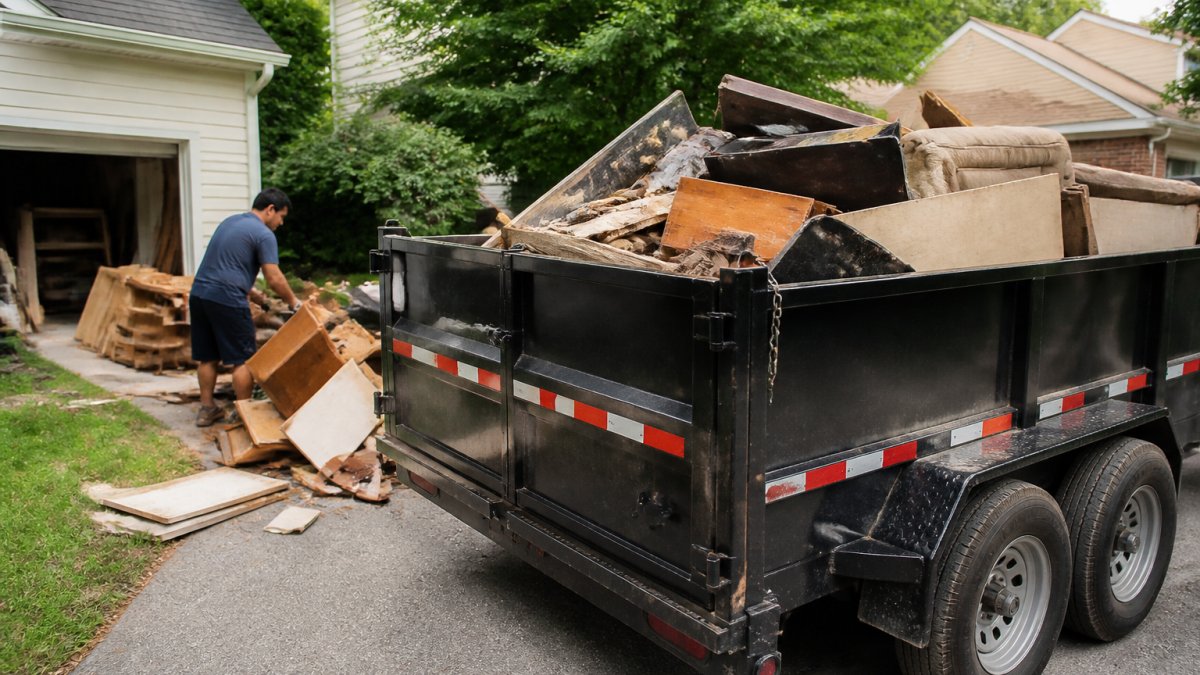
A dump trailer rental for home cleanout gives you control over pace and timing. Unlike full-service hauling, you decide when to load, how much each day, and what goes in.
It suits attic cleanouts, furniture and appliance removal during a renovation, basement cleanouts, and seasonal yard waste. The three-day loading period lets you work without physical strain or time pressure.
The flexibility matters if you can't dedicate a full day to loading. Load a few items in the morning, more in the afternoon, finish the next day, less fatigue, and you can separate donation-worthy items from waste as you go.
For apartment complexes handling tenant move-outs or renovations, a dump trailer rental offers predictability: schedule delivery, let tenants or maintenance staff load over the rental period, then schedule pickup. No coordinating external haulers or multiple waste trips.
Key Differences Between Self-Service Trailer Rental and Full-Service Hauling
Self-service dump trailer rental and full-service hauling are two different approaches to waste removal.
Self-service trailer rental means you rent the equipment and load it yourself. You control timing and contents, and it costs less because no labor is provided. Best when you have time, physical ability, or want to sort donations, recycling, and waste yourself.
Full-service hauling means professionals assess, load, and haul everything away. Convenient but pricier because you pay for labor. Best when you lack physical ability, have limited time, or need items gone fast.
If you're physically able, have several days, and want to minimize costs, self-service is ideal. If you're elderly, injured, on a tight timeline, or prefer not to do physical work, full-service hauling makes sense.
Fill and Dump Trailers bridges this gap with curbside pickup: our team picks items up from your curb or driveway. You still control timing and what gets removed.
Choosing the Right Dump Trailer Rental for Your Needs
Selecting the right dump trailer rental alternative means matching your project to the solution. Start with your actual needs.
Project scope: A small garage cleanout fits in a 12-yard trailer; major renovations or whole-house cleanouts may need larger capacity or multiple rentals. Underestimating volume means renting twice.
Timeline: Three days works for most projects, with extended timelines available. Base it on your actual schedule, not what you hope to accomplish.
Physical capability: If you can't load heavy items yourself, add curbside pickup, it removes the physical barrier.
Budget: Compare total cost, not the quoted rate. Include delivery, pickup, and disposal. A dump trailer rental alternative with disposal included often costs less overall than one with per-ton charges.
Location: Confirm the company serves your area and understand distance-based fees, some providers have limited service areas or charge premiums for distant locations.
Conclusion
Finding the right dump trailer rental alternative means matching your timeline, budget, and physical capabilities, whether you're clearing an attic, managing a renovation, or coordinating a property cleanout.
Fill and Dump Trailers simplifies this decision with driveway-safe 12-yard dump trailers, a flexible three-day loading period, and disposal included in every rental. Our approach removes the guesswork: no surprise per-ton charges, and the option to add curbside pickup if you prefer professional handling. Submit a request to get started with a dump trailer rental alternative designed for homeowners and contractors who value flexibility, affordability, and reliability.
Frequently Asked Questions
How long can you keep a rented dump trailer?
Most dump trailer rental providers offer flexible loading windows, typically ranging from three days to a week. Fill and Dump Trailers provides a three-day loading period, allowing you to load at your own pace without rushing. If you need additional time, contact your rental company about extension options or daily fees that may apply beyond the standard rental duration.
Is a dump trailer or dumpster better for a home cleanout?
Dump trailers work best for homeowners who want control over timing and loading. You load items yourself over several days, and the trailer sits in your driveway. Dumpsters suit projects requiring immediate bulk disposal but offer less flexibility and may require professional hauling. For attic, garage, or basement cleanouts, dump trailer rental offers better cost control and a longer loading window.
What's included in dump trailer rental cost?
Pricing varies by provider and project scope. Fill and Dump Trailers includes the first ton of waste disposal in every rental. Always ask your rental company what's covered: delivery, pickup, disposal of the first ton, and whether hazardous materials or appliances require separate disposal arrangements.
Can a dump trailer damage my driveway?
Driveway-safe dump trailers are designed to distribute weight evenly and minimize damage. Fill and Dump Trailers uses 12-yard trailers engineered for residential driveways. However, extremely old or weakened driveways may show temporary surface marks. Discuss driveway condition with your rental provider before delivery. Most temporary marks fade, but if you have structural concerns, mention them when booking to confirm the trailer is appropriate for your property.