 blog
7 Dumpster Alternatives for Home Renovation
Table of Contents
- Why Homeowners Look Beyond Traditional Dumpster Rentals
- Dump Trailer Rental for Home Cleanout
- Dumpster Bags for Home Renovation Projects
- Junk Removal for Construction Debris
- Where to Dispose of Renovation Waste Locally
- Donation and Reuse: Free or Low-Cost Options
- Choosing the Right Alternative: A Decision Framework
- Frequently Asked Questions
Last Updated: October 11, 2026
Why Homeowners Look Beyond Traditional Dumpster Rentals
When planning a home renovation, waste disposal is a critical decision. Standard dumpster rentals aren't always the best fit, dumpster alternatives for home renovation projects often deliver better value, more flexibility, and fewer headaches.
Homeowners consider dumpster alternatives for three reasons: cost, convenience, and control. Traditional dumpsters charge overage fees if projects run long or lock you into paying for unused time. Dump trailer rentals and other disposal options let you load at your own pace without surprise charges.
Renovation waste varies widely, drywall, wood, concrete, tile, and mixed debris require different disposal methods. Some alternatives excel at heavy materials; others work better for light debris. Match the right alternative to your project scope and waste type.
Dump Trailer Rental for Home Cleanout
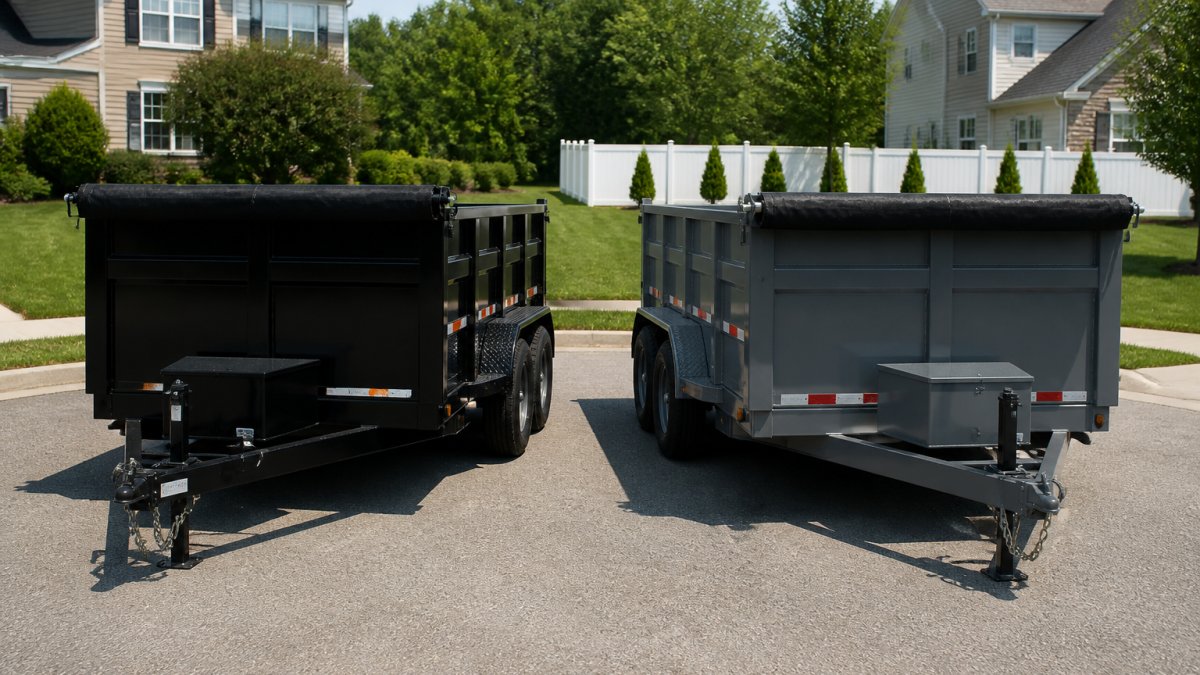
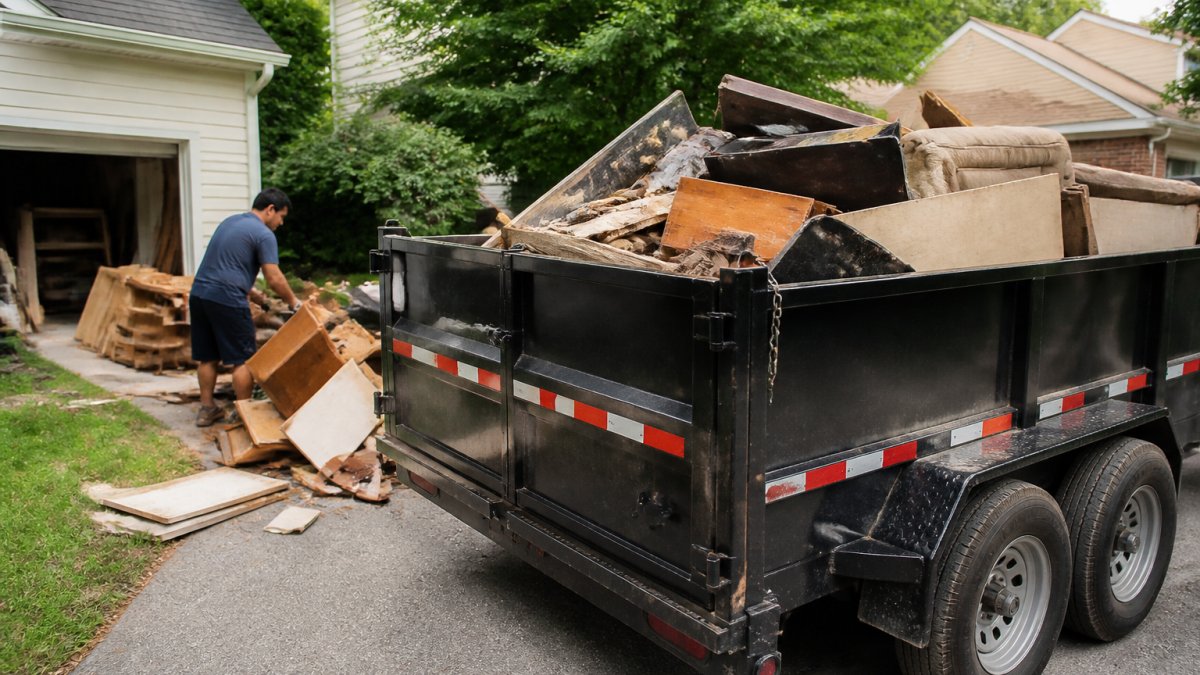
A dump trailer rental sits between a full dumpster service and hauling everything yourself. You get a 12-yard trailer delivered to your driveway, load it on your schedule, and it's picked up when done, unlike a dumpster that charges for every extra day.
The appeal is straightforward: you control the timeline. A three-day loading window gives most homeowners time to sort and load without rushing. The trailer is driveway-safe and requires no special equipment.
The first ton of waste disposal is included with every rental. Most homeowners stay within this limit for garage, attic, or bathroom renovations. You only pay overage fees if you exceed capacity, rewarding efficiency.
Dump trailer rentals work best for projects generating 10-20 cubic yards of mixed debris, such as kitchen remodels with flooring and cabinet removal.
Dumpster Bags for Home Renovation Projects
Dumpster bags (also called junk bags or debris bags) are fabric containers, typically 4-5 cubic yards, delivered to your driveway and picked up when full. They're a lightweight alternative to trailers and traditional dumpsters, ideal for smaller projects and homeowners without significant driveway space.
A standard 4-yard bag holds 8-10 cubic feet of compacted material. A typical bathroom renovation generates 8-12 cubic yards, requiring two to three bags. A single-room remodel fits in one bag; a kitchen remodel with cabinet and flooring removal requires two to three.
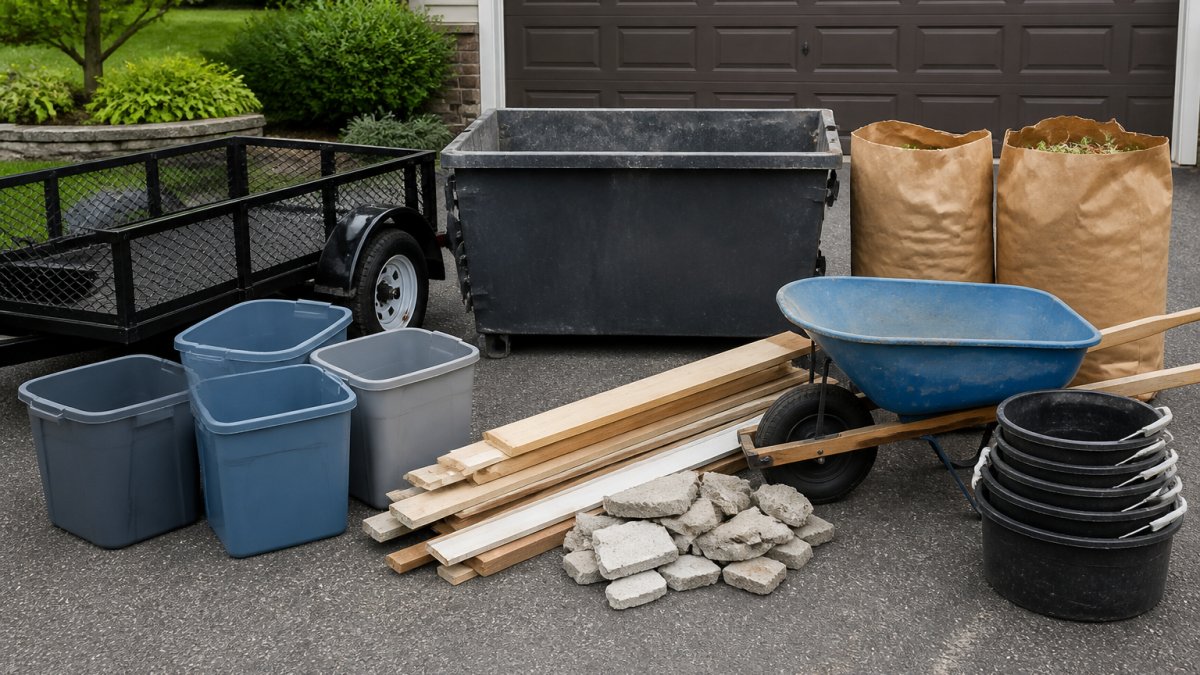
Bags excel at low-density materials: drywall, wood, insulation, and roofing shingles. They're poor for high-density materials. A 4-yard bag rated for 2-3 tons maxes out after just 1.5-2 cubic yards of concrete. Tile, brick, and stone have similar density issues.
Most bag providers set weight limits of 2-3 tons per bag, with overage charges of $50-$150 per ton. For renovations with significant concrete, tile, or brick work, a dump trailer ($500-$900) is cheaper than multiple bags plus overage fees.
Bag rental typically costs $300-$600 per bag, including delivery, pickup, and disposal. Hidden fees include overage weight charges ($50-$150 per ton), extended rental fees ($25-$50 per day), hazardous material surcharges ($100-$500), delivery outside service area ($50-$150), and fuel surcharges (5-10%). Always request an itemized quote and confirm weight limits, overage policies, and what's included in the advertised price.
Bags have smaller openings than trailers, requiring you to break down large items like doors and cabinets. This saves money but demands more manual effort. Once full, pickup typically occurs within 24-48 hours. If you're not ready to fill the bag immediately, you pay rental fees for unused time, making bags less flexible than trailers with 3-day loading windows.
Bags are most cost-effective for projects generating 8-16 cubic yards of low-density debris with no heavy materials, such as bathroom renovations or attic cleanouts. Bags also suit tight driveways: a 4-yard bag occupies 8 feet by 5 feet versus 20-25 feet for a trailer. For mixed debris, combine bags with donation and local disposal to minimize costs.
For projects under 12 cubic yards of light material, bags are simpler than multiple landfill trips. For projects over 20 cubic yards or with heavy materials, a dump trailer offers better value per cubic yard. For projects with reusable items, combine donation with bags or a trailer to minimize costs.
Junk Removal for Construction Debris
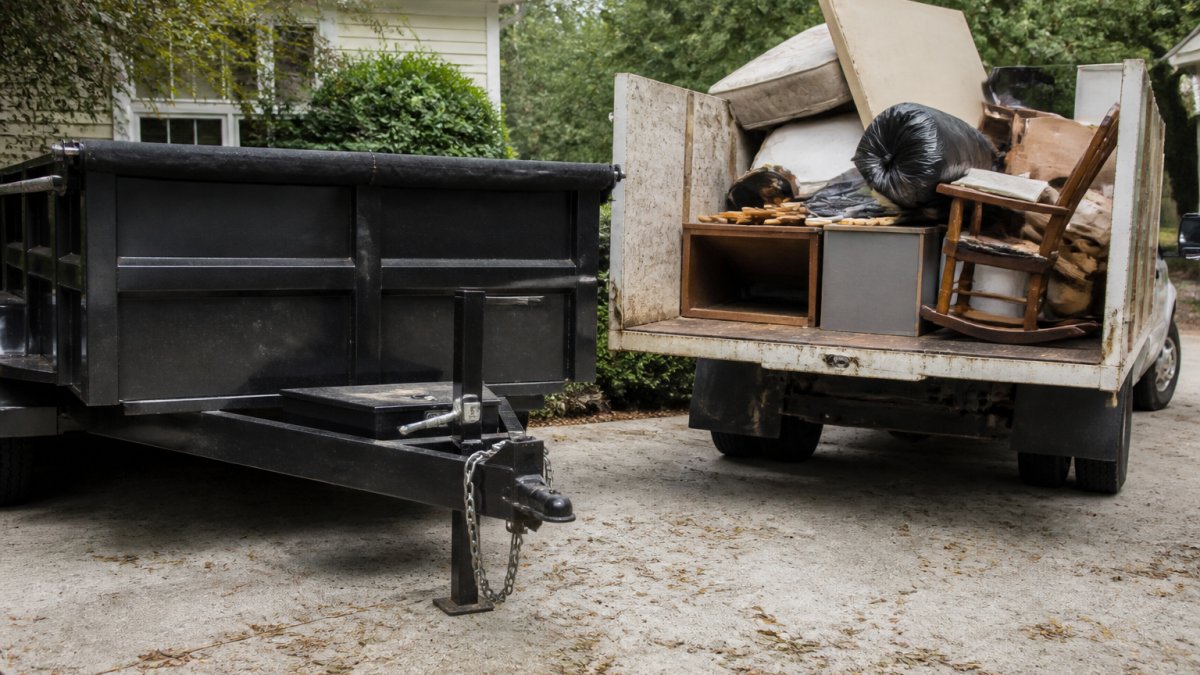
Full-service junk removal handles everything, assessment, loading, and hauling, without your effort. It works best when you lack physical ability to load heavy items or have mixed renovation and household debris. The trade-off is cost: crews charge because you're paying for labor, time, and fuel. For small projects, this overhead is expensive; for large, mixed-debris cleanouts, convenience may justify the cost. Some services separate reusable items and handle donation logistics, aligning disposal with sustainability goals.
Where to Dispose of Renovation Waste Locally
Understanding local disposal options prevents costly mistakes and delays. Most homeowners reduce disposal costs by routing waste to the correct facility rather than using a one-size-fits-all service.
C&D landfills accept mixed renovation debris, substantially cheaper than residential disposal. A typical bathroom renovation saves money routed to a C&D facility. Find facilities through your local solid waste authority or the EPA's Construction and Demolition Waste Directory. Call ahead to confirm accepted materials, hours, weight limits, and permit requirements. Some facilities charge lower rates for sorted loads.
Yard waste, branches, leaves, soil, sod, and tree stumps, goes to municipal composting facilities. Many offer free or low-cost drop-off. Check your municipality's website for locations and hours; many close during winter. Separating yard waste before disposal can eliminate tipping fees.
Scrap metal facilities pay for ferrous and non-ferrous metals. A 50-gallon water heater nets scrap value. Appliance recyclers charge per appliance for safe removal and processing; some utility companies offer rebates. Find facilities through the ISRI directory or local waste authority referrals.
Most landfills prohibit asbestos, lead paint, batteries, fluorescent bulbs, refrigerants, oils, solvents, and treated lumber. Disposing of these incurs fines and liability. Many municipalities operate quarterly hazardous waste collection events. For older homes, test for asbestos and lead before disposal. Check your local health department for collection schedules.
Permits and Street Placement Rules
If you place a dumpster, trailer, or bag on the street or public right-of-way, most municipalities require a permit. Permit costs vary and typically allow 7-14 days of placement. Unpermitted placement can result in fines.
Residential driveways usually don't require permits, but check your local ordinance. Some HOAs or municipalities restrict driveway placement of containers. Confirm placement rules with your local code enforcement office before ordering any disposal service.
Donation and Reuse: Free or Low-Cost Options
Before you dispose of anything, consider whether it has value to someone else. Donation and reuse options turn waste into resources and often cost you nothing.
Cabinets, doors, flooring, and fixtures from your renovation frequently have a second life. Habitat for Humanity ReStore locations accept building materials in good condition. Architectural salvage yards buy vintage fixtures, hardwood flooring, and period-appropriate doors. Craigslist and Facebook Marketplace connect you with people actively seeking used building materials. A contractor removing solid wood cabinets can sell them instead of paying to dispose of them.
Appliances in working condition go to donation centers, charities, or online marketplaces. A functioning refrigerator or dishwasher has resale value. Even broken appliances have scrap metal value at recycling facilities.
Furniture, decor, and household items removed during renovation go to Goodwill, Salvation Army, or local nonprofits. Many offer free pickup for large items. You get a tax deduction, and the items get reused instead of landfilled.
The math is simple: if an item has any value or utility, donate or sell it before considering disposal. You save disposal costs and keep materials out of landfills. The only items that should reach a disposal facility are genuinely unusable waste.
Choosing the Right Alternative: A Decision Framework
Selecting the best dumpster alternative depends on three factors: project scope, waste type, and your physical ability to load materials.
| Project Type | Best Alternative | Why | Cost Range |
|---|---|---|---|
| Small room remodel (bathroom, bedroom) | Dumpster bags | Low cost, simple logistics, fits typical debris volume | $300-$600 |
| Whole-house renovation | Dump trailer rental | Flexibility, included disposal, handles mixed debris | $400-$800 |
| Garage or attic cleanout | Dump trailer rental or junk removal | Trailers for DIY loading, removal for convenience | $400-$1,200 |
| Heavy debris (concrete, tile, brick) | Dump trailer rental | Higher weight capacity than bags | $500-$900 |
| Mixed renovation + household items | Junk removal | Full-service convenience, handles everything | $1,000-$3,000 |
| Eco-conscious project | Donation + selective disposal | Reuse first, then dispose responsibly | $200-$600 |
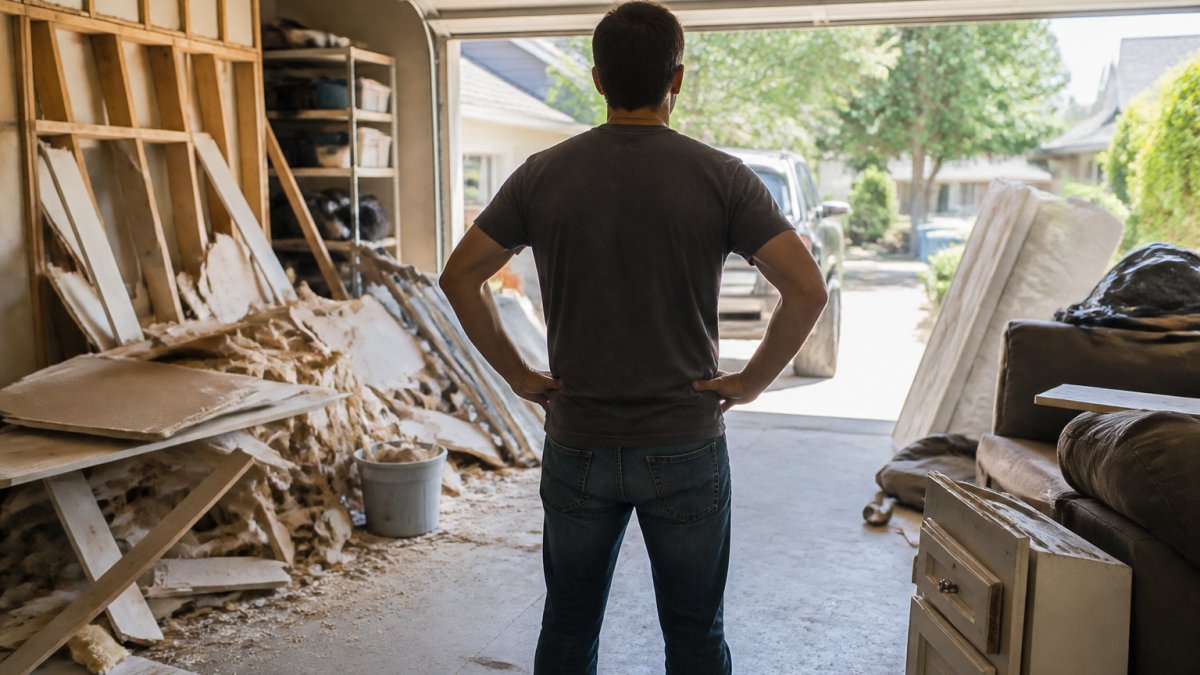
Start by estimating your debris volume. A bathroom renovation typically generates 8-12 cubic yards. A kitchen remodel with new flooring and cabinets runs 15-25 cubic yards. A whole-house renovation can exceed 40 cubic yards. Measure your pile, compare it to container capacities, and calculate cost per cubic yard for each option.
Next, identify your waste composition. If 80% of your debris is drywall and wood with some concrete, a dump trailer handles it efficiently. If you're mixing renovation waste with old furniture and appliances, junk removal or multiple disposal methods make sense. Heavy materials like concrete or brick favor trailers over bags due to weight limits.
Finally, assess your physical capability. Can you load heavy items yourself, or do you need help? Junk removal costs more but eliminates the labor. Trailers and bags require you to load, which saves money but demands physical effort. This is a legitimate factor, don't choose a self-service option if you can't safely load your debris.
construction waste management best practices provide additional frameworks for sorting and disposing of renovation debris responsibly.
Choosing the right dumpster alternative for your home renovation comes down to matching your project's specific needs with the disposal method that offers the best combination of cost, convenience, and flexibility. Fill and Dump Trailers specializes in dump trailer rentals that include the first ton of waste disposal and provide a three-day loading window, giving you the control to work at your own pace without surprise charges. Whether you're tackling a single-room remodel or a whole-house renovation, our driveway-safe trailers simplify the process. sustainable disposal practices for home renovation can guide your decisions on material reuse and responsible waste handling. Get started with Fill and Dump Trailers and clear your renovation debris on your schedule, not the calendar's.
Frequently Asked Questions
What is the cheapest dumpster alternative for a home renovation?
Cost depends on your project scope and debris type. Donation and curbside pickup services are free for usable items. Dumpster bags work well for smaller renovations. Dump trailers offer flexibility with a three-day loading period and often include disposal of the first ton, making them competitive for medium-sized projects. Get quotes from local providers to compare your specific situation.
Can I use a dump trailer instead of a roll-off dumpster for renovation waste?
Yes. Dump trailers work for most renovation debris including drywall, wood, flooring, and tile. They're driveway-safe and offer flexible loading periods, making them ideal for homeowners who need time to clear out materials. The main difference is access: trailers require enough space for delivery and pickup, while roll-off dumpsters need curb access. Confirm the trailer can handle heavy materials like concrete before renting.
Where can I take construction debris without renting a dumpster?
Local landfills and transfer stations accept construction debris, though some charge by weight or material type. Material-specific recycling facilities take concrete, wood, drywall, and metals separately. Donation centers accept usable cabinets, flooring, and fixtures. Some municipalities offer free or low-cost drop-off days for renovation waste. Call your local waste management department or search online for facilities near you; many have restrictions on certain materials or require advance scheduling.
What renovation waste can go in a dumpster bag?
Dumpster bags handle light to medium debris: drywall, wood scraps, insulation, carpet, cabinet pieces, and general household waste from cleanouts. They work poorly for heavy materials like concrete, tile, or large appliances, which often exceed weight limits. Check the provider's material restrictions before ordering, as some prohibit hazardous waste, asbestos, or electronics. For mixed renovation debris, confirm what's accepted to avoid overage charges or rejection at the landfill.