 how-to
Renting a Car Hauler With Winch: A Complete Guide
Table of Contents
- What You Need to Know About Renting a Car Hauler With Winch
- Car Hauler Rental Requirements and Eligibility
- Trailer Types, Capacity, and Winch Specifications
- How to Load a Car Onto a Trailer With a Winch
- Securing Your Vehicle: Car Hauler Tie-Down Straps and Equipment
- Renting a Trailer for a Nonrunning Car
- Tow Vehicle Compatibility and Hitch Requirements
- Rental Rates, Deposits, and Hidden Fees
- Frequently Asked Questions
Last Updated: October 12, 2026
What You Need to Know About Renting a Car Hauler With Winch
A car hauler winch rental is a practical solution when you need to transport a vehicle that can't drive on its own or when you're moving a car long distances. Whether you're hauling a classic car to a show, transporting a vehicle for repair, or moving a car you've purchased, understanding the rental process saves time and prevents costly mistakes.
The difference between a smooth rental experience and a stressful one often comes down to preparation.
This guide covers everything from eligibility requirements to step-by-step loading instructions, winch specifications, and cost considerations. We'll walk you through the practical details that most people overlook until they're already on the road.
Car Hauler Rental Requirements and Eligibility
Before you reserve a car hauler winch rental, rental companies will verify a few basic requirements. You'll need a valid driver's license and proof of insurance. Most rental operations require renters to be at least 18 years old, though some set the minimum at 21.
Many rental companies ask about your tow vehicle's specifications upfront. This isn't bureaucratic friction, it's a safety check. Your vehicle needs sufficient towing capacity to handle both the trailer and the vehicle you're hauling. A rental agent will typically ask for your vehicle's make, model, and year so they can confirm compatibility.
Some operations require a damage deposit, typically refundable if the trailer is returned in good condition. Ask about this when you call. Rental periods vary: daily, weekly, and monthly options give you flexibility depending on your timeline. Be clear about your exact dates, overages can add up quickly if you miscalculate.
Trailer Types, Capacity, and Winch Specifications
Not all car hauler trailers are the same. The type you need depends on what you're transporting and your tow vehicle's capability.
Winch Capacity and Load Limits
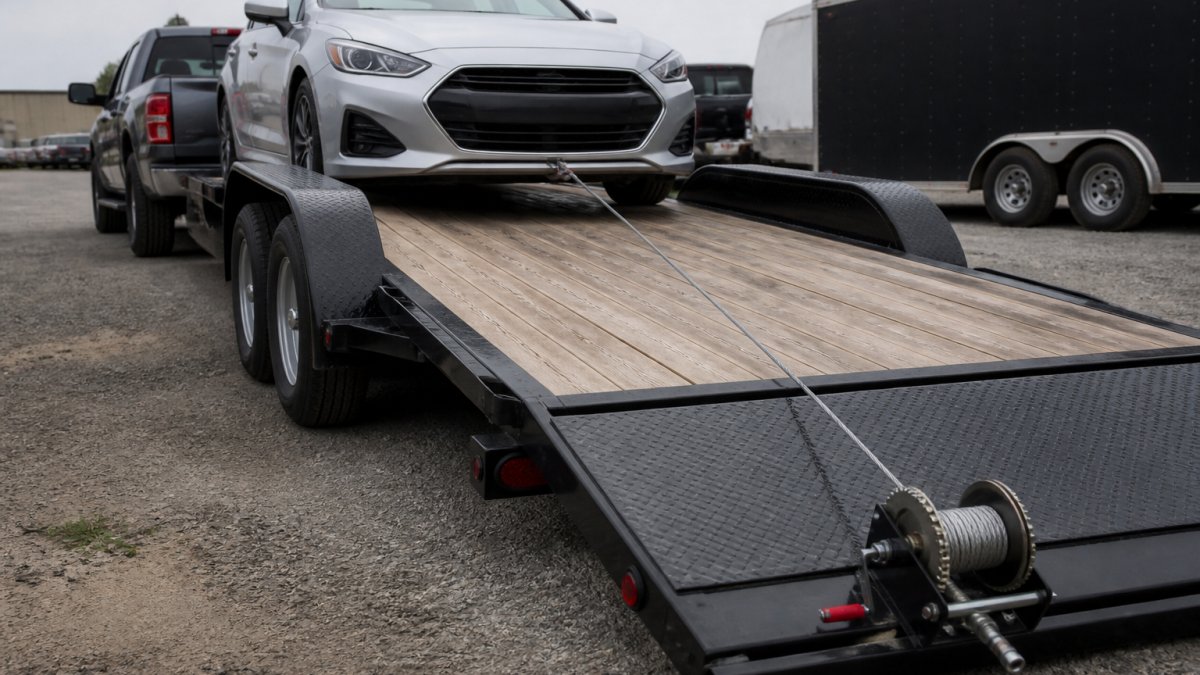
A 12,000 lb winch is the most common specification for standard car hauler rentals. This capacity handles most sedans, compact SUVs, and light trucks. The winch is designed to pull a vehicle up the loading ramps and secure it on the trailer bed.
Winch capacity and trailer load capacity are two different things. A 12,000 lb winch doesn't mean the trailer can only carry 12,000 lbs, the winch is just one component. The overall trailer capacity typically ranges from 10,000 to 14,000 lbs depending on the trailer model. Before renting, confirm both the winch capacity and the total load capacity to ensure your vehicle fits safely.
Exceeding these limits risks equipment failure, trailer damage, and potential liability issues. If you're transporting a vehicle heavier than the trailer's rated capacity, you'll need a different rental. Most rental operations have heavier-duty options available, though they may cost more.
Flatbed vs. Enclosed Trailers
A flatbed car hauler trailer is the standard option for most rentals. It's open-air, easier to load, and typically less expensive. You'll see the vehicle clearly during transport, and loading with a winch is straightforward on a flatbed design.
Enclosed trailers offer weather protection and extra security. They're ideal if you're transporting a valuable or classic vehicle. However, enclosed trailers cost more and require careful loading to avoid interior damage. The winch operation is the same, but you have less visibility during the loading process.
For most household moves and short-distance hauls, a flatbed with a winch meets your needs. Choose enclosed only if weather protection or security justifies the additional expense.
How to Load a Car Onto a Trailer With a Winch
Pre-Loading Safety Checks
Before you attach the winch cable to your vehicle, inspect both the trailer and your vehicle. Walk around the trailer and check for visible damage, rust, or loose components. Test the winch manually, it should move smoothly without grinding sounds.
Examine your vehicle's front bumper and frame. The winch cable will attach here, so make sure the bumper is solid and the attachment point is secure. If your vehicle has a towing eye or recovery hook, use that instead of the bumper. These are designed for exactly this purpose.
Check the trailer's loading ramps. They should be clean, dry, and free of debris. Wet or oily ramps reduce traction and make loading dangerous. If you notice ice or standing water, dry the ramps before proceeding.
Step-by-Step Winch Loading Process
Step 1: Position the trailer on level ground. Park the trailer on a flat, stable surface. If you're loading on a slope, position the trailer so the ramps face uphill.
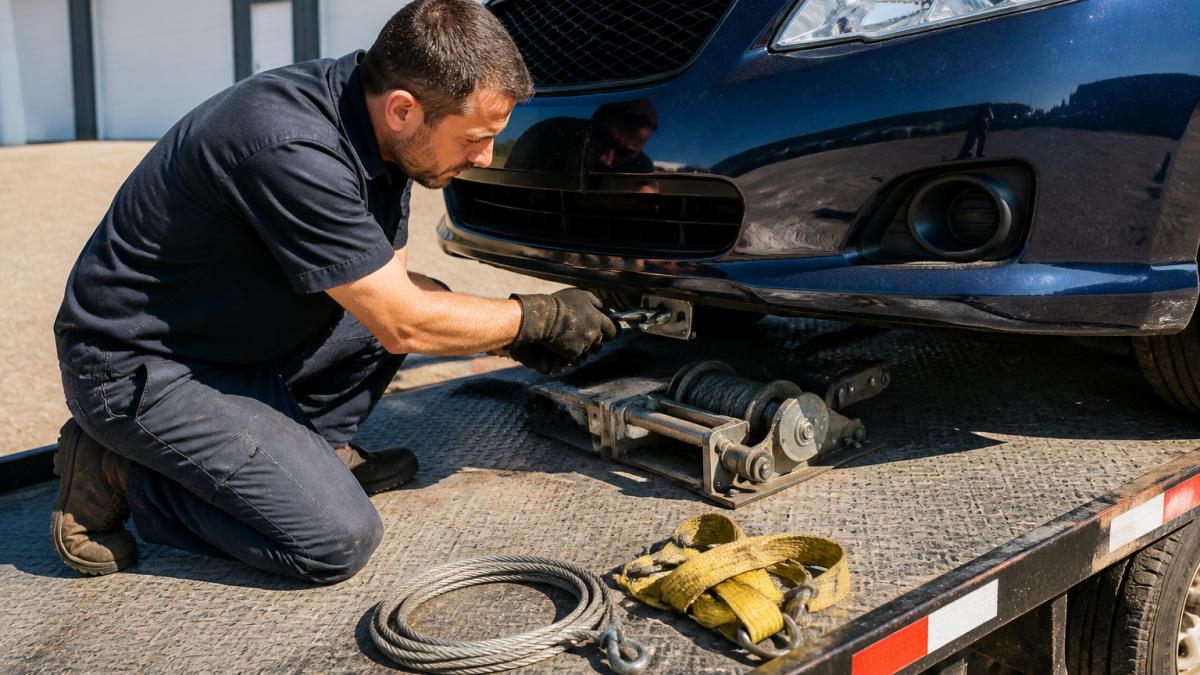
Step 2: Attach the winch cable. Connect the winch cable to the vehicle's towing eye or front bumper attachment point. Make sure the connection is tight.
Step 3: Engage the winch slowly. Start the winch at low speed. The vehicle should move smoothly up the ramps without jerking or hesitating.
Step 4: Monitor alignment as the vehicle climbs. Watch the vehicle's position as it moves up the ramps. It should track straight.
Step 5: Position the vehicle on the trailer bed. Continue until the vehicle is fully on the trailer, centered lengthwise and widthwise. The parking brake should be engaged once the vehicle is in position.
Step 6: Secure the vehicle with tie-downs. Once the vehicle is positioned, disconnect the winch cable and switch to tie-down straps. This is critical, the winch cable is not a permanent securing method.
Common Mistakes to Avoid
Don't skip the pre-loading inspection. A missing lug nut or loose bumper discovered mid-load creates problems you can't fix on the road. Spending five minutes checking saves hours of frustration.
Avoid attaching the winch cable to anything other than the designated towing point. Bumpers, grilles, and undercarriage components will break under winch tension. Use the towing eye if available; otherwise, ask the rental company where the safe attachment point is.
Don't operate the winch at high speed. Slow, steady pulling prevents cable damage and gives you time to spot alignment issues. Fast winching looks efficient but often causes problems.
Never leave a vehicle unattended on the trailer without tie-down straps securing it. Even parked on level ground, a vehicle can shift during transport if it's only held by the parking brake.
Securing Your Vehicle: Car Hauler Tie-Down Straps and Equipment
After the winch pulls your vehicle onto the trailer, tie-down straps take over. These are non-negotiable for safe transport.
Quality matters here. Look for straps rated for at least the vehicle's weight. Most rental trailers include heavy-duty straps with ratchet mechanisms. Inspect them for fraying, tears, or worn stitching before you use them.
Position the front straps at the vehicle's front wheels, angling down and outward to the trailer's front corners. The rear straps attach at the rear wheels, angling down and outward to the trailer's rear corners.
Tighten each strap firmly but don't over-tighten. You want the vehicle immobilized, not deformed. A properly secured vehicle shouldn't shift at all when you push on it. Test each corner before you drive.
Some trailers include additional equipment like wheel chocks or edge protectors. Use them. Wheel chocks prevent rolling if a strap loosens. Edge protectors keep the straps from cutting into the vehicle's paint.
Renting a Trailer for a Nonrunning Car
A nonrunning vehicle complicates the rental process, but it's manageable. The winch becomes essential because the vehicle can't drive onto the trailer under its own power.
Before you rent, tell the rental company explicitly that the vehicle is nonrunning. They may ask why, mechanical failure, no battery, transmission damage, or engine trouble all affect how the vehicle is loaded. This information helps them assess whether standard equipment is sufficient.
Ensure the vehicle's steering works, even without engine power. Most vehicles allow manual steering when the engine is off, though it requires more effort. The vehicle needs to roll straight up the ramps.
Check that the parking brake functions. A nonrunning vehicle relies on the parking brake to stay positioned on the trailer once the winch releases. If the brake doesn't hold, the vehicle will roll backward.
For a completely immobilized vehicle, you may need a rotator truck or heavy equipment to position it before the car hauler arrives. Some rental operations offer this service; others don't. Ask in advance.
Tow Vehicle Compatibility and Hitch Requirements
Your tow vehicle must match the trailer's requirements. This is where many people make expensive mistakes. An undersized tow vehicle strains the engine, transmission, and brakes. It's also illegal in most states to tow beyond your vehicle's rated capacity.
Check your vehicle's owner's manual for the towing capacity. This is the maximum weight the vehicle can safely pull, including the trailer and its cargo. A typical midsize pickup can tow 8,000 to 12,000 lbs.
Calculate the total weight: trailer weight plus vehicle weight. A typical flatbed car hauler weighs 2,500 to 3,500 lbs. Add a 3,000 lb vehicle, and you're at 5,500 to 6,500 lbs minimum.
The hitch class matters too. A Class II hitch handles lighter loads. A Class III or IV hitch is necessary for heavier trailers. Rental companies verify hitch compatibility before they hand over the keys.
Electrical compatibility is often overlooked. The trailer's brake lights and turn signals connect to your vehicle's electrical system via a plug.
Rental Rates, Deposits, and Hidden Fees
Rental pricing depends on several factors: trailer type, rental duration, your location, and current demand.
Most rental companies require a deposit, usually refundable. This protects them if you return the trailer damaged.
Mileage fees sometimes apply, though many companies include unlimited mileage. If mileage is charged, ask the rate per mile and calculate your expected cost based on your round-trip distance.
Insurance is another consideration. Your personal auto insurance may or may not cover a rental trailer. Check your policy before you rent.
Late return fees are common and can be steep. Confirm the exact return time and location. If you're even an hour late, you may be charged for an additional day.
Fill and Dump Trailers offers car hauler trailers with and without winches, designed to fit your specific hauling needs.
Renting a car hauler with winch isn't complicated once you understand the key steps. Start with a thorough pre-rental inspection of your tow vehicle and confirm hitch compatibility.
Frequently Asked Questions
Do car hauler rentals come with a winch?
Not all car hauler rentals include a winch, but many rental companies offer winch-equipped options. Fill and Dump Trailers provides car hauler trailers with or without a winch to match your needs. Winch-equipped trailers are ideal for loading vehicles that cannot drive onto the trailer themselves, including nonrunning cars, vehicles with transmission issues, or those with low clearance concerns. Always confirm winch availability and capacity when booking your rental.
What should I check before renting a winch-equipped car hauler?
Before renting, verify your tow vehicle's hitch capacity matches the trailer's loaded weight, check that your vehicle has proper electrical connections for trailer lights, confirm the winch capacity matches your vehicle's weight, and inspect the trailer's ramps and tie-down equipment. Request a pre-rental inspection checklist from your rental company. Ensure your tow vehicle's braking system can handle the additional load, and review insurance requirements. Ask about included equipment like straps, chains, and safety chains to avoid surprises at pickup.
Can a car hauler winch load a nonrunning vehicle safely?
Yes, a properly rated winch can safely load a nonrunning vehicle onto a car hauler trailer. The winch must have sufficient capacity for your vehicle's weight, typically ranging from 10,000 to 12,000 pounds for standard passenger cars. Before loading, secure the winch cable to a structural point on the vehicle's frame, not to bumpers or plastic trim. Use a spotter to guide the vehicle onto the ramps, ensure the winch operates smoothly with no jerking motions, and stop immediately if you hear unusual sounds or feel resistance. Always wear safety gear and keep bystanders clear during the loading process.
How much does it cost to rent a car hauler with a winch?
Rental pricing for winch-equipped car haulers depends on trailer size, rental duration (daily, weekly, or monthly), your location, and whether you need additional services like delivery or curbside pickup. Fill and Dump Trailers offers flexible rental terms to fit your budget. For accurate pricing and available discounts, visit Fill and Dump Trailers's website or submit a rental request with your specific needs. Ask about any fees beyond the base rental rate, such as mileage charges, damage deposits, or late return penalties.