 how-to
How to Rent a Dump Trailer for Landscaping Projects
Last Updated: October 26, 2026
Quick Summary
A dump trailer rental landscaping solution gives you control over your cleanup timeline without a fixed appointment window, letting you load at your own pace over a three-day rental period. A 12-yard dump trailer suits most homeowners tackling major landscaping work, from seasonal yard cleanup to renovation debris removal, consolidating material into one haul instead of multiple trips.
- A 5-7-cubic-yard trailer handles typical spring cleanups and small projects, while a 12-yard trailer suits full yard renovations and multiple tree removals.
- Heavy materials like soil and gravel hit payload limits before filling the bed, while light materials like mulch and branches fill volume before weight limits.
- Dump trailer rental costs range from $80 to $2,000 per project depending on trailer size, duration, delivery distance, and disposal fees.
- Place heavier materials toward the front third over the axle and lighter materials toward the rear to prevent fishtailing and ensure safe towing.
- Confirm all fees in writing before booking: base rate, delivery, disposal allowance, per-ton overage charges, and any fuel surcharges or late fees.
Table of Contents
- Dump Trailer Rental for Landscaping: Why It Works
- Dump Trailer Sizes and Capacity for Your Project
- How to Load a Dump Trailer Safely and Efficiently
- Dump Trailer Rental Cost and What's Included
- Dump Trailer vs Dumpster Rental: Which Fits Your Needs
- Common Mistakes When Renting and Loading
- Getting Started With Your Dump Trailer Rental
- Frequently Asked Questions
Dump Trailer Rental for Landscaping: Why It Works
A dump trailer rental landscaping solution gives you control over your cleanup timeline without a fixed appointment window.
The core advantage is flexibility plus cost efficiency: you're not paying someone else's labor markup, just renting the equipment and handling disposal yourself.
Most residential dump trailer rental landscaping projects generate more material than a truck bed can handle. A tree removal, yard overhaul, or deck demolition means multiple landfill trips in your own vehicle; a dump trailer consolidates everything into one haul.
Dump Trailer Sizes and Capacity for Your Project
Choosing the right trailer size is the most important decision you'll make. Too small and you'll overfill it; too large and you're paying for unused capacity. Think in pounds per cubic yard, not cubic yards alone, because landscaping materials vary enormously in density.
Standard Residential Trailer Dimensions
A 5-7-cubic-yard trailer is described as suitable for most residential cleanup and small landscaping projects, according to Hegens Golden Pig Rentals. This size handles typical spring cleanups, moderate yard waste, and smaller renovation debris.
For larger projects, a full yard renovation, multiple tree removals, or significant construction debris, a 12-yard trailer is standard, roughly double the capacity while remaining driveway-safe for most homes.
Payload Capacity and Gross Vehicle Weight Rating
Payload capacity and gross vehicle weight rating (GVWR) are separate specs that often confuse renters.
Your tow vehicle must be rated for the combined load; confirm towing capacity before renting. Exceeding GVWR compromises braking, handling, and safety.
Weight distribution matters more than raw capacity. A load concentrated toward the front creates tongue weight that can overwhelm your tow vehicle's rear suspension.
Landscaping Material Weight Cheat Sheet
Use these approximate densities to convert project volume into trailer loads. They are planning estimates, not scale tickets, always confirm actual weight at the disposal facility.
| Material | Approx. weight per cubic yard | What that means for a 12-yard trailer |
|---|---|---|
| Topsoil (moist) | 1,800-2,200 lb | 5-7 yards hits a 12,000-lb payload |
| Gravel / crushed stone | 2,400-2,900 lb | 4-5 yards maxes out payload |
| Concrete rubble | 3,000-4,000 lb | 3-4 yards maxes out payload |
| Mulch (bulk) | 600-800 lb | Volume-limited, not weight-limited |
| Sod (fresh) | 1,000-1,200 lb | 10-12 yards before weight limit |
| Green waste / branches | 300-500 lb (loose) | Volume-limited; stack and compact |
| Drywall / insulation | 300-500 lb | Volume-limited; light but bulky |
The pattern is clear: heavy mineral materials (soil, gravel, concrete) hit the payload ceiling long before the trailer looks full, while light organic materials (mulch, branches, drywall) fill the bed long before approaching the weight limit.
A Practical Sizing Workflow
- Estimate volume. Measure the area being cleared (length × width × depth in feet) and divide by 27 to get cubic yards. A 20 ft × 30 ft bed stripped 4 inches deep is about 7.4 cubic yards of soil.
- Convert to weight. Multiply cubic yards by the density from the table above. That 7.4 yards of moist topsoil is roughly 13,000-16,000 lb, already at or beyond a 12-yard trailer's payload.
- Add a 20 percent buffer. Debris fluffs up when disturbed, and a cushion prevents a mid-project second rental.
- Compare to payload, not volume. If weight exceeds payload, split the job or size up. If volume exceeds the bed but weight is low, plan to compact or make two trips.
- Match the tow vehicle. Confirm your truck's rated towing capacity exceeds the trailer's GVWR, not just the payload.
How to Load a Dump Trailer Safely and Efficiently
Loading correctly prevents equipment damage, ensures safe towing, and maximizes capacity. Most homeowners rush this step, and it costs them.
Distributing Weight Properly
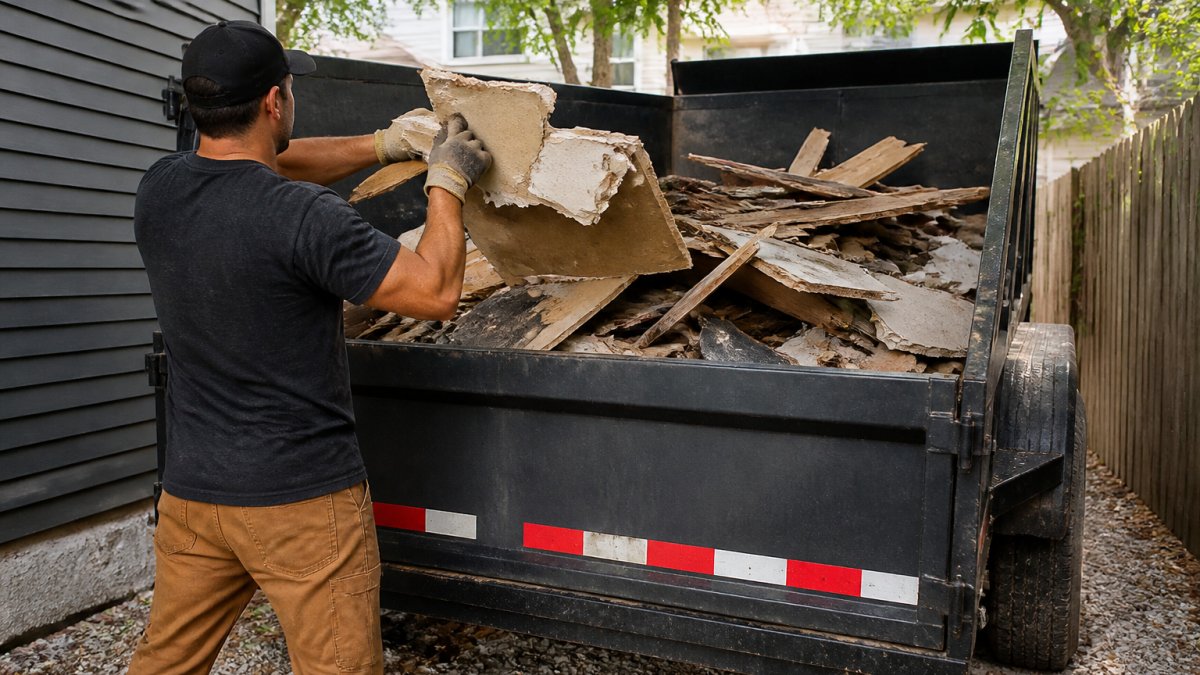
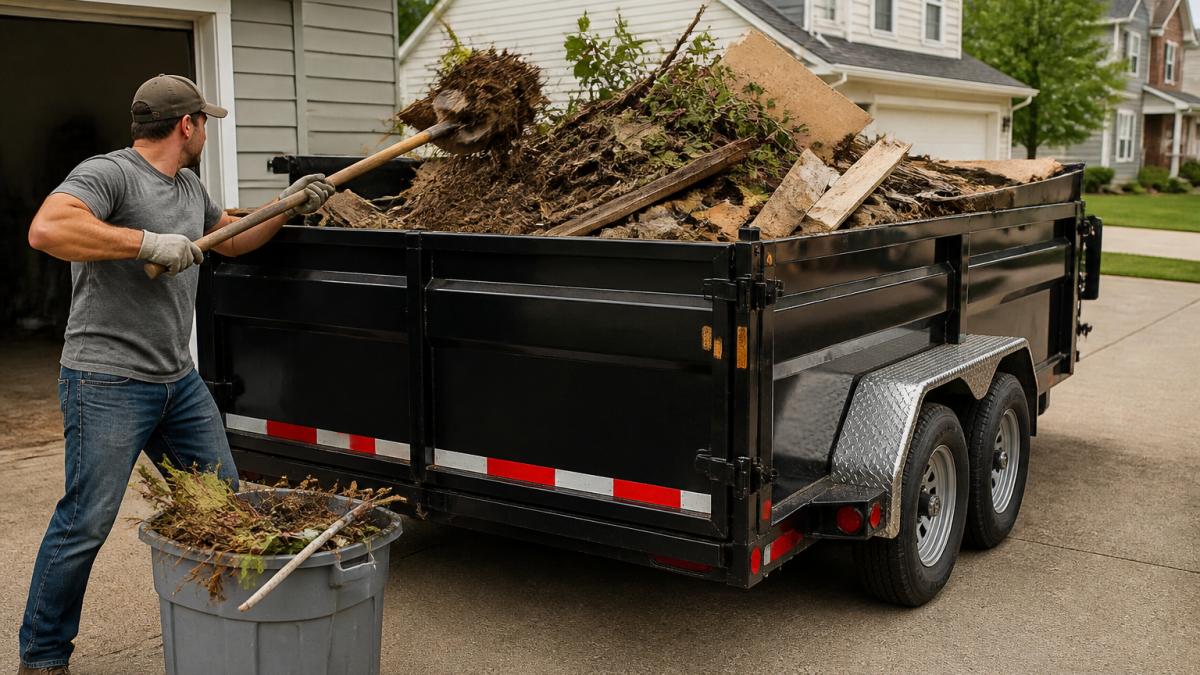
Place heavier materials, soil, gravel, concrete chunks, bricks, toward the front third of the bed, directly over the axle, to anchor the load and prevent fishtailing. Lighter materials go toward the rear.
For mixed loads, layer rather than pile: a base of heavy material, then alternating lighter debris on top. Avoid tall, narrow stacks that topple or catch wind while driving.
Secure anything that could shift or fall.
Materials You Can and Cannot Haul
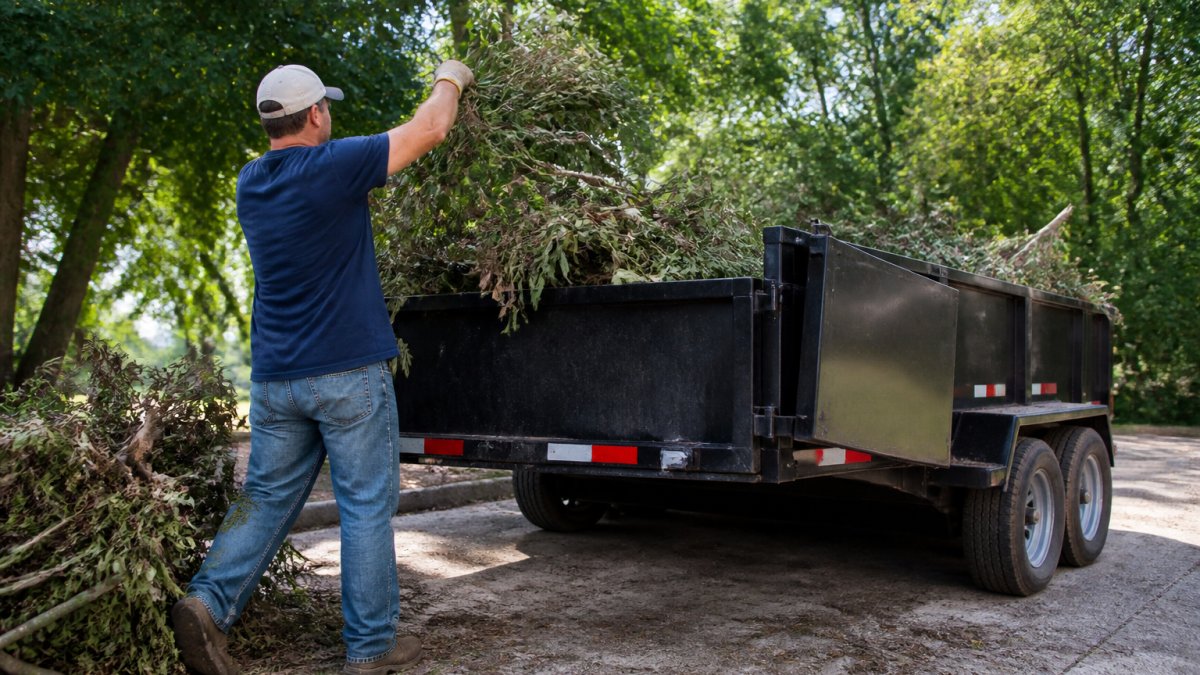
Most dump trailers accept common landscaping and construction debris: soil, mulch, gravel, rocks, wood scraps, drywall, concrete, asphalt shingles, yard waste, and general rubble.
Typically not accepted: hazardous waste (paint, chemicals, batteries), appliances, tires, electronics, and propane tanks, which require specialized disposal.
Heavy materials like concrete and brick compress well, letting you fit more volume. Bulky light materials like drywall or insulation take up space without much weight, so you may hit volume limits before weight limits.
Dump Trailer Rental Cost and What's Included
Dump trailer rental costs depend on trailer size, rental duration, delivery distance, and local market factors. Learn what's included in dump trailer rental before you get a quote. According to Angi, dump trailer rental costs range from $80 to $2,000 per project, with trailer size and rental duration identified as primary cost factors. That range is wide because it bundles very different jobs, a one-day 5-yard rental and a week-long 12-yard rental with multiple disposal trips are not the same product.
Pricing Factors That Affect Your Quote
Trailer size is the biggest variable, but larger projects may need multiple rentals.
Delivery and pickup fees vary by distance: local delivery (within 15-20 miles) is often included or a flat fee, while remote deliveries cost more.
For specific pricing on Fill and Dump Trailers rentals, submit a request for a quote to get accurate rates for your project and location.
The Fee Line Items to Ask About
A quoted daily rate is rarely the full cost. Before you book, get written answers to each of these:
- Base rental rate, daily, three-day, or weekly. Confirm what time pickup counts as the start of day one.
- Delivery and pickup, flat fee, per-mile, or included within a radius. Ask whether the fee is charged each way.
- Disposal / dump fee, often the largest hidden cost. Many providers include the first ton and charge per ton after; others pass through the landfill's gate rate.
- Weight overage, the per-ton charge if you exceed the included allowance. Ask for the current rate in writing.
- Mileage, some rentals cap towed miles or charge per mile beyond a threshold.
- Security deposit, typically refundable, but confirm the hold amount and release timeline.
- Cleaning fee, charged if the bed is left with caked soil, concrete residue, or debris.
- Late return fee, usually a partial-day or full-day rate; confirm the grace period.
- Fuel surcharge, increasingly common; ask whether it is a flat add-on or a percentage.
Worked Example: A Mid-Size Landscaping Cleanup
Suppose you are removing a 20 ft × 30 ft bed of old sod and topsoil, plus a season of green waste. Your volume estimate is about 7 cubic yards of soil and 4 cubic yards of loose branches.
A realistic budget for that job looks like this (illustrative line items, not a quote):
| Line item | What to expect |
|---|---|
| 12-yard trailer, 3-day rate | The base rental; ask for the three-day vs. weekly comparison |
| Delivery + pickup | Flat fee within the local radius, or per-mile beyond it |
| Included disposal | Confirm the first-ton allowance |
| Overage disposal | Per-ton charge if the load exceeds the allowance |
| Deposit | Refundable hold, released after inspection |
Because the soil load is near the payload ceiling, plan for either a second trip or a slightly smaller soil volume.
Rental Duration and Flexible Loading Windows
A three-day rental window is standard for residential projects. This gives you Friday evening through Sunday to load at your pace, plus Monday morning for final items.
Confirm whether your rental includes the dump fee or charges separately. The first ton of waste disposal is included in every rental, so you're not paying extra unless your load exceeds that threshold. Clarify the weight-checking process; some facilities weigh at drop-off, others estimate.
Dump Trailer vs Dumpster Rental: Which Fits Your Needs
The choice between a dump trailer rental and a traditional dumpster depends on your project type, timeline, and property layout.
A dump trailer gives you control: you load it yourself and haul it to the disposal facility (or arrange pickup).
For landscaping projects specifically, a dump trailer often wins because yard waste and soil are heavy and accumulate quickly, letting you consolidate material and handle disposal on your timeline.
Common Mistakes When Renting and Loading
Overloading is the most common mistake.
Underestimating material volume is the second mistake.
Improper weight distribution causes trailers to sway or fishtail during towing.
Not confirming what's included in the rental price leads to unexpected charges. Ask upfront: Is delivery included?
Failing to secure loose items results in debris flying off during transport, a safety hazard and a violation at many facilities.
Getting Started With Your Dump Trailer Rental
Start by assessing your project scope. Measure the area being cleared, estimate the volume of debris, and identify material types.
Contact Fill and Dump Trailers with your project details.
Prepare your driveway or property for delivery.
Load systematically. Place heavy materials first, distribute weight evenly, and secure anything that could shift.
When you're finished loading, arrange pickup. Confirm weight at drop-off if you're concerned about per-ton charges.
Frequently Asked Questions
What size dump trailer do I need for a landscaping project?
Assess your total volume of debris and soil before renting. Fill and Dump Trailers specializes in 12-yard dump trailers, which are suitable for most residential cleanup and landscaping projects, including yard waste removal, soil hauling, and mulch transport.
How much does dump trailer rental cost for landscaping?
Pricing depends on the volume of material, how long you need the trailer, and whether you require delivery and pickup services. Contact Fill and Dump Trailers for a current quote tailored to your specific project and location.
Can a dump trailer haul soil, mulch, and yard waste?
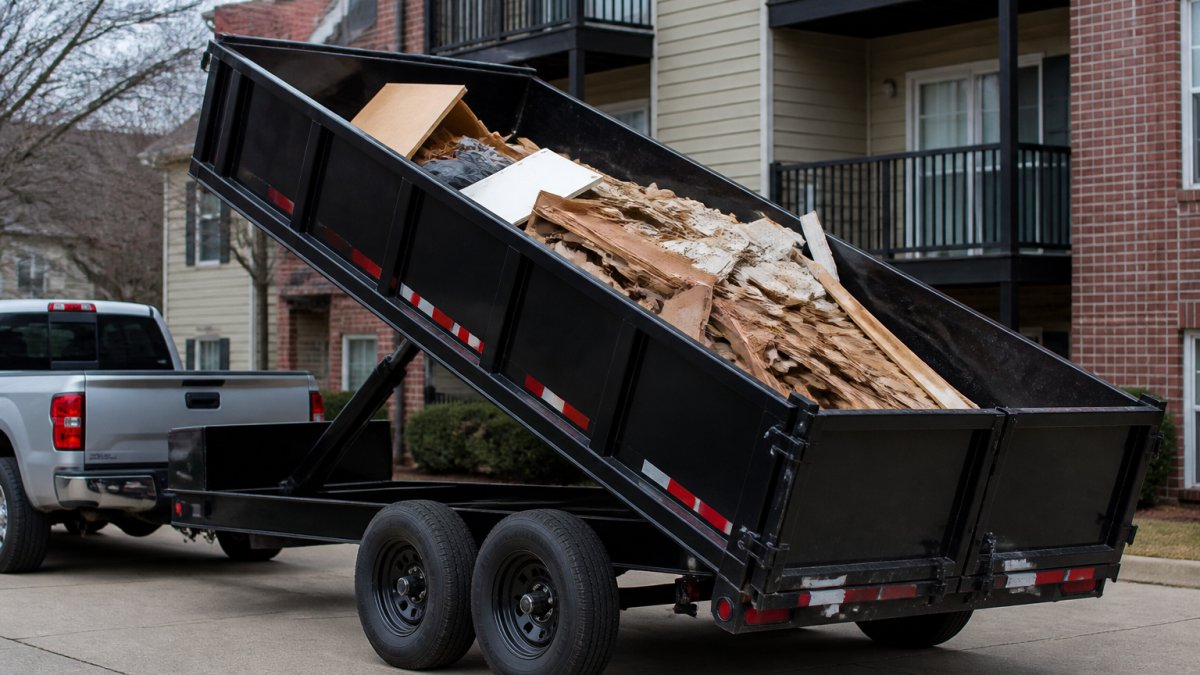
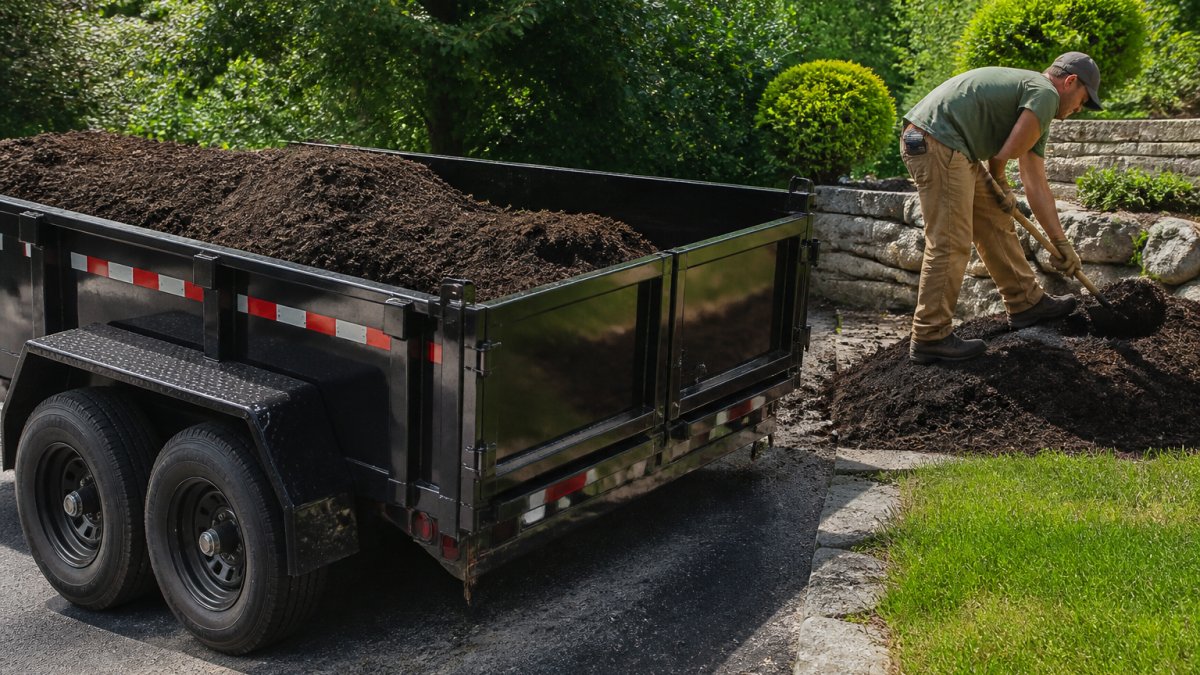
Yes. Dump trailers are designed to haul soil, aggregate, gravel, mulch, green waste, and construction debris. The hydraulic lift mechanism allows you to unload heavy landscaping materials quickly. Verify weight limits with your rental provider, as soil and wet mulch are denser than lighter yard waste and can approach payload capacity faster.
Is a dump trailer better than a dumpster for landscaping work?
Dump trailers offer flexibility: you control the loading timeline (typically three days), and can haul materials at your own pace. For DIY landscaping and home cleanup, a dump trailer is often more cost-effective and driveway-safe. Compare based on your project duration and material volume.
Landscaping projects generate debris faster than most homeowners expect, and managing that material efficiently saves time, money, and stress. A dump trailer rental for landscaping projects removes the guesswork from disposal. Fill and Dump Trailers provides driveway-safe 12-yard trailers with flexible three-day loading windows and disposal included in your rental. Submit a request to book your dump trailer rental and simplify your next landscaping project.