 how-to
Managing Heavy Debris in Small Yards: A Step-by-Step Guide
Last Updated: October 23, 2026
Quick Summary
Managing heavy debris in small yards starts with assessing what you have, breaking down large items into smaller pieces, and organizing materials into categories. Use a dump trailer rental for efficient removal, protecting your driveway with plywood or mats while loading at your own pace over a flexible three-day period.
- Break down large items like furniture and branches into 3-4 foot pieces that fit in a wheelbarrow
- Sort debris into separate piles: branches, metal, furniture, and construction waste for easier disposal
- Use plywood at least 3/4 inch thick under equipment wheels to protect your driveway from damage
- Dump trailer rentals include the first ton of waste disposal with flexible three-day loading windows
- Load heavy items toward the front of the trailer and lighter materials on top for balanced transport
Table of Contents
- Assess Your Debris and Plan the Removal
- Essential Yard Debris Removal Tools and Equipment
- How to Clear Debris From Your Yard Safely
- Protecting a Driveway During Debris Removal
- Dump Trailer Rental for Yard Debris: The Efficient Solution
- Common Mistakes to Avoid When Removing Heavy Debris
- Frequently Asked Questions
Assess Your Debris and Plan the Removal
Managing heavy debris in small yards starts with an honest assessment of what you're dealing with. Before you move anything, take time to walk through your space and catalog the items. Make a list of what needs to go: branches, old furniture, construction waste, broken appliances, or landscaping materials.
The key is understanding your volume. Measure or estimate how much space your debris occupies. A good rule of thumb: if it fills more than a few trash cans, you'll need a removal strategy beyond weekly pickups. This is where planning saves time and money.
Next, check local disposal options. Many areas offer yard waste collection programs similar to Houston's curbside collection or Lexington's Loan-a-Box program. Some municipalities focus on specific materials like yard debris, while others accept mixed household waste.
Consider whether you can manage debris on-site. The North Central Texas Council of Governments recommends mulching as the easiest and most efficient approach for light leaf drop using a mulching mower. For heavier debris, this approach won't work, and you'll need removal.
Research from the Journal of Emergency Management emphasizes that pre-event debris-management plans are important to an effective and efficient response, the same principle applies to household projects. A simple plan now prevents chaos later.
Use this framework to decide your approach:
- Small volume (fits in trash cans): weekly pickup or DIY haul
- Medium volume (fills a garage corner): rental equipment or professional pickup
- Large volume (fills multiple areas): dump trailer rental
Essential Yard Debris Removal Tools and Equipment
The right tools make managing heavy debris in small yards faster and safer. You don't need everything listed here, but having the right combination prevents injuries and wasted effort.
Hand Tools for Breaking Down Debris
Start with basic hand tools to break down large items into smaller, moveable pieces.
A chainsaw is essential for branches and tree limbs. For small yards, a cordless electric model offers enough power without the gas smell or maintenance headaches. Chainsaws require focus and safety gear: goggles, gloves, and hearing protection are non-negotiable.
A reciprocating saw handles metal, plastic, and wood. It's gentler than a chainsaw for smaller materials and works well in tight spaces.
Pruning shears and loppers cut branches up to 2 inches thick without power. Loppers give you reach and use for overhead branches.
A pry bar breaks apart old furniture, pallets, and wooden structures. It also helps dislodge stuck items from tight corners.
Heavy-duty work gloves protect your hands from splinters, sharp edges, and rough surfaces. Leather or reinforced synthetic materials work best.
Equipment for Moving and Staging
Once debris is broken down, you need ways to move it across your yard.
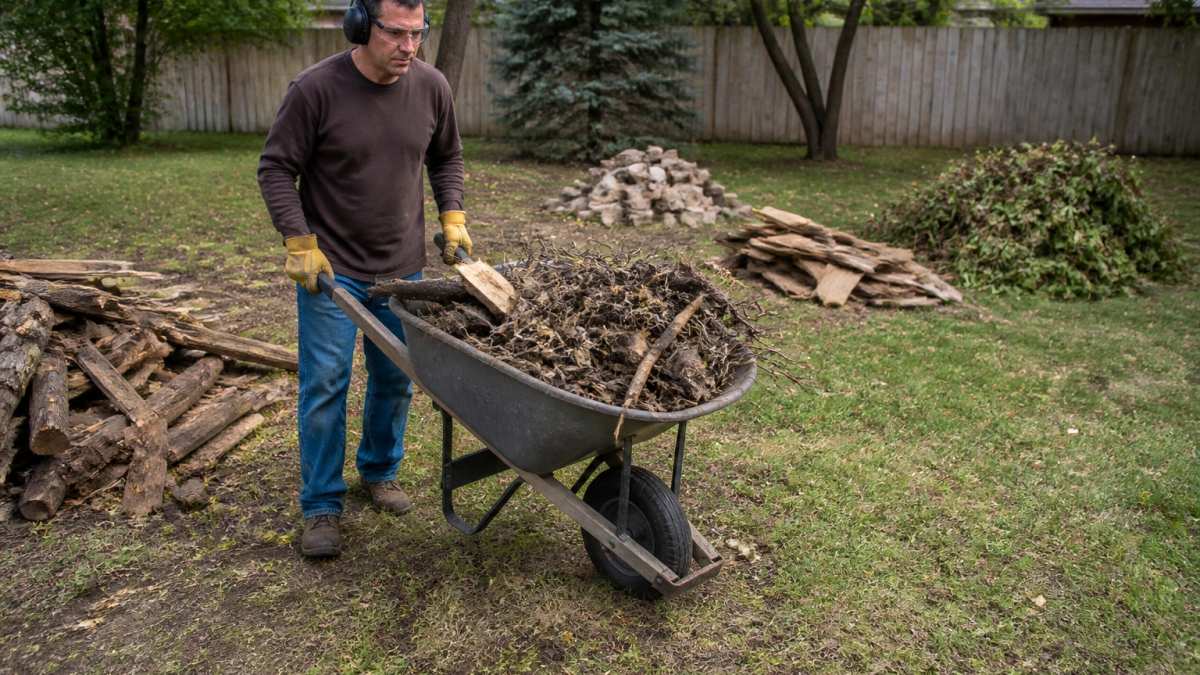
A wheelbarrow is the foundation. It handles most yard waste and fits through narrow gates. Choose one with a deep bin and sturdy frame.
A hand truck (two-wheeled dolly) moves heavy, compact items like appliances or stacked boxes. Heavier items move easier on wheels than in your arms.
A tarp corrals loose debris and makes cleanup faster. Drag debris onto the tarp, then fold and move it as one bundle.
Rakes and shovels help stage materials and push debris into piles. A sturdy shovel also breaks up compacted soil or debris.
For larger projects, consider how to load heavy yard waste properly to avoid injury and ensure efficient use of rental equipment.
How to Clear Debris From Your Yard Safely
Clearing heavy debris from a small yard requires strategy. Space is tight, so every movement counts. Work systematically to avoid creating new problems while solving the old one.
Break Down Large Items First
Don't move large items whole if you can break them into pieces. A whole door takes up more space than a door cut into thirds.
Use a chainsaw or reciprocating saw on branches, wood pallets, and old furniture frames. Cut items to sizes you can actually carry or wheel. Most wheelbarrows fit pieces roughly 3-4 feet long.
For appliances, remove doors and shelves separately. A refrigerator without its door takes up half the space. Metal items get smaller when you separate components.
Breaking things down also makes staging easier. Small piles are easier to organize and move than one large pile.
Organize Debris Into Categories
Sort as you go. Create separate piles for:
- Branches and wood
- Metal items
- Furniture and bulky goods
- Mixed construction debris
Organized piles are easier to load into rental equipment and often qualify for different disposal methods. Some materials get recycled. Others go to landfill. Sorting now saves sorting later.
In a small yard, you might create piles in different corners or use tarps to separate categories. Label each pile so you know what goes where.
Stage Debris Strategically in Limited Space
In a small yard, staging is everything. You can't dump everything in one spot.
Create a main staging area near where your removal equipment will park. This might be your driveway or a side yard. Stage other materials in secondary areas.
Keep pathways clear. You need room to move wheelbarrows and hand trucks without tripping over debris.
Use vertical space. Stack wood and flat items against a fence or wall. Hang tools on the garage wall. The ground is your most valuable real estate in a small yard.
Protecting a Driveway During Debris Removal
Your driveway bears the weight of debris removal equipment. Protect it from damage.
Use Protective Barriers and Mats
Heavy equipment damages asphalt and concrete. Distribute weight across a wider surface to prevent cracking and gouging.
Use plywood sheets or rubber mats under equipment wheels. These spread the load and protect the surface underneath. Plywood at least 3/4 inch thick works best.
For dump trailers, protective barriers are essential. A how to protect your driveway from dump trailers provides detailed steps to keep your surface safe during the rental period.
Distribute Weight Evenly
Never park heavy equipment in the same spot for extended periods. Move it periodically to avoid concentrated damage.
Keep tires properly inflated. Under-inflated tires create more pressure on a smaller surface area, increasing damage risk.
Avoid sharp turns on your driveway. Wide, gentle turns distribute weight better than tight pivots.
Dump Trailer Rental for Yard Debris: The Efficient Solution
For most homeowners managing heavy debris in small yards, a dump trailer rental is the most practical solution. It solves the space problem, the disposal problem, and the hauling problem all at once.
Why Trailer Rental Works for Small Yards
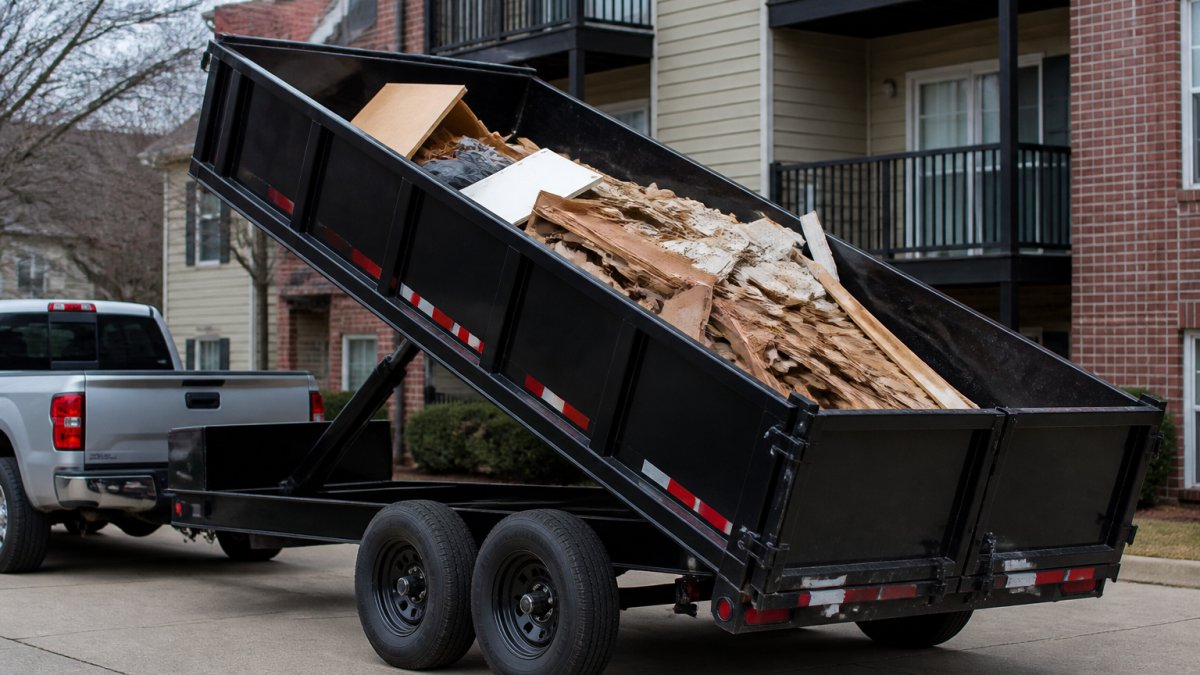
A dump trailer parks on your driveway and stays there while you load at your own pace. You don't need multiple trips to the landfill. You don't need to fit everything into your truck bed.
The trailer comes to you. You load when you're ready. No rushing. No tight timeline.
Fill and Dump Trailers provides driveway-safe 12-yard dump trailers designed for exactly this situation. The trailer is sized for residential projects without dominating a small yard. You get a flexible three-day loading period, so you're not scrambling to finish in an afternoon.
The first ton of waste disposal is included in every rental. If you go over, you pay only for the additional weight. This approach keeps costs predictable.
Loading and Timeline Flexibility
The three-day loading window gives you time to work at your own pace. Break down debris over a day or two. Load gradually. No pressure.
Load strategically. Put heavier items in first, toward the front of the trailer. Lighter materials go on top. This balances the load and makes transport safer.
For larger projects, calculate your waste volume before renting to ensure you get the right size equipment and avoid overages.
If you don't have the physical ability to load heavy items yourself, Fill and Dump Trailers offers curbside pickup service. You point out what goes.
Common Mistakes to Avoid When Removing Heavy Debris
Learning from others' mistakes saves time and frustration.
Underestimating volume is the most common error. Debris always takes up more space than you think. If you're unsure, rent a slightly larger trailer. It's cheaper than a second rental trip.
Loading unevenly creates safety and transport issues. Heavy items in the back shift during transport. Distribute weight across the trailer bed.
Mixing incompatible materials complicates disposal. Keep wood separate from metal. Keep hazardous materials (paint, chemicals, batteries) completely separate. Some landfills charge extra for mixed loads or refuse them entirely.
Waiting too long to remove debris creates problems. Debris sitting in your yard attracts pests, creates safety hazards, and makes the job harder. Weathered wood is heavier than fresh wood.
Not protecting your driveway leads to expensive repairs. Use mats or plywood under equipment. This protection costs far less than driveway repair.
Renting equipment too small forces multiple trips or overages. Assess your actual volume honestly. A slightly larger rental costs less than repeating the process.
Managing heavy debris in small yards doesn't require professional contractors or multiple trips to the landfill.
These common errors can derail your debris removal project or create unnecessary costs and safety issues.
| Mistake | Cause | How to Fix |
|---|---|---|
| Underestimating volume | Debris takes up more space than expected | Rent a slightly larger trailer |
| Loading unevenly | Heavy items placed in back | Put heavy items toward front of trailer |
| Mixing incompatible materials | Not sorting during removal | Keep wood, metal, and hazardous materials separate |
| Waiting too long to remove | Debris sits in yard | Remove debris promptly to avoid pests |
| Not protecting driveway | Heavy equipment causes damage | Use mats or plywood under equipment wheels |
| Renting equipment too small | Underestimating actual volume | Assess volume honestly before renting |
Frequently Asked Questions
How do I protect my driveway when managing heavy debris?
Use plywood sheets, heavy-duty tarps, or plastic mats to create a protective barrier between debris and your driveway surface. Distribute weight evenly to avoid concentrating pressure on one spot. If renting a dump trailer, confirm it has proper tire pressure and weight distribution. Older driveways are more vulnerable to cracking, so extra protection is worth the effort. Move equipment slowly and avoid sharp, heavy objects dragging directly on the surface.
What are the best tools for moving heavy yard debris in a small space?
A heavy-duty wheelbarrow, hand truck (dolly), and garden cart work well for confined areas where a full-size equipment rental isn't practical. For breaking down large items, use a reciprocating saw, pruning saw, or axe. Pry bars and crowbars help disassemble wooden structures. Wear work gloves and steel-toed boots for safety. In small yards, breaking debris into smaller pieces first makes manual movement much more manageable than trying to move whole items.
Can I use a dump trailer on my driveway without damage?
Yes, if precautions are taken. Driveway-safe dump trailers are designed with weight distribution in mind. Place protective plywood or rubber mats under the trailer wheels before delivery to spread the load. Avoid leaving the trailer in one spot for extended periods, and ensure your driveway is in good condition before placement. If your driveway shows cracks or deterioration, discuss this with the rental company before delivery. Most modern trailers are engineered to minimize driveway impact.
How should I stage heavy debris when yard space is limited?
Sort debris into categories: wood, metal, general waste, and recyclables. Stack items vertically where safe to do so, and use the full height of your yard. Break down large items to reduce footprint. Create a staging area near your driveway or trailer location to minimize handling distance. Keep pathways clear for safety and movement. If debris will sit for more than 30 days before removal, expect cleanup to take significantly longer, so prioritize quick removal to maintain workspace efficiency.