 how-to
How to Load Heavy Yard Waste: Step-by-Step Guide
Last Updated: October 23, 2026
Quick Summary
To load heavy yard waste, place the heaviest items like logs and stumps at the front of the trailer near the axle first, then fill gaps with medium-weight material, and finish with lighter leaves and grass clippings on top. Distribute weight evenly across the trailer width and secure everything with tie-downs or ratchet straps before transport.
- Cut large branches into 3- to 4-foot sections to save space and prevent dangerous protrusion during transport.
- Wet yard debris weighs significantly more than dry material, so account for extra weight and plan loading after dry weather if possible.
- A 12-yard dump trailer typically includes the first ton of waste disposal in the rental fee, with additional charges for weight beyond that.
- Never put heavy material on top of lighter debris, as this causes shifting, instability, and safety hazards during transport.
- Use proper lifting technique, take breaks, and ask for help or hire professional services if you have physical limitations.
Table of Contents
- Assess Your Yard Waste and Estimate Volume
- Gather Tools and Equipment for Loading
- Prepare Yard Debris for Pickup and Transport
- How to Load a Dump Trailer Correctly
- Understand Load Capacity and Weight Limits
- How to Dispose of Large Yard Waste
- Common Mistakes to Avoid When Loading Yard Debris
- Frequently Asked Questions
Assess Your Yard Waste and Estimate Volume
The first step in how to load heavy yard waste is understanding what you're working with. Before you rent a trailer or schedule pickup, take time to evaluate the debris pile.
Estimating volume matters because it determines which disposal method works best. A small pile of leaves might fit in your truck bed. A major cleanout from tree trimming or landscaping work requires a different approach entirely.
Here's how to estimate what you have:
- Small loads: Fits in your pickup truck bed or a few garbage cans. Typically leaves, light branches, or seasonal cleanup.
- Medium loads: Requires a trailer or multiple truck trips. Think a few fallen trees, a yard renovation, or several seasons of accumulated brush.
- Large loads: Needs a 12-yard dump trailer or professional hauling service. This includes major tree removal, construction debris, or complete yard overhauls.
Write down what you're hauling. Are there heavy items like logs or stumps? Awkward pieces like long branches? Wet leaves that weigh more than dry ones? This inventory shapes your loading strategy and helps you choose the right equipment.
Gather Tools and Equipment for Loading
You can't load heavy yard waste efficiently without the right tools. The equipment you need depends on what you're hauling, but certain items make the job safer and faster for everyone.
Essential tools for loading yard debris:
- Work gloves: Protect your hands from splinters, thorns, and sharp edges. Leather or heavy-duty synthetic gloves work best.
- Shovel or spade: Moves loose material like leaves and grass clippings. A flat-blade shovel works better than a pointed one for scooping.
- Rake: Gathers leaves and light debris. Keeps material organized before you load it.
- Pruning saw or chainsaw: Cuts large branches and logs into manageable pieces. Makes transport and loading easier.
- Tarp: Protects the trailer bed and helps contain loose material during transport.
- Tie-downs or ratchet straps: Secures the load so nothing shifts or falls during transport.
- Wheelbarrow or garden cart: Moves material from the pile to the trailer without carrying it manually.
For awkward or very heavy items like logs, stumps, or construction debris, consider renting a hand truck or dolly. These tools reduce strain on your back and shoulders. If you have mobility limitations or simply prefer not to load heavy items yourself, services like curbside pickup eliminate the physical work entirely.
Prepare Yard Debris for Pickup and Transport
Before you start loading, prepare your materials. This step saves time, reduces waste, and makes the actual loading process much smoother.
Sort your debris by type and size. Leaves and grass clippings go in one pile. Branches and brush in another. Heavy items like logs or stumps separate from everything else.
Cut large branches into manageable pieces. A branch that's 12 feet long is awkward to load and takes up excessive space. Cut it into 3- to 4-foot sections.
Remove any non-yard-waste items from the pile. Rocks, metal, plastic, or construction materials might not be accepted by your disposal service. Check what your chosen disposal method accepts before loading begins.
Bag loose leaves if you have them, but use compostable bags or no bags at all if your disposal service accepts bulk material. Evaluating yard waste collection options shows that many services now prefer bulk set-outs over bagged material because compostable bags add processing complexity.
Let wet material dry slightly if possible. Wet leaves and grass clippings compact and become heavier, reducing your effective load capacity.
How to Load a Dump Trailer Correctly
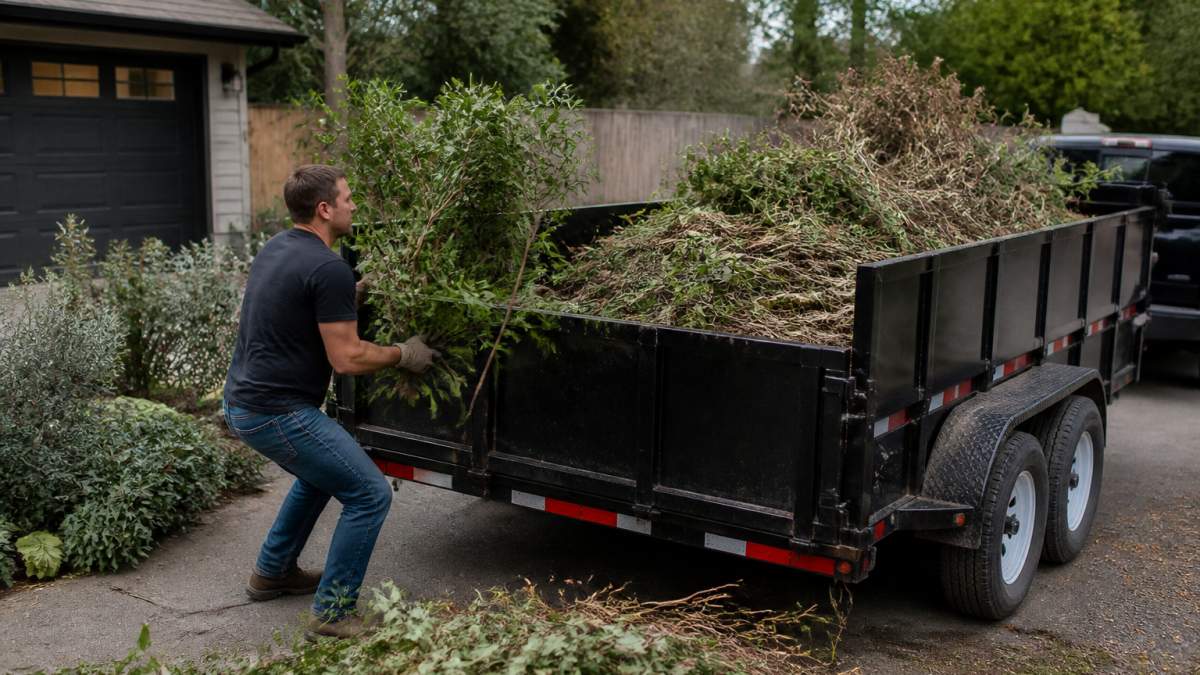
Loading a dump trailer properly prevents accidents, maximizes capacity, and ensures your debris arrives safely at the disposal facility. Follow these steps to load heavy yard waste the right way.
Step 1: Organize Materials by Type and Weight
Start by arranging your debris before you load it into the trailer. Place the heaviest items, logs, stumps, large branches, closest to where you'll load them first. Put lighter material like leaves and grass clippings nearby for final filling.
This organization prevents you from having to move material around inside the trailer. You load once and load right. Heavy items go in first, which we'll cover in the next step.
Step 2: Load Heavy Items First
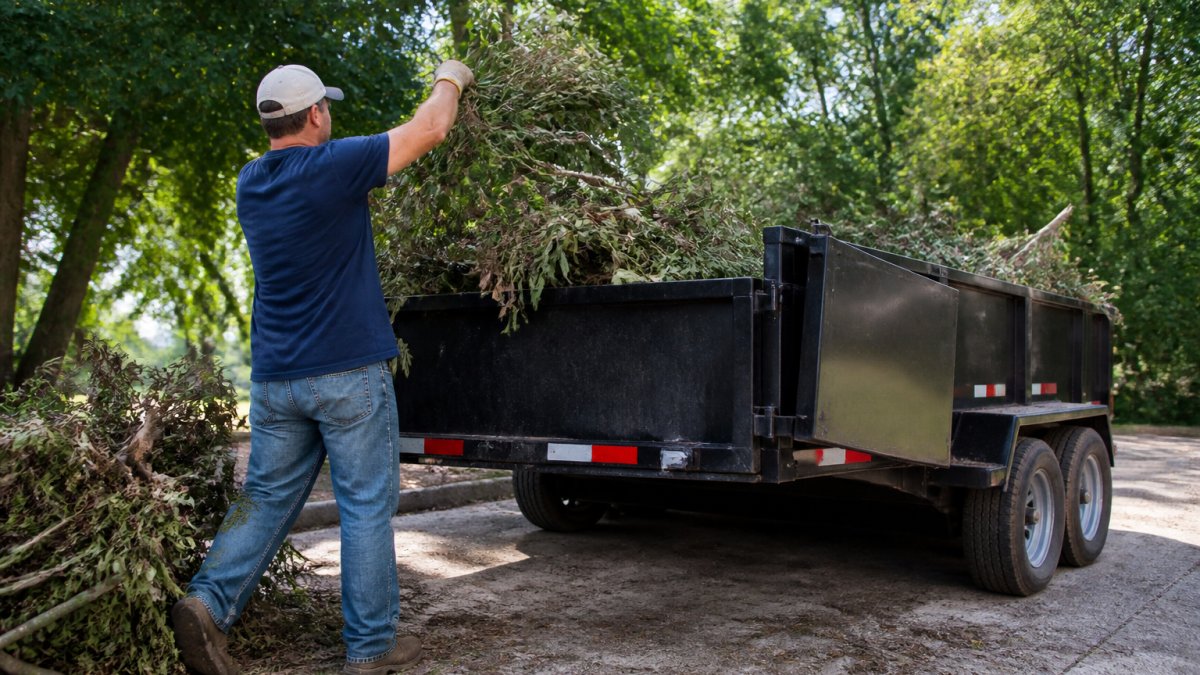
Place your heaviest debris at the front of the trailer, near the axle. This distributes weight properly across the trailer's frame. Heavy material sitting at the back shifts weight away from the towing vehicle, which causes handling problems and potential safety issues during transport.
Load logs and large branches first. Stack them neatly, not haphazardly. A organized stack uses space efficiently and keeps the load stable. Branches should run roughly parallel to each other, not at wild angles.
Once heavy items are in place, fill gaps with medium-weight material like brush and smaller branches. This creates a solid base for lighter material on top.
Step 3: Distribute Weight Evenly
Avoid piling all your heaviest material on one side of the trailer. Spread weight across the width of the trailer bed. A load that's heavy on the left side shifts during transport, unbalances the trailer, and creates handling problems.
Fill the trailer evenly from front to back and side to side. Think of it like packing a suitcase, you want balanced weight, not everything crammed into one corner. This approach keeps the trailer stable and safe on the road.
Step 4: Stack and Secure the Load
Once you've loaded your heavy yard waste, secure it so nothing shifts during transport. Use tie-downs or ratchet straps across the top of the load. Strap material at multiple points, not just one spot.
Stack material as compactly as possible. Loose branches that stick out get caught on obstacles, fall off during turns, or create hazards for other drivers. Tuck branches inward and tie them down firmly.
For very tall loads, make sure nothing extends above the trailer sides by more than a few inches. This prevents material from shifting sideways during transport and keeps your load legal and safe.
Understand Load Capacity and Weight Limits
Every trailer has a maximum payload capacity. Exceeding it damages the trailer, stresses your towing vehicle, and creates safety hazards. Know your limits before you load.
A 12-yard dump trailer typically handles significant weight, but "significant" varies by trailer condition and design. That sounds like a lot until you realize that wet leaves, logs, and construction debris add up fast.
Yard waste density varies dramatically:
- Loose leaves: Light and airy. You can fit a lot of volume before hitting weight limits.
- Wet leaves or grass clippings: Much heavier. Compacted material can double or triple the weight of loose material.
- Branches and brush: Medium weight. Depends on how densely you stack them.
- Logs and stumps: Heavy. A few large logs can consume your entire weight capacity.
- Construction debris: Extremely heavy. Concrete, drywall, and wood framing add weight quickly.
When you rent a trailer from Fill and Dump Trailers, the first ton of waste disposal is included in your rental. That gives you a clear baseline for what you're working with. If your load exceeds that, you'll pay additional disposal fees.
Don't guess at weight. If you're uncertain whether your load is within capacity, contact your rental service before pickup. They can advise based on what you're hauling.
How to Dispose of Large Yard Waste
Once your trailer is loaded, you need a disposal plan. Several options exist for getting rid of large quantities of yard debris.
Municipal yard waste services accept bulk yard debris on scheduled pickup days.
One-time or on-call pickup services offer more flexibility. You call when you're ready, and they schedule a pickup within a few days.
Dumpster or roll-off container rental gives you complete control.
Professional hauling services handle the loading for you. You don't lift anything. They show up, load your debris, and haul it away.
Composting facilities accept yard waste and turn it into mulch or compost. Many communities have municipal composting programs. Check locally for options.
Choose based on your timeline, physical ability, and budget.
Common Mistakes to Avoid When Loading Yard Debris
Learning what not to do prevents injuries, equipment damage, and wasted time. These mistakes happen regularly, and they're all avoidable.
Overloading the trailer. The most common mistake. You think "one more pile" and suddenly you're over capacity.
Putting heavy material on top. This is backwards.
Loading unevenly. All your weight on one side creates balance problems.
Skipping tie-downs. Material shifts during transport. Branches fall out. Loose debris creates hazards for other drivers.
Mixing incompatible materials. Some disposal services accept only yard waste.
Not cutting large branches. A 15-foot branch takes up space inefficiently and sticks out dangerously. Cut it into thirds.
Loading wet material in heavy quantities. Wet debris weighs significantly more than dry.
Ignoring your physical limits. Loading yard waste is hard work.
Loading heavy yard waste doesn't have to be complicated. Our rental includes the first ton of waste disposal, and if you prefer not to load yourself, we offer curbside pickup service. Public involvement in waste management research shows that flexible disposal options reduce stress and improve outcomes for property owners managing significant cleanup projects.
Frequently Asked Questions
How do you safely lift and load heavy yard waste?
Bend at your knees, not your back, and keep heavy items close to your body as you lift. Use tools like a hand truck or dolly for awkward or dense materials. Take breaks to avoid fatigue, which increases injury risk. For extremely heavy items like logs or tree stumps, consider asking for help or using mechanical assistance. Wear work gloves and sturdy boots to protect against cuts and impacts.
What's the best way to load a dump trailer without it shifting during transport?
Place heavier items first and toward the center-front of the trailer to maintain balance. Distribute weight evenly side to side and front to back. Fill gaps with lighter materials like leaves or grass clippings to prevent movement. Secure everything with tie-downs or straps if the load is tall or unstable. Avoid overloading one side, which can cause the trailer to tip or sway on turns.
How much yard waste can a typical dump trailer hold?
A standard 12-yard dump trailer's capacity varies by material density. Leaves and grass clippings are lighter and may fill the space before reaching weight limits. Branches, logs, and soil are heavier and will hit weight restrictions first. Check your trailer's payload capacity before loading to avoid overweight violations and additional disposal fees.
What tools make loading heavy yard waste easier?
A hand truck or dolly moves heavy branches and logs efficiently. A pitchfork or garden fork helps move loose leaves and grass clippings. A wheelbarrow transports smaller loads from your yard to the trailer. Work gloves protect your hands, and a tarp can cover the load for transport. A pry bar helps position awkward items, and a rope or tie-downs secure everything in place.