 how-to
Driveway Safe Dumpster Rental for Home Cleanouts
Table of Contents
- What Makes a Dumpster Rental Driveway Safe
- How to Protect Your Driveway From Dumpster Damage
- Dump Trailer vs Roll-Off Dumpster: Which Is Better for Your Driveway
- What Items Are Prohibited in Residential Dumpsters
- Sizing Your Dumpster Rental and Understanding Weight Limits
- Rental Duration, Delivery, and Pickup: What to Expect
- Pricing, Permits, and Hidden Costs to Avoid
- Frequently Asked Questions
Last Updated: October 4, 2026
What Makes a Dumpster Rental Driveway Safe
A driveway safe dumpster rental is a waste removal solution specifically designed to minimize damage to your property's surface while providing convenient, flexible waste disposal. The key difference lies in the trailer's construction and weight distribution. Dumpster trailers built for driveway safety use rubber-wheeled axles instead of metal tracks, which spread weight more evenly across a larger surface area. This matters because a standard roll-off dumpster concentrates force on narrow contact points, potentially cracking or rutting asphalt and concrete.
At Fill and Dump Trailers, we prioritize this distinction because most homeowners don't realize their driveway can sustain damage from a single rental. A loaded 12-yard dump trailer weighs several tons. Without proper weight distribution, that concentrated pressure breaks down surface integrity over time.
Understanding what makes a rental driveway safe also means knowing your driveway's condition before delivery. Older asphalt or concrete that's already cracked or settling becomes more vulnerable. Newer, well-maintained surfaces handle the load better.
How to Protect Your Driveway From Dumpster Damage
Protecting your driveway requires a combination of preventive measures taken before the trailer arrives. The most effective approach combines professional placement with additional protective barriers. Think of it as layered defense: the trailer itself is the first line of protection, but you control what happens beneath it.
DIY Protection Methods You Can Use
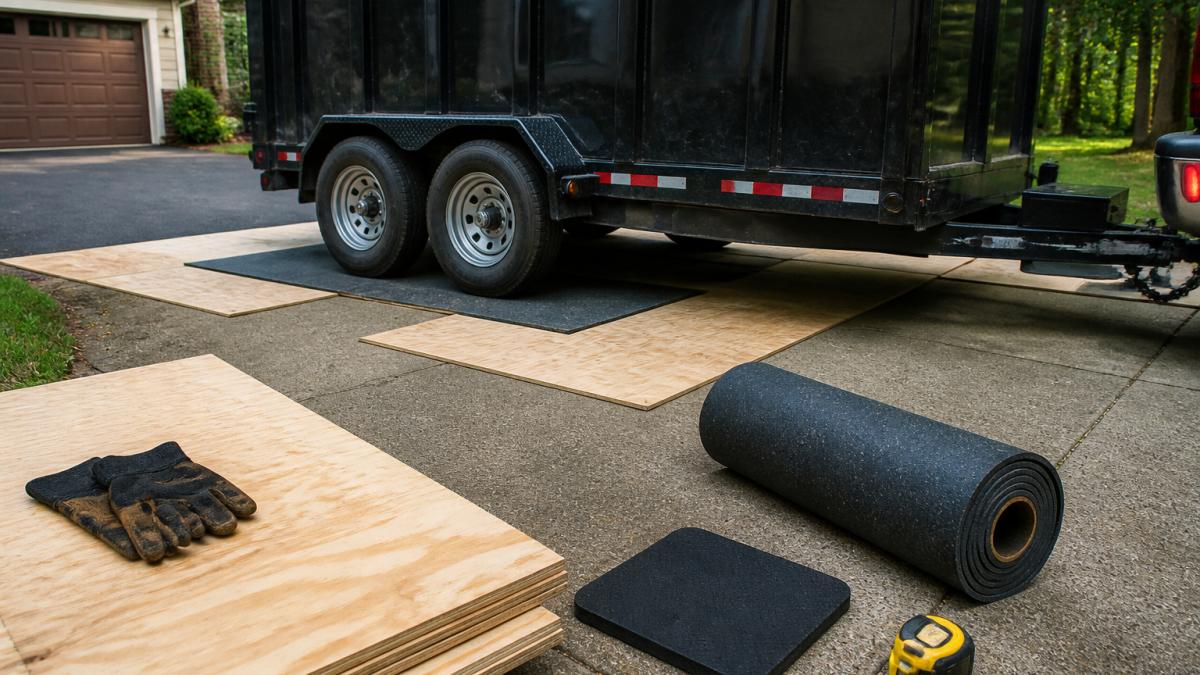
You have several options for protecting your driveway without professional help. The most accessible method is laying down plywood sheets where the trailer will sit. Plywood distributes weight across a wider area than the trailer's wheels alone, reducing pressure on any single spot. A quarter-inch plywood sheet works for most residential driveways; half-inch provides extra protection for older surfaces.
Rubber matting offers another practical solution. Heavy-duty rubber mats designed for industrial use can be purchased or rented from equipment suppliers. These mats are thicker than plywood and provide cushioning in addition to weight distribution. Many homeowners layer both materials, plywood as the base layer with rubber mats on top, for maximum protection.
Cardboard can serve as a temporary barrier, though it's the weakest option. Flattened cardboard boxes placed under the trailer wheels help prevent direct asphalt contact but break down quickly under weight. Use cardboard only if you're certain the trailer won't sit in place for more than a few hours.
The timing of installation matters as much as the material choice. Place protective barriers at least an hour before delivery so they're stable and properly positioned. Mark the placement area clearly with chalk or flags so the delivery driver can position the trailer precisely.
When Professional Placement Matters
Professional placement becomes essential when your driveway shows visible wear, age, or damage. Cracks, soft spots, or areas of settled concrete indicate compromised structural integrity. In these cases, the additional weight of a loaded trailer can accelerate deterioration.
Professional placement also matters if you're unable to install protective barriers yourself. Fill and Dump Trailers offers curbside pickup, meaning the trailer never touches your driveway. Our team positions the trailer on the street or in a designated area, and you load waste into it from your property. This approach works particularly well for homeowners with mobility limitations or those handling heavy items like appliances and construction debris.
Dump Trailer vs Roll-Off Dumpster: Which Is Better for Your Driveway
The choice between these two waste removal options fundamentally changes how driveway protection works. A dump trailer vs roll-off dumpster decision hinges on weight distribution, placement flexibility, and your specific cleanup project.
Roll-off dumpsters are large metal containers lifted onto your driveway by a hydraulic truck. They concentrate weight on four small contact points where the legs rest. A full roll-off dumpster can weigh 15,000 pounds or more. That weight pressing down on four small spots creates significant pressure, often enough to crack asphalt or leave permanent impressions in concrete.
Dump trailers like those we provide distribute weight across multiple wheels and axles. A 12-yard dump trailer spreads the same load across a larger surface area, reducing pressure per square inch. Rubber wheels further cushion the impact compared to the metal legs of a roll-off dumpster.
Dump trailers also offer loading flexibility. You control the loading pace over three days, which means you can work at your own speed without a strict time window.
For driveway safety specifically, dump trailers offer benefits because of weight distribution and flexibility. If your driveway is in questionable condition, a dump trailer rental can be a suitable choice.
What Items Are Prohibited in Residential Dumpsters
Not everything goes in a residential dumpster, and understanding prohibited items prevents rental complications and additional fees. Waste management facilities have strict rules about what they can safely process.
Hazardous Materials You Cannot Dispose Of
Hazardous materials are the primary category of prohibited items. These include paint, solvents, motor oil, batteries, propane tanks, and pesticides. Hazardous waste requires special handling and disposal at licensed facilities. Placing these items in a residential dumpster creates safety risks for our drivers and disposal site workers.
Asbestos-containing materials fall into this category as well. If your home was built before 1980 and you're removing insulation or floor tiles, have materials tested before disposal. Asbestos requires professional removal and specialized disposal.
Radioactive materials, medical waste, and ammunition are absolutely prohibited. These items pose serious legal and safety consequences.
Appliances and Bulky Items With Special Rules
Large appliances like refrigerators, air conditioners, and washing machines require special handling because they contain refrigerants or other regulated substances. Many facilities charge additional fees for appliance disposal or require separate drop-off.
Mattresses and furniture are often restricted or charged at premium rates because they take up significant space relative to their weight. Some facilities ban them entirely.
Electronics including computers, televisions, and monitors contain materials that require specialized recycling. Disposal site regulations vary by location, so confirm acceptance before loading.
When you request a rental from Fill and Dump Trailers, we provide a complete list of prohibited items specific to your local disposal facility.
Sizing Your Dumpster Rental and Understanding Weight Limits
Selecting the right dumpster size and understanding weight capacity prevents overage fees and ensures efficient waste removal. A 12-yard dump trailer accommodates most residential cleanouts, but project scope determines the actual need.
A 12-yard trailer holds approximately 4.5 cubic yards of compacted waste. For context, this equals the contents of a typical garage or basement cleanout.
Weight limits matter more than cubic yardage for many projects. Fill and Dump Trailers includes the first ton of waste disposal in every rental, which covers approximately 2,000 pounds. Projects exceeding this weight incur overage fees calculated by the ton.
Heavy items like concrete, brick, and soil approach weight limits quickly. A single cubic yard of concrete weighs roughly 4,000 pounds. If you're removing a patio or driveway section, weight becomes the limiting factor, not space. Conversely, light items like foam insulation or cardboard fill the trailer by volume before hitting weight limits.
Calculate your project's weight by estimating item categories. Furniture and household items average 500-1,500 pounds total. Construction debris from a bathroom remodel typically runs 2,000-4,000 pounds. Landscape waste varies dramatically based on whether it's grass clippings (light) or tree stumps (heavy).
When requesting your rental, describe your project in detail.
Rental Duration, Delivery, and Pickup: What to Expect
Understanding the rental timeline and service process prevents scheduling conflicts and unexpected charges. Fill and Dump Trailers provides flexible three-day loading periods.
Flexible Loading Periods and Overage Fees
Your three-day rental period begins on delivery day and extends through the third calendar day. This flexibility accommodates real-world project timelines. A garage cleanout that takes one person 16 hours of work spreads across three days without pressure or rushing.
If you need the trailer longer than three days, overage fees apply. Contact us before your rental period ends if you need additional time.
Loading flexibility also means you're not charged for partial loads. If your project finishes in one day, you still have two additional days included in your rental.
Curbside Pickup and Additional Services
Curbside pickup means the trailer never touches your driveway. Our driver positions the trailer on the street or in a designated area, and you load waste from your property into it. This service eliminates driveway protection concerns entirely and works well for homeowners with mobility limitations.
Additional services include item removal and loading assistance. If you cannot physically load heavy items like appliances or construction debris, our team can handle that work.
Request your preferred delivery window when you submit your rental request.
Pricing, Permits, and Hidden Costs to Avoid
Understanding what's included in your rental and what costs extra helps you make informed decisions.
Fill and Dump Trailers includes the first ton of waste disposal in every rental fee. This covers most residential projects without additional charges. Projects exceeding one ton pay overage fees calculated per ton. Ask about current pricing and overage rates when requesting your rental, rates vary by location and disposal facility.
Some municipalities require permits for dumpster placement on residential property. We can advise whether your area requires permits and help you understand the process.
Hidden costs emerge when prohibited items end up in your load. Disposal facilities charge premium fees or refuse entire loads containing banned materials. Confirm what's prohibited before loading to avoid these surprises.
Overage fees represent the most common unexpected cost. Projects that underestimate weight or volume end up paying per-ton charges at drop-off.
Some providers charge separate fees for delivery confirmation, or extended rental periods. We include these services in our standard offering, but always confirm what's included when comparing rental options.
Protecting your driveway during a major cleanout doesn't require expensive specialized equipment or complicated procedures. The combination of proper trailer selection, protective barriers, and accurate project planning ensures your driveway emerges undamaged. Fill and Dump Trailers makes this process straightforward with driveway-safe 12-yard dump trailers, flexible three-day loading periods, and transparent pricing that includes the first ton of disposal. When you're ready to tackle your cleanout project, submit a request and let our team help you choose the right solution for your specific driveway and waste removal needs.
Frequently Asked Questions
Will a dumpster rental damage my driveway?
A driveway safe dumpster rental minimizes risk when placed correctly. The weight is distributed across rubber-wheeled trailers or containers positioned on protective materials. Older or thin driveways are more vulnerable to cracking. Using plywood, rubber mats, or requesting curbside placement protects your surface. Ask your rental company about their driveway protection practices before delivery.
What is the difference between a dump trailer and a roll-off dumpster for driveway safety?
Dump trailers use rubber wheels and smaller footprints, making them generally more driveway-friendly than roll-off dumpsters, which have metal wheels and larger contact areas. For residential driveways, especially older ones, dump trailers can pose less risk of damage due to their weight distribution and maneuverability.
What items cannot go in a residential dumpster?
Hazardous materials like paint, batteries, oils, refrigerants, and pesticides are prohibited. Electronics, appliances with Freon, tires, and asbestos also have restrictions. Some facilities limit yard waste, concrete, or roofing materials. Check with your rental provider about their specific prohibited items list, as rules vary by disposal site. Many items require separate disposal arrangements or fees.
How much does driveway safe dumpster rental cost, and what's included?
Pricing depends on trailer size, rental duration, your location, and the amount of waste. Most providers include the first ton of disposal in their rental fee, with overage charges for additional weight. Curbside pickup services may have separate fees. Contact Fill and Dump Trailers for a quote based on your specific project needs and timeline.