 comparison
Dump Trailer vs Roll-Off Dumpster: Which Fits Your Project
Table of Contents
- Dump Trailer vs Roll-Off Dumpster: Core Differences
- Capacity and Load Size: What You Can Actually Fit
- Weight Limits and Disposal Restrictions
- Dump Trailer Rental: Flexibility and Convenience
- Understanding Dump Trailer Rental Cost vs Roll-Off Pricing
- Which Option Fits Your Project Type
- Frequently Asked Questions
Last Updated: October 14, 2026
Dump Trailer vs Roll-Off Dumpster: Core Differences
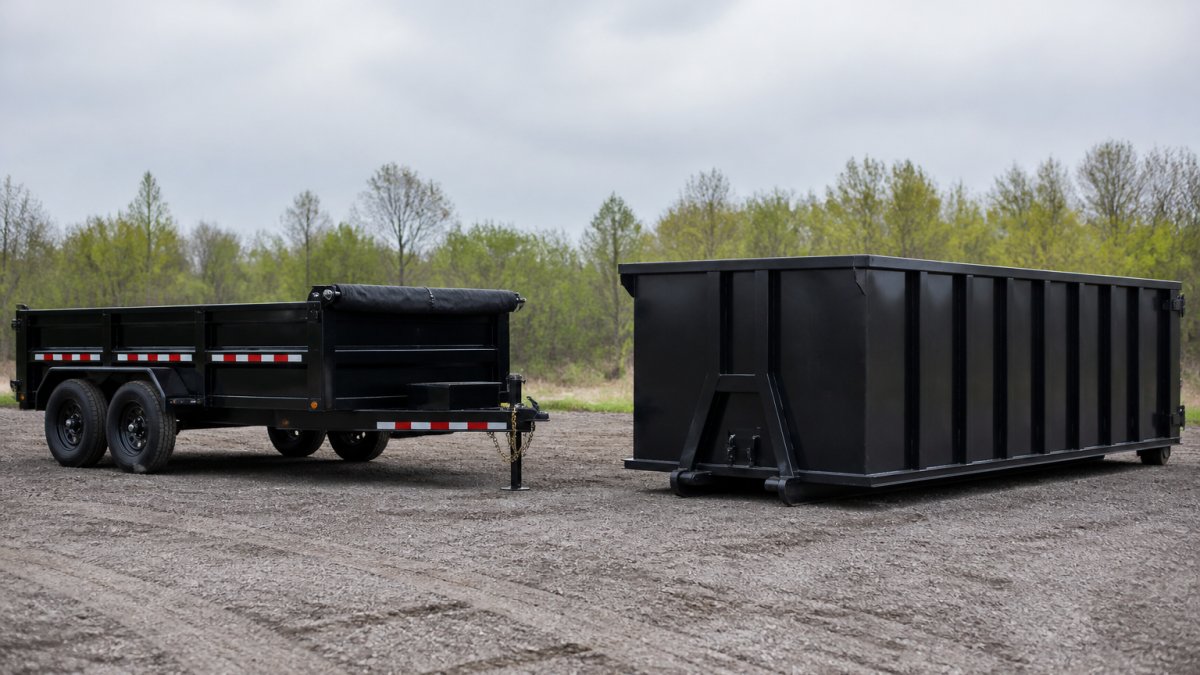
A dump trailer vs roll-off dumpster comparison starts with one question: who controls the loading and unloading? That shapes cost, convenience, capacity, and fit.
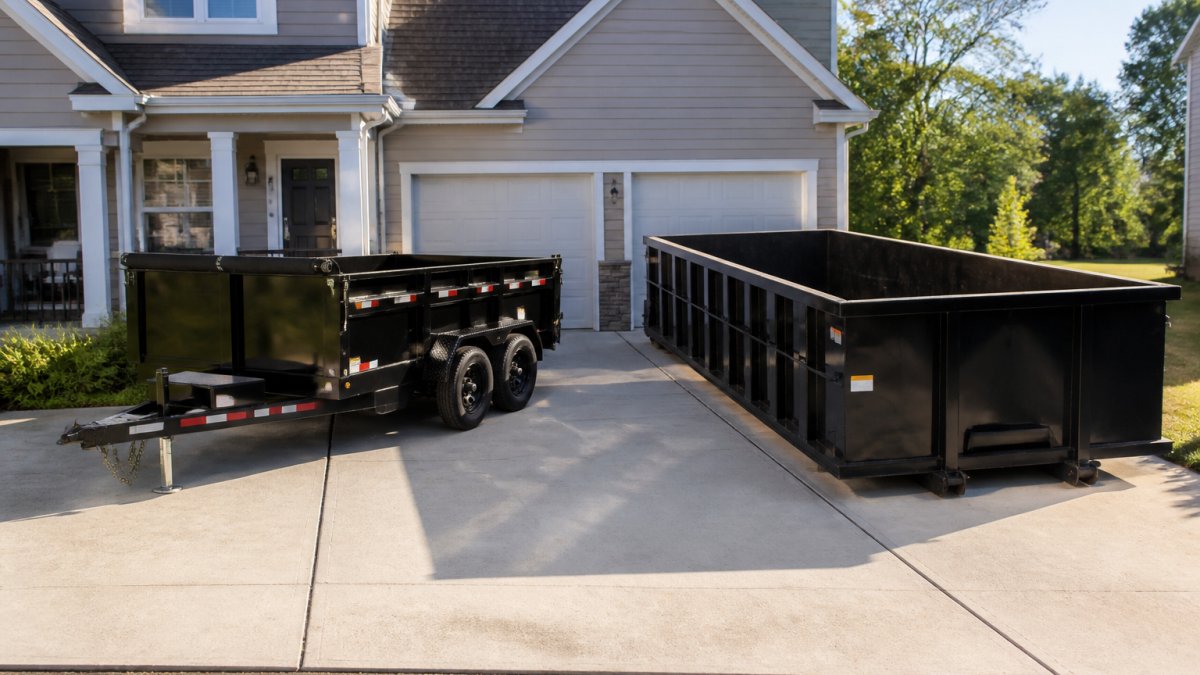
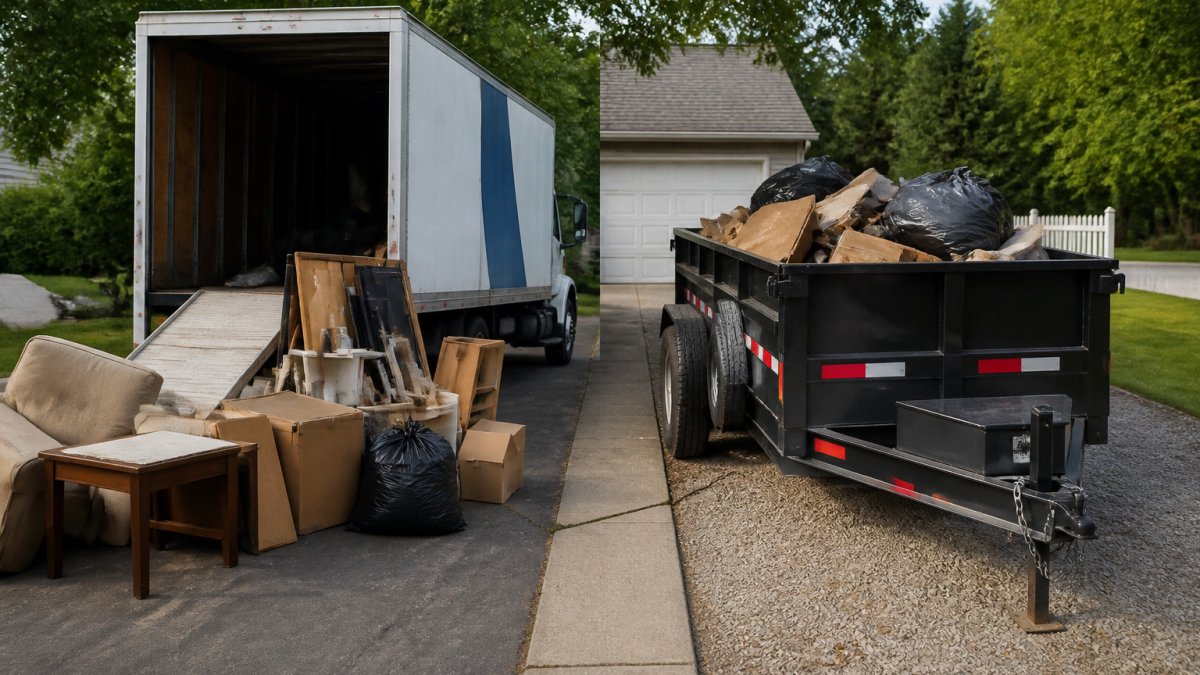
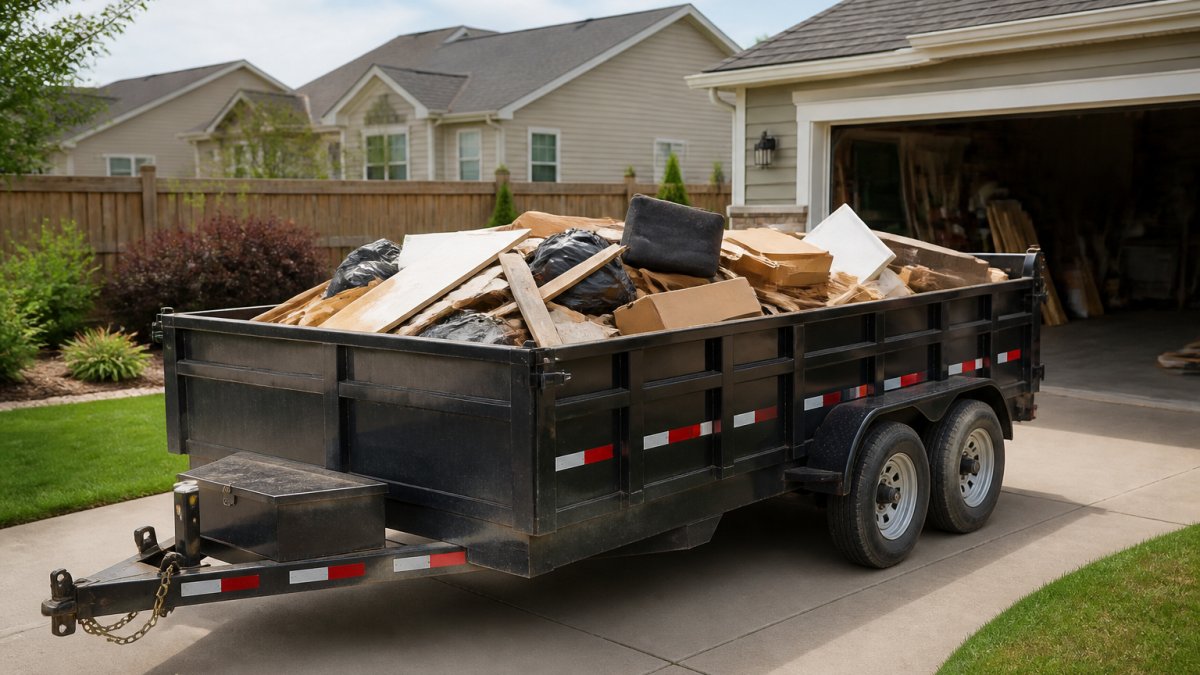
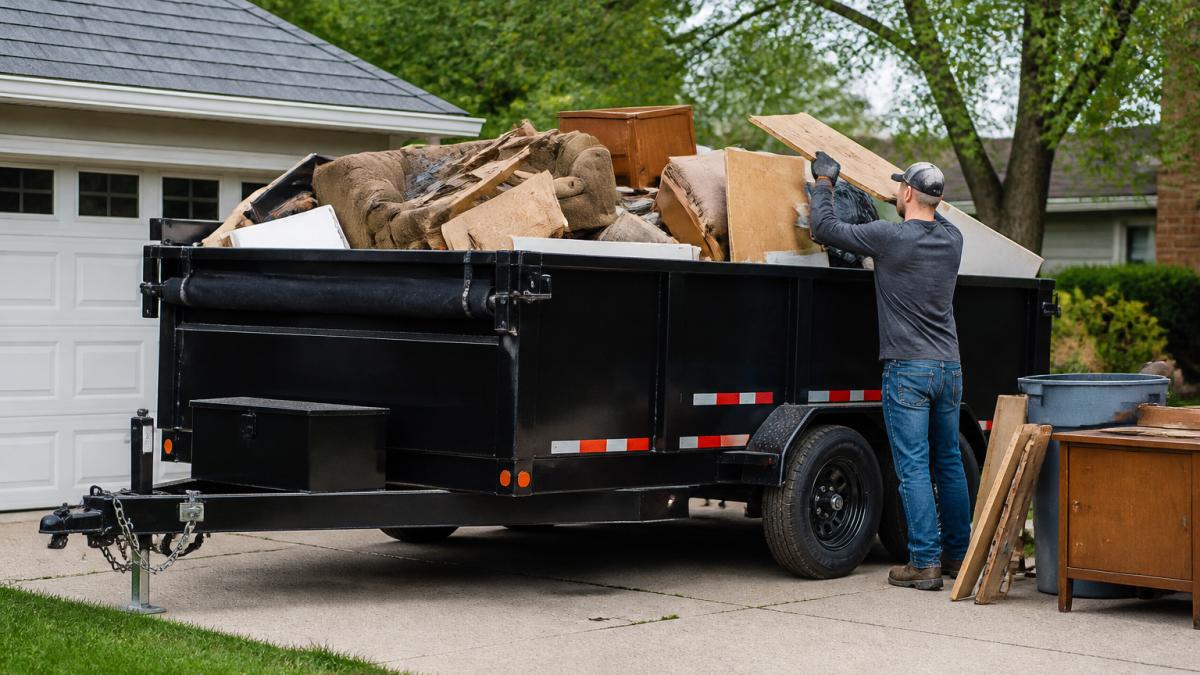
A dump trailer is a portable container you rent and load yourself over a set period (typically three days).
In practice: a dump trailer sits in your driveway for three days while you load at your own pace, then you call for pickup.
The choice hinges on three factors: how much waste you have, how fast it must go, and whether you can load it.
Capacity and Load Size: What You Can Actually Fit
Capacity is where the two options diverge most.
Twelve cubic yards is roughly a 10-by-10 room filled floor-to-ceiling. A full pickup bed holds about 1.5 cubic yards, so it takes eight truck loads to fill a dump trailer.
Roll-off dumpsters come in 14, 16, 20, and sometimes 30 cubic yards. The extra capacity matters most for whole-house renovations removing drywall, flooring, framing, or roofing.
The practical question is what you're disposing of.
Weight limits add another layer. Most dump trailers handle 1 to 2 tons; roll-off dumpsters handle 3 to 5 tons.
Weight Limits and Disposal Restrictions
Weight, not volume, most often surprises people. A 12-cubic-yard dump trailer and a 20-cubic-yard roll-off dumpster can both be "full" at wildly different weights, and the legal payload limit is separate from cubic capacity. Understanding that prevents overage fees, rejected loads, and unsafe towing.
Start with the two numbers that govern every load:
- Volume capacity, how much space the debris occupies (cubic yards).
- Payload limit, how much the load can legally weigh (tons), set by the trailer's GVWR minus its empty weight, or by the hauler's disposal contract for a roll-off.
A container can be half-full by volume and already over its payload limit.
What common debris actually weighs
Use these as planning estimates, moisture, compaction, and material mix shift the numbers:
- Concrete and asphalt: roughly 2,000-4,000 lb per cubic yard. A single cubic yard can approach or exceed a small trailer's entire payload.
- Dirt, gravel, and sand: roughly 2,000-3,000 lb per cubic yard.
- Roofing shingles: roughly 1,000-1,500 lb per cubic yard.
- Drywall: roughly 500-800 lb per cubic yard.
- Framing lumber and wood: roughly 300-500 lb per cubic yard.
- Household junk and furniture: highly variable, often 150-400 lb per cubic yard.
- Yard waste and branches: roughly 200-400 lb per cubic yard.
- Appliances: heavy per unit but low in volume, a few units rarely threaten a payload limit.
The takeaway: a trailer rated for 1-2 tons fills with concrete after roughly one cubic yard, but with furniture and boxes only when physically full.
Contamination rules change the disposal path
Most landfills classify loads as clean or mixed. A clean load, one material type, no trash, often goes to a recycling facility at a lower tipping fee. A mixed load goes to the landfill at a higher rate, and a contaminated load can be rejected outright.
Common contamination triggers:
- Concrete with rebar, plastic, or wood attached
- Yard waste bags containing trash or plastic
- Metal loads with non-metal attached
- Clean wood mixed with painted, treated, or composite material
A rejected load means you pay for the trip and still sort and re-haul it.
Materials that need a different facility
Some items cannot go to a standard landfill at all and require a specialty drop-off, a household hazardous waste event, or a retailer take-back program:
- Tires, usually banned from landfills; go to a tire recycler.
- Electronics (TVs, monitors, computers), many states restrict landfill disposal; use an e-waste recycler.
- Appliances with refrigerant (refrigerators, AC units), refrigerant must be recovered before disposal.
- Paint, batteries, oil, propane tanks, chemicals, asbestos, household hazardous waste or a licensed abatement contractor.
- Yard waste, often routed to a composting facility rather than the landfill.
Who screens the load
A roll-off service screens the load at pickup and can refuse prohibited items, leaving you to remove them. A dump trailer rental puts that on you, you drive to the scale and absorb a rejected load. Before renting either, confirm what your local facility accepts and whether disposal is included.
Dump Trailer Rental: Flexibility and Convenience
The dump trailer model centers on one thing: you control the timeline.
This matters most for household cleanouts.
The financial benefit is direct: you pay for what you rent, not idle equipment. Dump trailer rental cost stays predictable because you rent equipment, not service labor.
Driveway safety is another advantage. A dump trailer's footprint is smaller than a roll-off dumpster and designed to sit on residential driveways without damaging asphalt or concrete.
Curbside pickup adds convenience: if you can't load the trailer or items are too heavy, the provider loads and hauls it away.
Understanding Dump Trailer Rental Cost vs Roll-Off Pricing
A dump trailer rental's sticker price and a roll-off dumpster's aren't comparable: one is an equipment rate, the other a bundled service rate. To compare fairly, build a total cost model with every line item your project triggers.
The line items that belong in the comparison
For each option, list and estimate:
- Base rental or container fee, the quoted rate for the rental period or the container size.
- Delivery and pickup, often bundled, sometimes charged separately, sometimes free within a radius.
- Included disposal allowance, how many tons (or cubic yards) are covered before overage kicks in.
- Overage / tonnage fees, the per-ton charge once you exceed the allowance.
- Special-material surcharges, concrete, dirt, shingles, tires, and appliances frequently carry a higher rate.
- Extra rental days, daily charges if the project runs long.
- Fuel and towing cost, only if you tow the trailer yourself; factor in the round trip to the disposal site.
- Labor, your own time if you load, or hired labor if you don't.
- Permits, some jurisdictions require a permit to place a container on a public street or right-of-way.
- Property protection, plywood under the container or trailer, plus any repair if damage occurs.
- Second trip, the cost of a second rental or haul if the first load fills before the project is done.
A worked example (illustrative numbers)
Assume a mid-size kitchen remodel producing about 10 cubic yards of mixed debris weighing roughly 1.5 tons.
Dump trailer path:
- Base rental (3-day window): $350
- Delivery and pickup: included
- Included disposal: first ton
- Overage for the extra 0.5 ton: $60
- Fuel and towing for one round trip: $40
- Labor: your own time
- Estimated total: about $450
Roll-off dumpster path:
- 15-yard container rental: $450
- Delivery and pickup: included
- Included disposal: 3 tons
- Overage: $0 (load is under the allowance)
- Fuel and towing: $0 (provider handles it)
- Labor: your own time to load, provider hauls
- Estimated total: about $450
Here the two options land close together. The gap opens when the load gets heavier or the project runs longer.
Where the totals diverge
- Heavy material. Concrete, dirt, and shingles blow past a trailer's included tonnage quickly. A roll-off's higher weight allowance absorbs the load without a per-ton penalty, which can flip the math in its favor even though the base rate is higher.
- Long timelines. A multi-week renovation that outlasts a trailer's rental window triggers daily charges. A roll-off's rental period is often longer, so the container can sit through the whole project at one price.
- Multiple trips. If the debris exceeds the trailer's volume, you pay for a second rental and a second round of fuel. A larger roll-off handles it in one container.
- Self-hauling. If you tow the trailer yourself, you save the delivery fee but add fuel, time, and the risk of a rejected load at the scale.
- Permits and placement. A container on a public street may need a permit; a trailer in your own driveway usually does not.
How to run your own numbers
- Estimate the volume of debris in cubic yards (use the material weights above to sanity-check tonnage).
- Estimate the weight in tons.
- Compare that weight to each option's included allowance.
- Add the overage charge for any excess.
- Add delivery, fuel, labor, permits, and property protection.
- Add the cost of a second trip if volume or weight exceeds one load.
The option with the lower total, not the lower base rate, is the cheaper choice.
Which Option Fits Your Project Type
The right choice depends on what you're disposing of and how much control you need.
Choose a dump trailer for:
- Household cleanouts (attics, garages, basements)
- Seasonal yard waste and landscaping debris
- Minor home renovations with manageable debris
- Projects where you have time to load gradually
- Situations where you want to avoid hiring labor
- Properties with limited driveway space (the smaller footprint fits better)
Choose a roll-off dumpster for:
- Major construction or demolition projects
- High-volume waste that exceeds 12 cubic yards
- Heavy materials (concrete, metal, framing lumber)
- Projects where you need the waste gone quickly
- Situations where you want the service provider to handle loading
- Commercial or multi-unit property cleanouts
An estate cleanout after a move or downsizing usually fits a dump trailer: you have time, the waste is mixed, and the volume rarely exceeds 12 cubic yards.
A basement waterproofing project with concrete removal pushes weight limits, so a roll-off dumpster's higher capacity and weight allowance makes sense.
Physical ability also factors in. If you can load the trailer yourself, a dump trailer saves money and adds flexibility.
Fill and Dump Trailers specializes in dump trailer rentals that simplify household cleanouts.
Frequently Asked Questions
What is the main difference between a dump trailer and a roll-off dumpster?
A dump trailer is a smaller, towed container you load yourself over several days, while a roll-off dumpster is a larger stationary bin that typically requires a service provider to deliver and pick up. Dump trailers offer flexibility and driveway access; roll-off dumpsters provide greater capacity for bigger projects. The choice depends on your project size, loading ability, and available space.
Is a dump trailer cheaper than a roll-off dumpster?
Dump trailers can be more cost-effective for smaller, shorter-term projects because you control the loading timeline and often pay for disposal by weight rather than flat rental fees. Roll-off dumpsters may cost less per project for large volumes of debris because their higher capacity reduces the need for multiple trips. Pricing depends on quantity, dates, and delivery distance; contact Fill and Dump Trailers for a current quote tailored to your project.
What projects work best for a dump trailer rental?
Dump trailers excel for household cleanouts (attics, garages, basements), seasonal yard waste removal, small to medium construction debris, and apartment complex move-outs. The three-day loading period lets you work at your own pace without rushing. They're ideal when you have a driveway or accessible placement area and don't need to haul extremely heavy materials like concrete or soil in large quantities.
What weight limit should I expect with a dumpster rental?
Weight limits vary by trailer and dumpster type. Most dump trailers include a certain tonnage in the rental (Fill and Dump Trailers includes the first ton of waste disposal), with overage charges for additional weight. Roll-off dumpsters typically have weight restrictions ranging from 2 to 10 tons depending on the container size. Always confirm the weight limit and overage rates before booking to avoid surprise fees.