 how-to
How to Avoid Driveway Damage During Renovation
Table of Contents
- How to Avoid Driveway Damage During Renovation: What You'll Need
- Weight Limits for Residential Driveways: What Your Surface Can Handle
- Plywood Under Dumpster for Driveway Protection: Step-by-Step
- Driveway Safe Dumpster Rental for Home Projects: What to Look For
- Common Causes of Driveway Damage During Renovation
- Post-Renovation Damage Assessment and Repair
- Seasonal Maintenance and Preventative Care After Renovation
- Conclusion: Protecting Your Driveway Investment
- Frequently Asked Questions
Last Updated: October 9, 2026
How to Avoid Driveway Damage During Renovation: What You'll Need
The best way to avoid driveway damage during renovation is to spread heavy loads across the surface, keep equipment off the slab when you can, and protect the concrete or asphalt before the first dumpster lands.
A 12-yard dump trailer can weigh several tons once it is loaded. That weight sits on a small footprint, and old concrete does not forgive a mistake.
Here is what you will need before work starts:
- Plywood sheets, at least 3/4 inch thick
- Corrugated plastic or red rosin paper for lighter protection
- Rubber or composite mats for heavy machinery
Weight Limits for Residential Driveways: What Your Surface Can Handle
Most residential driveways handle a 4,000-6,000 lb passenger vehicle without complaint. A loaded dumpster or a concrete truck is a different order of magnitude, and the difference is not just total weight, it is pressure, measured in pounds per square inch (PSI). Two loads of equal weight can do wildly different damage depending on how many square inches touch the slab.
Concrete vs. Asphalt Weight-Bearing Capacity
Concrete and asphalt fail under load in different ways, so the safe PSI ceiling is not the same for both.
- Concrete: A typical residential slab is 4 inches thick, poured over a compacted gravel base. Most practitioners treat a 4-inch slab as comfortable with sustained loads up to roughly 40-50 PSI at the contact point, and a 5-6 inch slab with a solid base can take more. Thin slabs, slabs poured over soft or poorly compacted soil, and slabs with existing hairline cracks have far less margin.
- Asphalt: Asphalt is viscoelastic, it stiffens in cold weather and softens in heat. On a 90°F day, a point load that would be fine in January can rut the surface in an afternoon. Asphalt driveways are generally more sensitive to sustained point loads than a properly built concrete slab of similar thickness.
- Pavers: Interlocking pavers on a sand or polymeric-sand bedding are the most vulnerable to point loads. A heavy wheel can displace individual units and shift the bedding, which is why pavers almost always need a rigid overlay (plywood or mats) under any heavy equipment.
The American Concrete Institute guidance on slab design explains how thickness, reinforcement, and sub-base strength drive load capacity. A thicker slab with a solid aggregate base carries far more than a thin one poured over soft soil.
How to Calculate Load Distribution for Heavy Equipment
Load distribution is the practice of spreading weight across a wider area so no single point takes the full force.
Step 2, Find the contact area. Measure the footprint of each wheel or support that touches the ground, in square inches.
Step 4, Spread the load. Plywood, rubber mats, and outrigger pads increase contact area.
A quick worked example:
- Loaded trailer: 12,000 lb
- Four tires, 40 sq in each: 160 sq in total
- Bare-slab pressure: 12,000 ÷ 160 = 75 PSI
That drop from 75 PSI to under 40 PSI is often the difference between a clean pickup and a cracked slab.
When to Call a Pro Before You Place a Load
If your driveway is older, has visible cracks, drains poorly, or you are planning to park a crane, concrete truck, or anything over roughly 10,000 lb, have a local engineer or paving contractor look at it first. The cost of an inspection is trivial next to a slab replacement.
Plywood Under Dumpster for Driveway Protection: Step-by-Step
Plywood under a dumpster for driveway protection is the single most effective step you can take. It spreads weight, cushions impact, and gives you a sacrificial surface that takes the scrapes instead of your concrete.
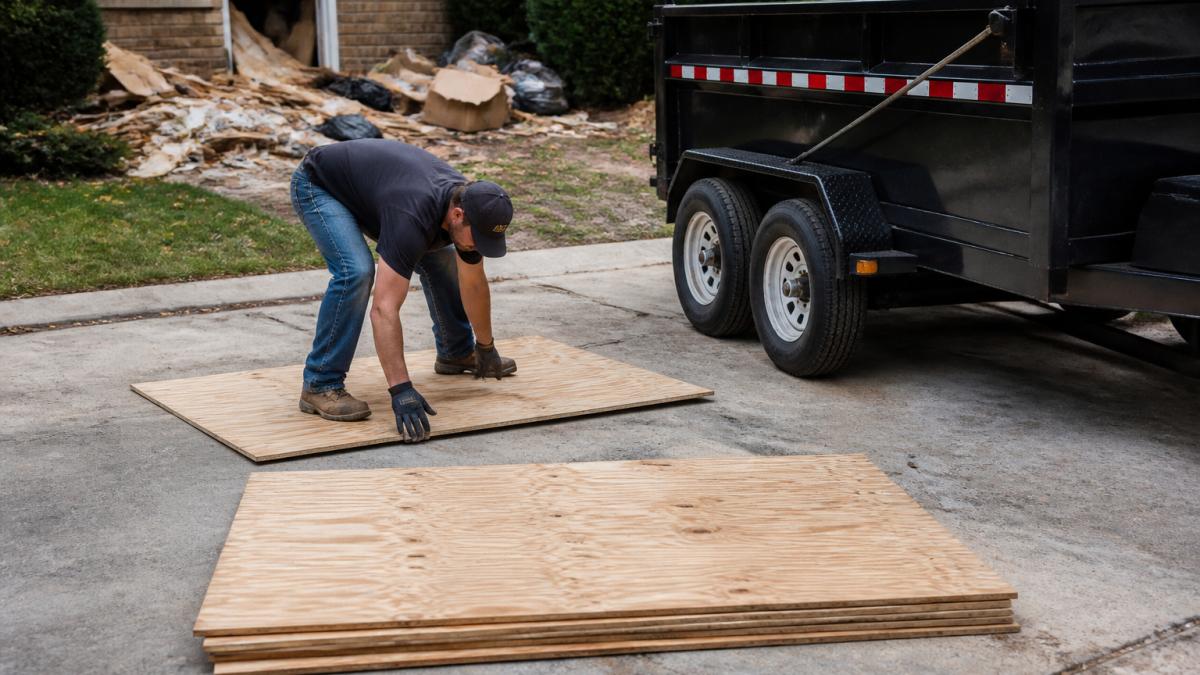
Here is how to do it:
- Sweep the driveway clean of grit and debris.
- Lay down red rosin paper or corrugated plastic as a base layer.
- Place 3/4-inch plywood sheets over the base, tight against each other.
- Tape the seams so sheets do not shift.
- Position the trailer or dumpster so wheels rest on the plywood, not the bare slab.
Layering Materials for Maximum Impact Mitigation
One layer helps. Two layers help more. A common approach is to pair a soft base layer with a rigid top layer.
- Base layer: red rosin paper or corrugated plastic for waterproofing.
- Middle layer: plywood underlayment to spread the load.
- Top layer: rubber mats where machinery will move.
Driveway Safe Dumpster Rental for Home Projects: What to Look For
A driveway-safe dumpster rental keeps the weight off your slab and the debris off your lawn. The key is matching the container to your surface and your load, and the right match looks different on concrete, asphalt, and pavers.
What to Look For in the Rental Itself
- Wheel-based or roll-off with a protective underlay. Trailer-style containers roll on tires; skid-steer-dragged boxes scrape. If the hauler drags the box, you need plywood under the entire path, not just the resting spot.
- A footprint that fits your driveway width with room to spare. Measure the narrowest point, gates, mailbox posts, and curbs all count.
- Clear delivery and pickup windows. A container that sits an extra week is an extra week of load on your slab.
Material-Specific Protection: Concrete, Asphalt, and Pavers
Most generic advice treats every driveway the same. It should not. Here is what each surface actually needs before a dumpster lands.
Concrete
- 3/4-inch plywood under every wheel and support point, seams taped.
- Red rosin paper or corrugated plastic between plywood and slab to stop grit from grinding the surface.
- Rubber mats at the delivery path if the truck will roll across the slab.
Asphalt
- Plywood plus a rigid mat, because asphalt softens in heat and point loads rut it.
- Schedule delivery in the morning on hot days, before the surface reaches peak temperature.
- Never let a loaded container sit in one spot for days in summer, rotate or shorten the rental window.
Pavers
- Rigid plywood over the entire footprint, not just under the wheels, pavers displace individually.
- Avoid wheeled containers that pivot on the surface; the turning motion shifts the bedding.
- If the project is heavy, consider a driveway-adjacent placement on grass or gravel instead.
Matching Container Size to Your Project
A 12-yard trailer is a common sweet spot for a single-room renovation or a garage cleanout. Larger projects, a full kitchen gut, a roof tear-off, or a whole-home remodel, often need multiple pulls or a larger roll-off, which means more load cycles on your driveway. Plan the number of deliveries and pickups before you commit, because every truck pass is another chance for damage.
| Feature | Why It Matters | What to Check |
|---|---|---|
| Wheel-based trailer | Rolls instead of dragging | Wheels rest flat on surface |
| Compact footprint | Fits standard driveways | Measure width first |
| Included first ton | Predictable disposal terms | Ask about overage rates |
| Multi-day loading | No rush to finish | Confirm the time window |
| Rubber-tired delivery | Protects surface on arrival | Ask what equipment is used |
Putting a Protection Clause in the Rental Agreement
Ask the hauler to put driveway protection in writing: plywood under the container, rubber-tired delivery equipment, and a stated policy for who pays if the surface is damaged. A one-paragraph clause is standard practice and costs nothing to request.
Common Causes of Driveway Damage During Renovation
Most driveway damage during renovation comes from three things: too much weight in one spot, dragging equipment across the surface, and debris left to sit. Each one is preventable.
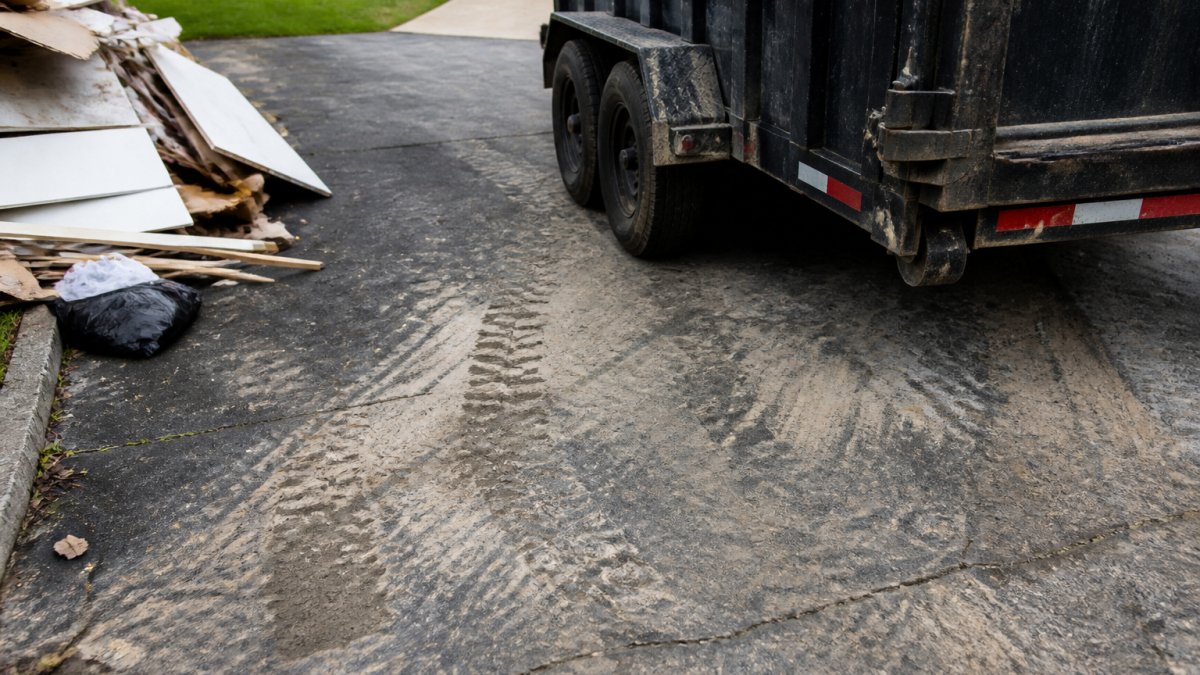
Heavy machinery is the worst offender. A loaded dumpster concentrates weight on a small area. Dragging a container instead of rolling it scrapes the surface. And construction debris left in place can stain or etch concrete over time.
Surface Abrasion and Sub-Base Compaction Issues
Surface abrasion happens when something hard drags across the top layer. It leaves scratches and worn patches that worsen with traffic.
Sub-base compaction is the opposite problem. The soil under the slab compresses under heavy load, and the slab loses support. That leads to hairline fractures that spread into structural cracks.
- Watch for new scratches after equipment moves.
- Check for sinking or soft spots near the trailer.
- Note any cracks wider than a pencil line.
Post-Renovation Damage Assessment and Repair
Assess your driveway as soon as the equipment leaves. Catching damage early keeps a small repair from becoming a full replacement.
Walk the surface and note:
- Hairline fractures and structural cracks
- Stains from oil, paint, or chemicals
- Ruts or depressions in asphalt
For minor hairline fractures, a concrete sealer can stop water from getting in and freezing. For deeper structural cracks, call a pro. The Federal Highway Administration pavement guidance covers how cracks form and why sealing early matters.
Seasonal Maintenance and Preventative Care After Renovation
Preventative maintenance keeps your driveway strong long after the project ends. The freeze-thaw cycle is the biggest threat in cold months. Water seeps into cracks, freezes, expands, and widens them.
A simple routine protects your investment:
- Seal cracks before winter arrives.
- Clean debris off the surface after storms.
- Keep drainage paths clear so water does not pool.
Sealcoating asphalt and waterproofing concrete both slow asphalt degradation and surface abrasion. The EPA guidance on stormwater and runoff notes that managing drainage protects both your property and local water.
Conclusion: Protecting Your Driveway Investment
Driveway damage is almost always avoidable with the right prep. Spread the load, protect the surface, and inspect after the work is done.
Fill and Dump Trailers makes this easy. Our driveway-safe 12-yard dump trailers include the first ton of waste disposal and a flexible three-day loading period.
Submit Request to get started with Fill and Dump Trailers and protect your driveway while you clear the clutter.
Frequently Asked Questions
How do I protect my driveway from heavy dumpster weight?
Place plywood underlayment or corrugated plastic sheets across the entire footprint where the dumpster or trailer will sit. This spreads the load distribution and prevents surface abrasion. For concrete driveways, use 3/4-inch plywood. For asphalt, add a layer of red rosin paper between the plywood and the surface to prevent scratching. Always verify your driveway's weight-bearing capacity before delivery, and ask the rental company about rubber-wheeled options, which cause less impact than steel-wheeled containers.
What is the best way to distribute weight on a concrete driveway?
Position heavy containers or trailers on the strongest part of the driveway, typically near the garage slab rather than the apron or edges. Use load-bearing materials like plywood to spread the weight across a wider area. Avoid placing concentrated loads directly over expansion joints or structural cracks. If using a dump trailer, keep the load balanced and never exceed the trailer's rated capacity. Spreading the weight reduces the risk of hairline fractures developing into structural cracks.
Are rubber-wheeled dump trailers better for driveways than steel-wheeled dumpsters?
Rubber-wheeled dump trailers generally cause less impact mitigation issues because the tires absorb some of the load and roll smoothly across the surface. Steel-wheeled dumpsters can dig into asphalt during delivery and pickup, especially in summer heat when the surface softens. Rubber wheels also reduce surface abrasion and are easier on driveway sealers. If your driveway is older or has existing hairline fractures, a rubber-wheeled trailer is the safer choice for temporary flooring and debris removal.
How can I tell if heavy equipment has damaged my driveway sub-base?
Look for new structural cracks wider than 1/4 inch, depressions that hold water, or sections that feel spongy when walked on. These signs suggest sub-base compaction failure. Also check for misaligned expansion joints or crumbling edges. If you notice these issues after renovation, document them with photos and contact the rental company promptly. Early repair, such as crack filling or sealcoating, prevents freeze-thaw cycle damage from making the problem worse.