 how-to
How to Calculate Waste Weight for Dumpsters
Table of Contents
- What You'll Need Before You Calculate Waste Weight
- Step 1: How to Estimate Cubic Yards for a Dumpster
- Step 2: Average Weight of Construction Debris per Cubic Yard
- Step 3: Apply the Conversion Factor to Get Tonnage
- How Moisture and Mixed Loads Change Debris Density
- What Happens If a Dumpster Is Overweight?
- How to Avoid Overage Fees and Manage Load Distribution
- Conclusion
- Frequently Asked Questions
Last Updated: October 2, 2026
What You'll Need Before You Calculate Waste Weight
Before you can calculate waste weight for dumpsters, gather four things: a tape measure, a calculator, a rough material list, and your dumpster's weight limit. Knowing these upfront prevents the most common mistake in dumpster rental: overloading a trailer and paying overage fees.
Here's what you need to start:
- Tape measure for dimensions (feet and inches)
- Calculator for volume and tonnage
- Material list to identify debris density
- Weight limit for your dumpster or trailer
Step 1: How to Estimate Cubic Yards for a Dumpster
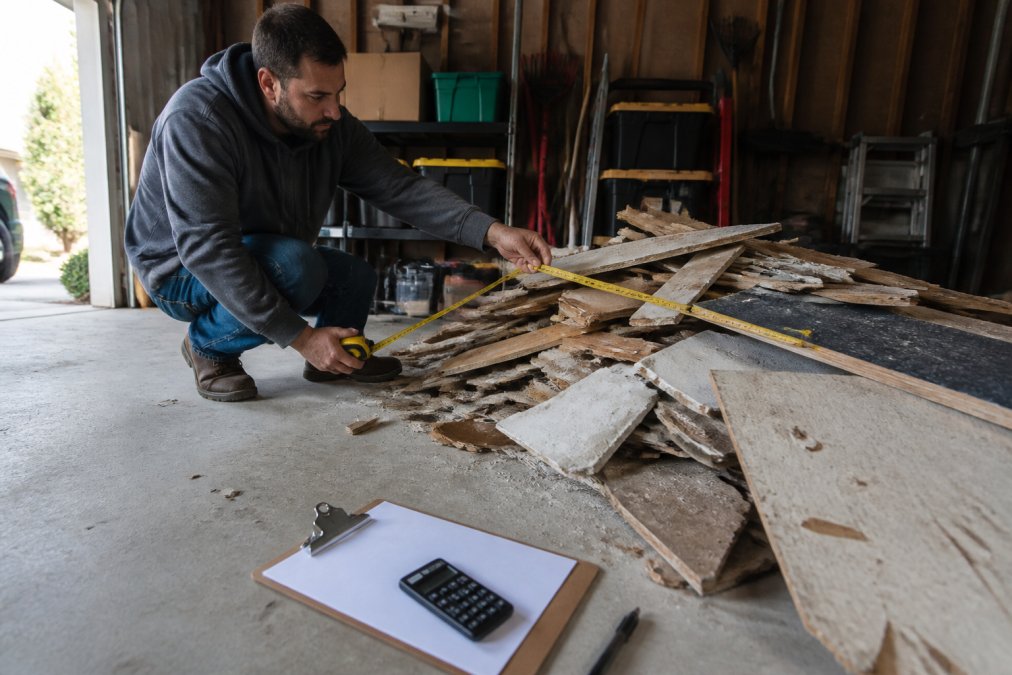
To estimate cubic yards for a dumpster, measure the length, width, and height of your debris in feet, multiply them together, then divide by 27. That gives you the volume in cubic yards. A 12-yard dump trailer holds roughly 12 cubic yards of material.
Measuring Irregular Piles and Room Volumes
Irregular piles are harder to measure than a neat box. Break the pile into rough rectangular sections, measure each one, and add the totals. For room cleanouts, measure the room's length, width, and the height of debris you plan to remove.
Converting Cubic Feet to Cubic Yards
Cubic yards is a volume measurement equal to 27 cubic feet. To convert cubic feet to cubic yards, divide your total cubic feet by 27. If you measured 324 cubic feet of debris, that's 12 cubic yards.
Step 2: Average Weight of Construction Debris per Cubic Yard
The average weight of construction debris per cubic yard depends on the material, but the spread is enormous, roughly 200 pounds per cubic yard for loose cardboard up to 2,700 pounds per cubic yard for broken concrete. That 13x range is why guessing at density is the single biggest source of overage charges. Use the numeric ranges below instead of eyeballing your pile.
Common Materials and Their Densities
These are typical in-place densities for debris as it actually sits in a trailer, not lab-compacted figures. Loose material sits at the low end; broken, stacked, or compacted material sits at the high end.
| Material | Pounds per Cubic Yard (typical range) | Notes |
|---|---|---|
| Broken concrete, asphalt, brick | 1,800 - 2,700 | Heaviest common debris; a few wheelbarrows hit a ton |
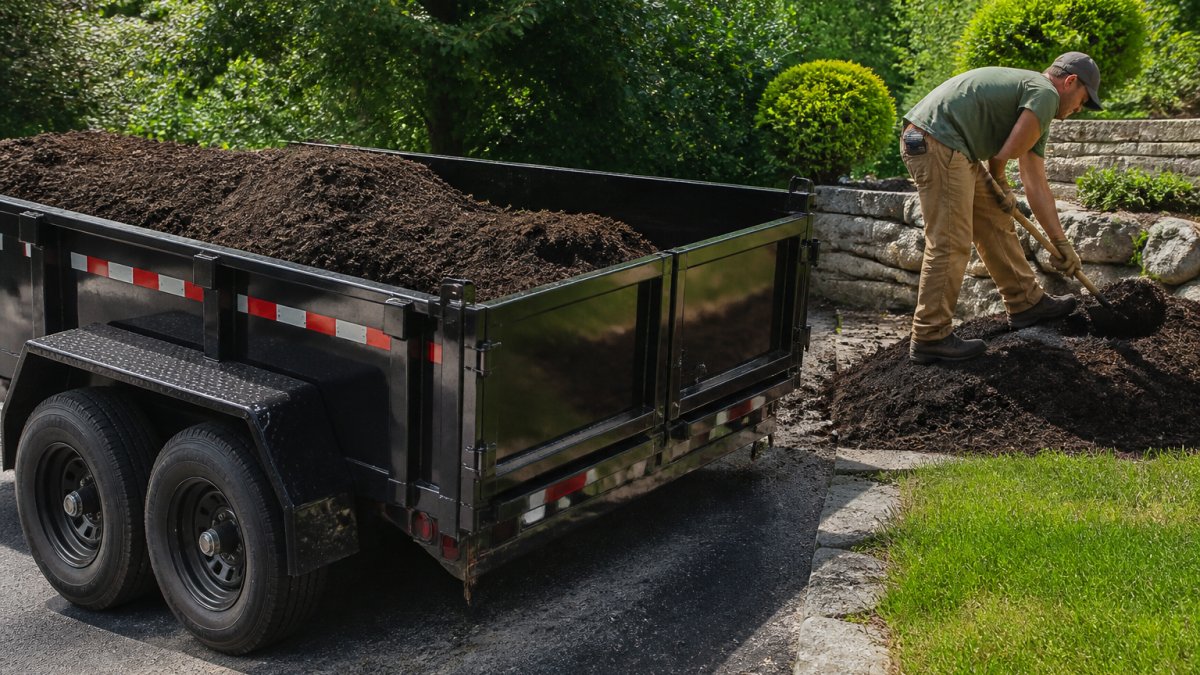
| Dirt, sand, gravel | 2,000 - 2,700 | Moisture pushes this toward the top of the range |
| Roofing shingles (tear-off) | 900 - 1,400 | Dense and awkward to stack; nails add weight |
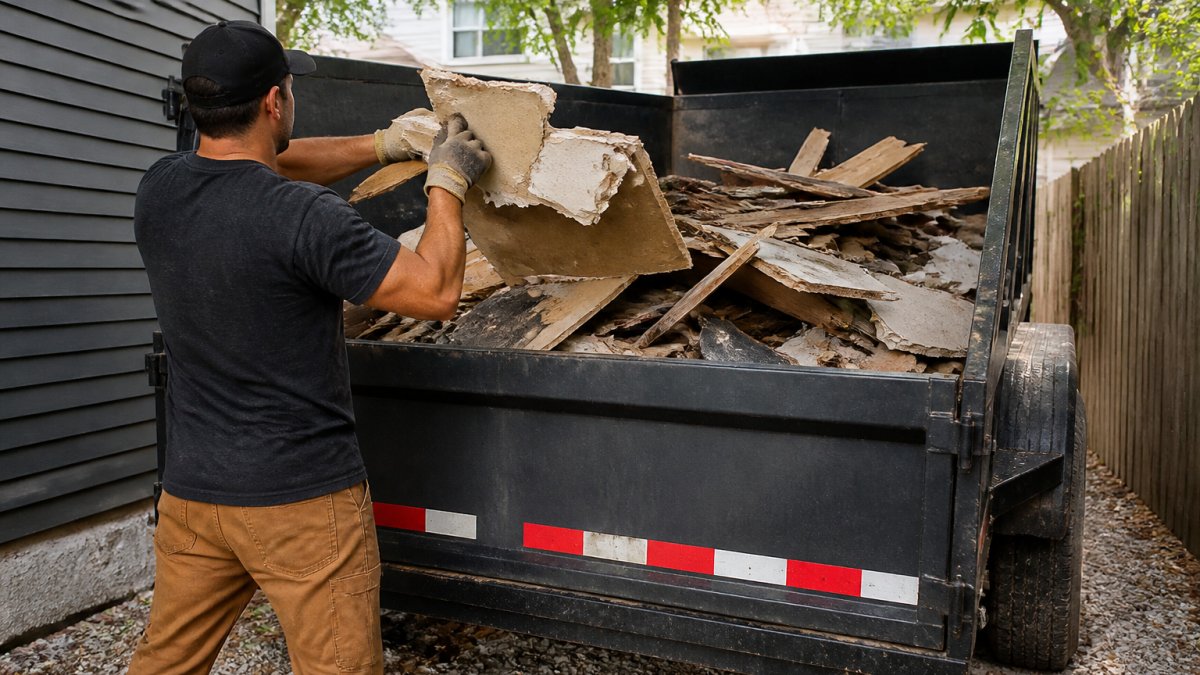
| Drywall (loose) | 400 - 700 | Jumps sharply once it absorbs water |
| Wood, lumber, pallets | 250 - 500 | Bulky but light; fills volume fast |
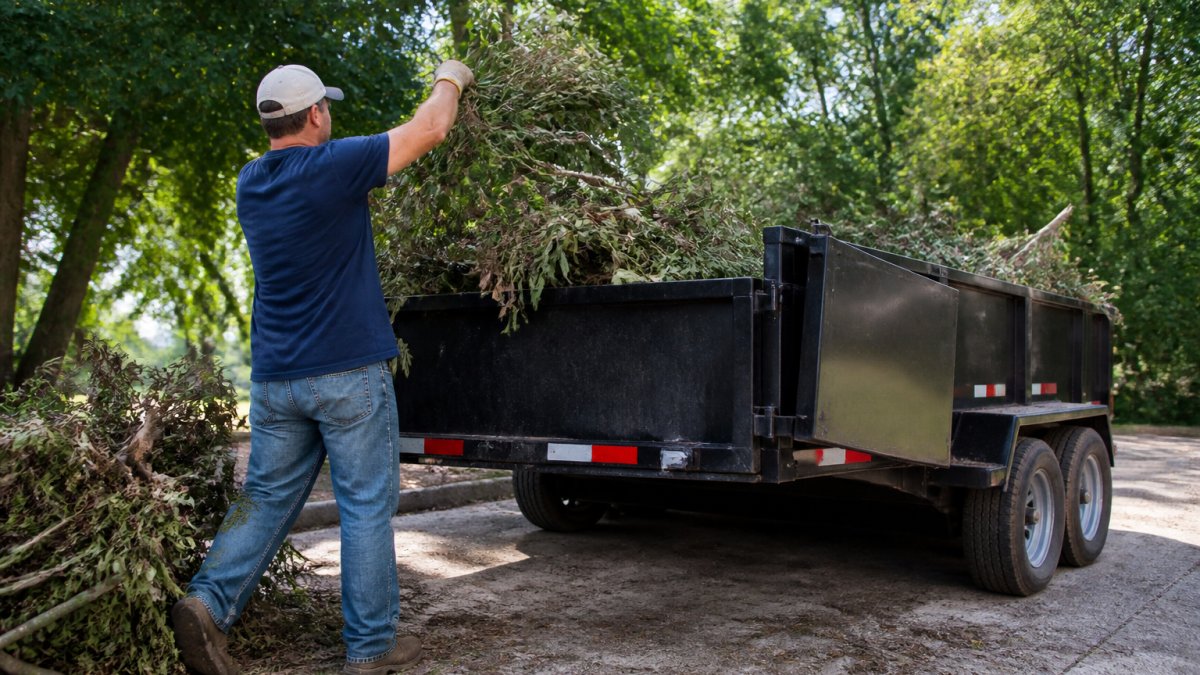
| Yard waste (leaves, branches) | 300 - 600 | Dry leaves near the low end; wet grass near the high end |
| Household clutter / furniture | 200 - 500 | Highly variable, see mixed-load note below |
| Cardboard (loose) | 150 - 300 | Almost always volume-limited, not weight-limited |
| Appliances (whole) | ~350 - 500 each | Refrigerators and freezers are heavier than they look |
How to Estimate a Mixed Load
Most real cleanouts are mixed, and averaging the table above will mislead you. A better method is a weighted average by volume share:
- Estimate the cubic yards each material occupies.
- Multiply each by the midpoint of its density range.
- Add the results, then divide by total cubic yards to get your blended density.
Why the Range Matters More Than the Average
Two loads of the same material can differ by 30-50% based on how they're packed and how wet they are. When you're within a few hundred pounds of your allowance, always estimate at the high end of the range. A 10% density error on a 6-yard load is roughly 600 pounds, enough to trigger an overage tier on most rentals.
Material Density Variance Is the Real Variable
No two loads weigh exactly the same. The same pile of drywall weighs meaningfully more after a rainstorm, and the same volume of "household junk" can swing by hundreds of pounds depending on whether it contains books, tile, or a water heater. Treat the table as a starting band, not a fixed number, and build in a buffer before you load.
Step 3: Apply the Conversion Factor to Get Tonnage
To convert volume to tonnage, multiply cubic yards by the material's weight per cubic yard, then divide by 2,000. That final number is your tonnage estimate. This is how you calculate waste weight for dumpsters before you ever load a single item.
How Moisture and Mixed Loads Change Debris Density
Moisture content impact is one of the most overlooked factors in waste weight. Wet drywall, soaked wood, and rain-saturated yard waste can weigh significantly more than the same material when dry. A load that measures light on volume can still exceed your weight limit.
- Wet wood can weigh far more than dry wood
- Soaked drywall crumbles and compacts
- Yard waste holds water after rain
- Mixed loads average out unpredictably
What Happens If a Dumpster Is Overweight?
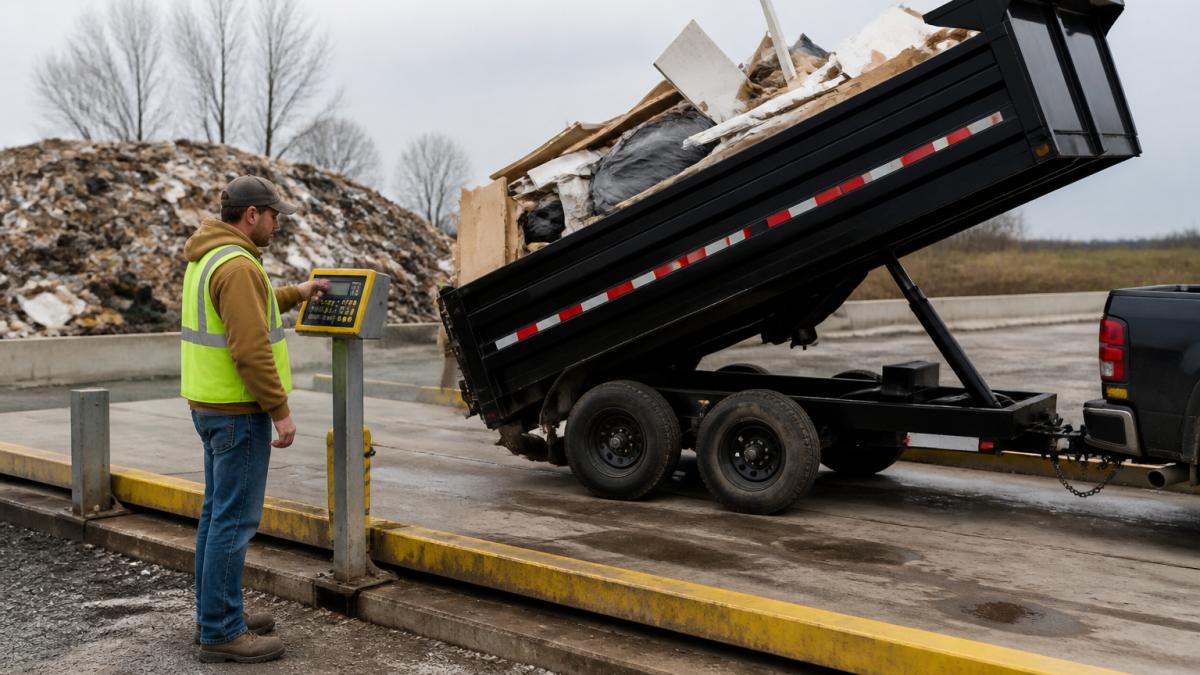
If a dumpster or trailer is overweight, the disposal site weighs the load on a certified scale at the landfill or transfer station, subtracts the included allowance, and bills the difference by the ton. The mechanism is straightforward, but the cost structure is where most renters get surprised.
How Overage Is Actually Calculated
Almost every hauler prices overage the same way:
- Tare weight, the empty trailer or dumpster is weighed (or its weight is on file).
- Gross weight, the loaded unit is weighed at the scale house.
- Net weight, gross minus tare equals your debris weight.
- Billable overage, net weight minus your included allowance, rounded up to the next ton or half-ton, multiplied by the per-ton overage rate.
That rounding step matters. If your allowance is 1 ton and you come in at 1.1 tons, many haulers bill a full extra ton, not 0.1 ton. A 200-pound overshoot can cost the same as a 2,000-pound one.
What Triggers an Overage Charge
- Exceeding the included tonnage, the most common trigger.
- Prohibited materials, tires, mattresses, appliances with refrigerant, and electronics often carry separate surcharges on top of weight.
- Wet loads, rain-soaked debris can push a compliant load over the limit without any change in volume.
- Overfilled units, a trailer loaded above the side walls may be refused at the scale and require unloading before hauling.
How to Reduce or Avoid Overage Fees
There's no universal negotiation, but these tactics reliably reduce the bill:
- Ask for the allowance and rate in writing before delivery. Know your included tonnage, the per-ton overage rate, and the rounding rule.
- Weigh your heaviest items separately if you have access to a bathroom scale and a dolly, appliances, concrete chunks, and tile are the usual culprits.
- Stage heavy material last. Load light, bulky items first to fill volume, then add heavy items only up to your weight budget.
- Split the load. Two smaller hauls at the base allowance are often cheaper than one overweight haul with a full extra ton billed.
- Keep moisture out. Tarp the load and avoid hauling immediately after rain if your schedule allows.
- Ask about a re-weigh. Some facilities will re-weigh a disputed load once; it's worth requesting if the number looks off.
The Financial Consequence in Plain Terms
That's the entire reason to estimate weight before you load rather than after. The math in Steps 1-3 exists to keep you inside the allowance, not to be precise for its own sake.
How to Avoid Overage Fees and Manage Load Distribution
Avoid overage fees by weighing as you load. Distribute heavy items evenly across the trailer floor rather than piling them in one corner. Good load distribution keeps the trailer stable and makes the most of your weight allowance.
A simple checklist:
- Estimate total tonnage before loading
- Place heavy items on the bottom and center
- Spread weight evenly side to side
- Leave a buffer below the weight limit
- Weigh or estimate before pickup
Conclusion
Calculating waste weight for dumpsters comes down to three things: volume, density, and conversion. Measure your debris, identify the material type, and apply the conversion factor. Then leave a buffer for moisture and mixed loads.
Frequently Asked Questions
What is the average weight of a cubic yard of household trash?
Household trash typically weighs between 150 and 300 pounds per cubic yard, depending on what's in it. Bulky items like furniture and cardboard lower the density, while food waste and yard debris push it higher. For a 12-yard dump trailer, that means a full load of average household trash could weigh between 900 and 1,800 pounds. Knowing this range helps you estimate whether you'll stay under a one-ton allowance or need to plan for overage.
How do I avoid overweight fees when renting a dumpster?
Start by estimating the weight of your debris using volume and density factors. Separate heavy materials like concrete, dirt, and shingles from lighter household items. Load heavy debris first and distribute it evenly across the trailer floor. If you're close to the weight limit, consider scheduling a second pickup or removing dense items before hauling. Fill and Dump Trailers includes the first ton of disposal in every rental, so keeping your load under that threshold avoids extra charges.
How many tons of garbage fit in a 30 yard dumpster?
The amount a 30-yard dumpster can hold depends on the material. Heavy debris like concrete or roofing shingles can hit weight limits with only a few cubic yards, while bulky items like sofas and cardboard might fill the dumpster at lower weights. Always check the weight limit set by your provider, because exceeding it triggers overage fees that vary by disposal site.
How much does an empty 20 yard dumpster weigh?
That tare weight is subtracted from the gross weight at the landfill scale to calculate your disposal tonnage. For a 12-yard dump trailer, the empty weight is much lower, which gives you more allowance for debris before hitting the first-ton inclusion limit.