 how-to
How to Dispose of Old Appliances: A Complete Guide
Table of Contents
- Step 1: Prepare Your Appliances for Removal
- Can You Put Appliances in a Dumpster?
- How to Dispose of a Refrigerator Safely
- Appliance Removal Services Cost: What to Expect
- Donation and Trade-In Options for Working Appliances
- Recycling and Municipal Bulk Waste Pickup
- DIY vs. Professional Removal: Which Is Right for You?
- Conclusion
- Frequently Asked Questions
Last Updated: September 30, 2026
Step 1: Prepare Your Appliances for Removal
Getting an old appliance out the door safely starts before you move it an inch. The right prep protects your floors, your back, and your home.
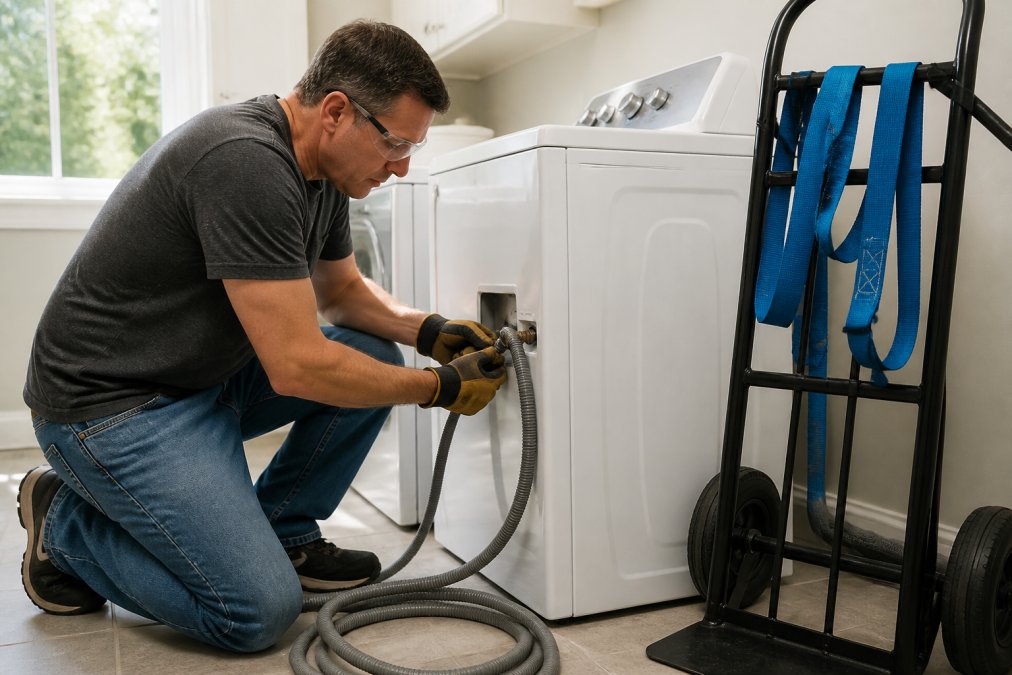
Here is how to get ready:
- Unplug the unit and let it sit for at least 24 hours
- Empty every shelf, drawer, and ice bin
- Tape doors shut so they do not swing open
- Clear a straight path to the exit
- Wear work gloves and closed-toe shoes
- Use a dolly and moving straps, not your bare hands
Can You Put Appliances in a Dumpster?
The short answer: yes for most appliances, no for anything holding refrigerant or hazardous fluids. The rule that blocks a fridge from a roll-off container is federal, not a hauler preference.
Here is the practical split:
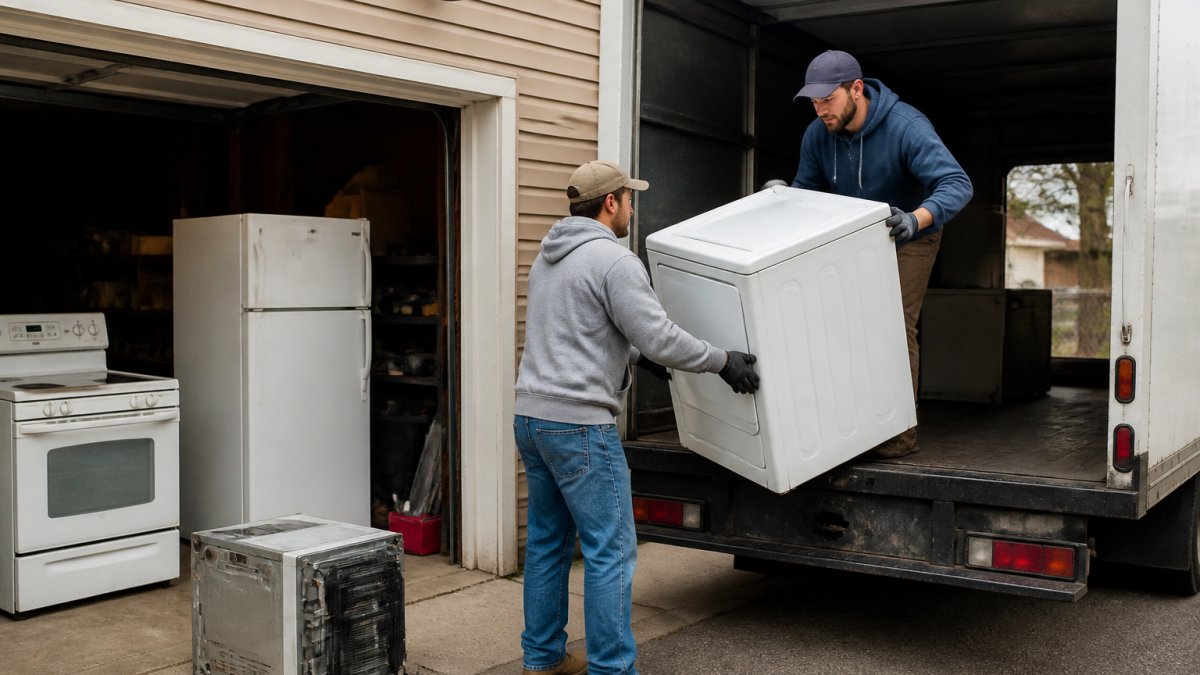
- Allowed in a standard dumpster: washers, dryers, stoves, ovens, dishwashers, microwaves, trash compactors, and most small countertop appliances
- Banned from a standard dumpster: refrigerators, freezers, window air conditioners, dehumidifiers, and anything else with a sealed cooling circuit
- Never allowed in any container: units holding oil, gasoline, or other hazardous fluids, plus appliances with PCB-containing capacitors found in some pre-1979 units
Why the fridge is different
The ban is not about bulk. It is about the refrigerant. Under Section 608 of the Clean Air Act, refrigerant must be recovered before a cooling appliance is scrapped, and the recovery has to be done with certified equipment by a certified technician. Venting refrigerant to the atmosphere is illegal and carries civil penalties. The full rule set lives at EPA refrigerant management requirements under Section 608.
The workaround most people miss
You do not have to choose between a dumpster and a certified recycler. Split the job:
- Have a certified technician recover the refrigerant and tag the unit. Many appliance repair shops and HVAC companies do this for a modest fee.
- Once the tag is on, the unit is legally scrap metal. It can go in a dumpster, to a scrap yard, or on the curb if your city allows it.
- Everything else in the cleanout, the washer, dryer, stove, and water heater, goes straight into the container.
Check before you order
- Does the hauler inspect loads for refrigerant units, and what is the rejection fee if one is found?
- Does the city require a separate bulk-pickup appointment for cooling appliances even after recovery?
- Are doors required to be removed on any unit left curbside?
- Is there a weight limit per ton, and what is the overage rate?
If you are clearing a garage or basement, a driveway-safe dump trailer handles the bulky non-hazardous items at your own pace. If you are clearing a garage or basement, a driveway-safe dump trailer handles the bulky non-hazardous items at your own pace.
How to Dispose of a Refrigerator Safely
A refrigerator needs special handling because of the refrigerant sealed inside it. You cannot legally scrap one without recovering that gas first.
Your options for a fridge or freezer:
- Call your city or county for bulk pickup rules
- Ask your utility about a fridge recycling rebate program
- Take it to a certified recycler or drop-off facility
- Hire an appliance removal service that handles refrigerant
Appliance Removal Services Cost: What to Expect
Appliance removal pricing is opaque. Most providers quote by item, weight, and access, and the spread between the cheapest and priciest quote for the same fridge can be two or three times. Knowing what drives the number is how you avoid overpaying.
What actually drives the price
- Item type - a fridge or freezer costs more than a microwave because of refrigerant handling and weight
- Weight - haulers pay landfill or recycling fees by the ton, and that cost gets passed through
- Access - stairs, tight doorways, and long carries add labor minutes, and labor is the biggest line item
- Refrigerant - cooling units need a certified tech, which adds a separate recovery charge
- Distance - a trip charge applies if you are outside the provider's normal service radius
- Timing - same-day and weekend pickups usually carry a premium
Rough price bands to expect
Exact quotes vary by market, but the pattern is consistent. A microwave or dishwasher lands at the low end; a washer, dryer, or stove sits in the middle; a refrigerator, freezer, or window AC sits at the top because of the refrigerant step. Stairs or a basement add to any of those. On a cooling unit, the recovery charge alone is often a meaningful fraction of the total, which is why bundling it with the haul-away beats paying two vendors.
DIY vs. professional: the real math
The question is not "which is cheaper," but "which is cheaper once you count your time, your vehicle, and your injury risk."
Go DIY when:
- The items are light enough to lift safely with one helper
- No refrigerant or hazardous fluids are involved
- You already have a truck, trailer, or access to one
- Your city offers free curbside bulk pickup and you can wait for the scheduled date
Hire a pro when:
- The unit is a fridge, freezer, or AC and needs refrigerant recovery
- You cannot lift heavy items safely, or the path out involves stairs
- You want it gone in one visit and do not want to schedule around a pickup window
- The unit is in a tight space, like a basement laundry room or a second-floor kitchen
The middle path that usually wins
For a full cleanout, the cheapest reliable option is often a hybrid: rent a dump trailer or container for the non-hazardous items, load them yourself, and pay a certified technician only for the refrigerant units. You avoid per-item haul fees on washers, dryers, and stoves, and pay the premium only where the law requires it.
To compare your options:
| Option | Best For | Effort | Cost Driver |
|---|---|---|---|
| Curbside bulk pickup | Single items, flexible timing | You move it out | Local fees |
| Retailer haul-away | New purchase delivery | None | Add-on charge |
| Donation pickup | Working appliances | You prep it | Free or low |
| Dump trailer rental | Multiple items, DIY | You load it | Flat rate plus tonnage |
| Removal service | Heavy or hazardous units | None | Per item and weight |
Donation and Trade-In Options for Working Appliances
A working appliance is worth more than scrap. Donating or trading it in keeps it out of the landfill and can put money or a tax break back in your pocket.
Before you donate:
- Confirm the unit works and cools or heats properly
- Clean it inside and out
- Have the model and age ready
- Ask about pickup, since not all locations offer it
Recycling and Municipal Bulk Waste Pickup
Most cities offer bulk waste pickup, and most scrap yards take metal appliances for free. Recycling is almost always cheaper than the landfill.
Here is how the two main routes work:
- Municipal bulk pickup - you schedule a date, set the item at the curb, and crews collect it. Rules vary by city.
- Scrap metal recycling - you haul the unit to a recycler. They strip the metal and pay by weight for some items.
Check your city's rules before you set anything out:
- Do cooling units need a separate appointment?
- Is there a tag or fee for bulk collection?
- Are doors required to be removed?
- What size or weight limits apply?
DIY vs. Professional Removal: Which Is Right for You?
The right choice comes down to three things: how heavy the load is, whether refrigerant is involved, and how much time you have.
Go DIY when:
- The items are light enough to lift safely
- No refrigerant or hazardous fluids are involved
- You have help and a vehicle that can haul
- You want to save money on labor
Hire a pro when:
- The unit is a fridge, freezer, or AC
- You cannot lift heavy items safely
- Stairs or tight spaces make access hard
- You want it gone in one visit
Conclusion
Clearing out old appliances is a job most people put off because they do not know the rules. Now you do: prep first, check what a dumpster will take, recover refrigerant properly, and pick the method that fits your load.
Submit Request
Frequently Asked Questions
What is the best way to dispose of old appliances?
The best method depends on condition. Working appliances under 10 years old can be donated or traded in. Non-working units should go to a certified recycler that handles refrigerant recovery and scrap metal. For bulky items, a dump trailer rental or curbside bulk pickup keeps heavy lifting manageable. Never leave appliances on the curb without checking municipal regulations, as many areas fine illegal dumping.
Can I put old appliances in a standard residential dumpster?
Most residential dumpster services prohibit appliances because they contain hazardous materials like refrigerants, capacitors, and oil. Even empty units add significant weight that can damage the container. If you need a container, rent a dump trailer rated for heavy debris and confirm it accepts appliances. Always ask about refrigerant removal requirements before loading a refrigerator or AC unit.
Are there specific regulations for disposing of appliances containing refrigerants?
Yes. Under the Clean Air Act, refrigerants like Freon must be recovered by a certified technician before the appliance is scrapped. Releasing refrigerant into the air is illegal. Many scrap yards and retailers require a signed recovery statement before accepting refrigerators, freezers, or air conditioners. Plan for this step early so you do not pay for a second pickup.
Do retailers offer haul-away services for new appliance purchases?
Many large retailers offer haul-away when you buy a new appliance, often for a small fee or free with delivery. They typically take the old unit to a certified recycler. This is convenient but limited to one-for-one replacements. If you are clearing multiple appliances or doing a renovation, a dump trailer rental can offer a flexible loading window.