 how-to
How to Organize a Garage Cleanout: Step-by-Step Guide
Table of Contents
- Plan Your Garage Cleanout Before You Start
- How to Estimate Junk Removal Volume for Your Project
- Sort and Categorize Your Debris
- Garage Decluttering Checklist: What to Keep and What to Remove
- Dumpster Rental for Garage Cleanout: Loading and Disposal
- Safety Considerations and Common Mistakes to Avoid
- Timeline and Next Steps for Your Cleanout
- Frequently Asked Questions
Last Updated: October 3, 2026
Plan Your Garage Cleanout Before You Start
Learning how to organize a garage cleanout starts with a solid plan. Assess what you're dealing with before you start sorting.
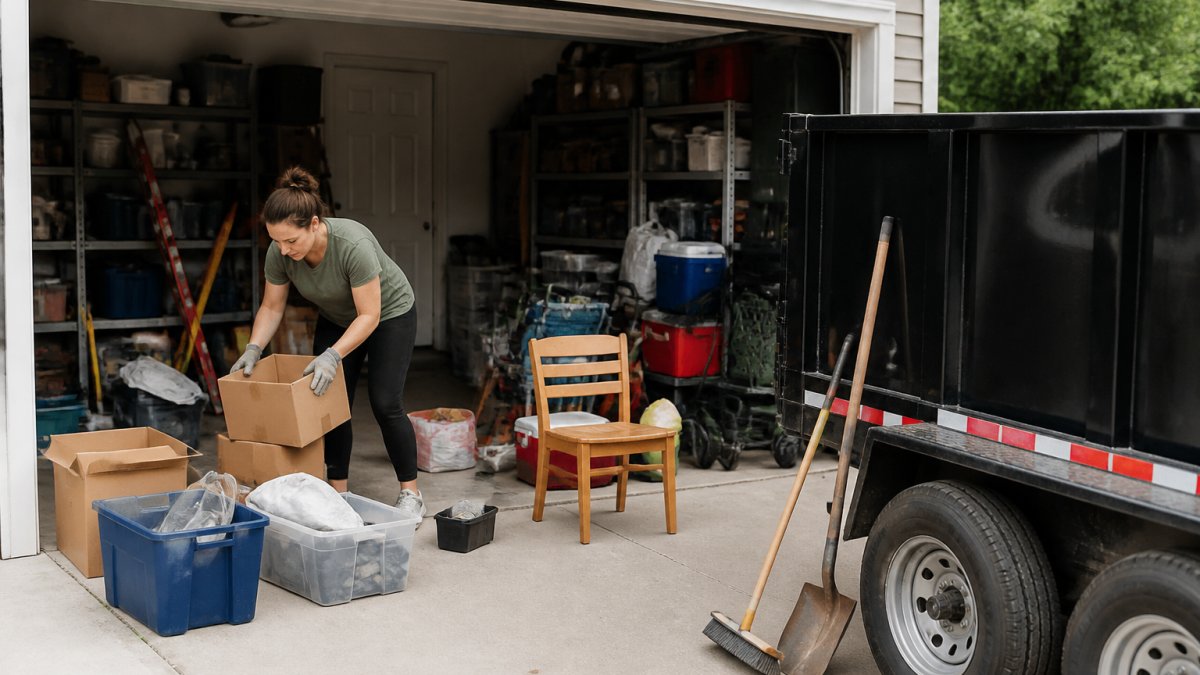
Walk through your garage and assess the volume. Look for old furniture, sports equipment, unused tools, and unidentified boxes. This 15-minute walk-through saves hours of wasted effort.
Decide what you actually need to keep. If you haven't used something in two years, you probably won't. This is where you reclaim the most space.
Create a timeline. A typical garage cleanout takes 3-5 days at a few hours per day, or 8-10 hours in one weekend.
Finally, arrange for debris removal before you start sorting. When you know how you'll haul things away, you can sort directly into piles that match your disposal method. At Fill and Dump Trailers, we make this part easy with our flexible three-day loading period, so you can work at your own pace without rushing.
How to Estimate Junk Removal Volume for Your Project
Before renting, estimate your debris volume and weight.
Start with Volume, Then Account for Weight
Break your garage into zones (front, middle, back). For each zone, estimate cubic feet.
Convert to cubic yards: one cubic yard equals 27 cubic feet.
Weight matters more than volume.
Material Density Reference Table
Use this table to estimate the weight of your specific debris types. Most garage cleanouts contain a mix of these materials:
| Material Type | Weight per Cubic Yard | Notes |
|---|---|---|
| Cardboard boxes (empty) | 50-100 lbs | Lightest common debris |
| Plastic bins and containers | 100-150 lbs | Lightweight but bulky |
| Household items (mixed) | 200-400 lbs | Furniture, dishes, books |
| Drywall/gypsum board | 400-600 lbs | Common in renovations |
| Wood furniture | 400-800 lbs | Varies by wood type and density |
| Brick and masonry | 2,500-3,500 lbs | Very heavy; limits container size |
| Concrete chunks | 3,500-4,500 lbs | Heaviest common material |
| Appliances (avg. refrigerator) | 200-300 lbs each | Count individually |
| Window air conditioner units | 60-90 lbs each | Count individually |
| Metal items (mixed scrap) | 500-1,500 lbs per cubic yard | Density varies widely |
Calculate Your Mixed Load Weight
Most garage cleanouts are mixed loads.
Example: A typical garage cleanout might contain:
- 1.5 cubic yards of mixed household items (furniture, boxes, tools) = 1.5 × 300 lbs = 450 lbs
- 2 cubic yards of cardboard boxes = 2 × 75 lbs = 150 lbs
- 0.5 cubic yards of metal scrap = 0.5 × 1,000 lbs = 500 lbs
- Total: 1,100 lbs
This example would fit comfortably in most 8,000-10,000 lb weight-limited containers.
The Moisture Content Factor: A Hidden Weight Multiplier
Moisture adds significant weight. Wet cardboard weighs 2-3 times more than dry; saturated furniture adds 30-50%.
Typical Garage Cleanout Ranges
Most garage cleanouts produce between 2-5 cubic yards of debris and weigh 1,500-4,000 pounds:
- Small cleanout (mostly lightweight items, no construction waste): 2-3 cubic yards, 800-1,500 lbs
- Medium cleanout (mixed household items, some furniture): 3-5 cubic yards, 1,500-3,000 lbs
- Large cleanout (full garage with construction debris, appliances, or concrete): 6-10 cubic yards, 3,000-8,000 lbs
If your estimate approaches or exceeds 8,000 pounds, you're near the weight limit of standard rental containers.
Document and Verify Before Renting
Document each material category and cubic yard estimate.
Sort and Categorize Your Debris
Create four piles: keep, donate, recycle, and trash.
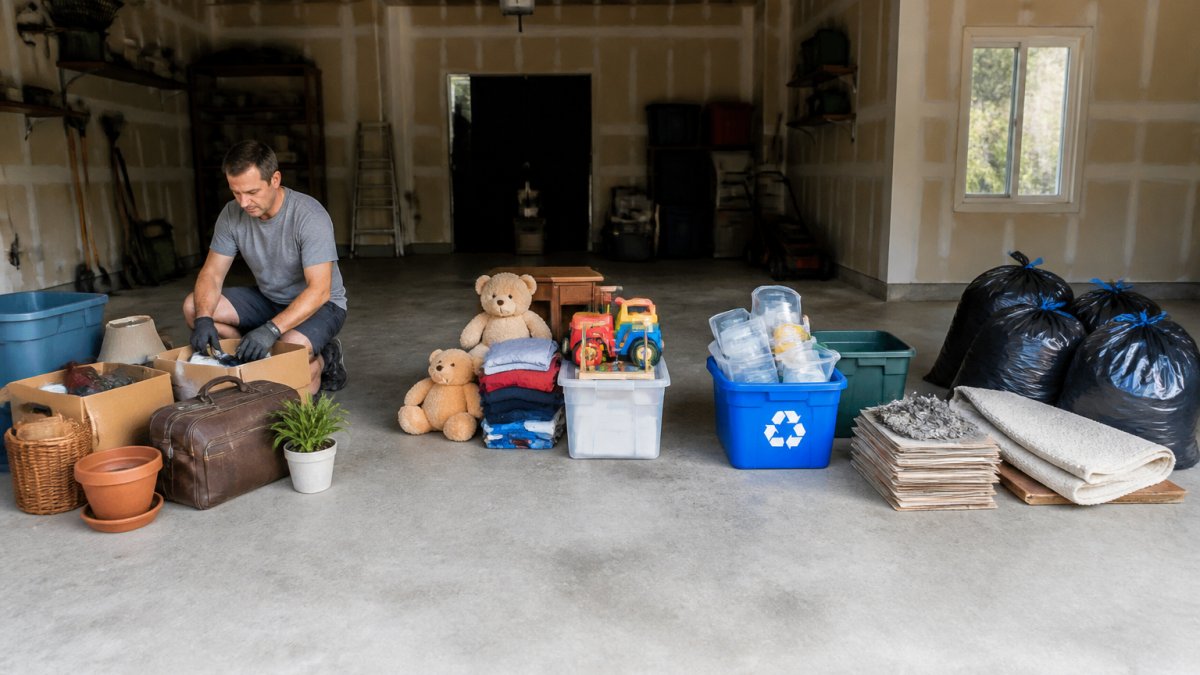
Keep only items you actually use or genuinely value. If you're keeping something "just in case," it should go.
The donate pile includes furniture, tools, clothing, books, and kitchen items in good condition. Many charities pick up from your driveway.
The recycle pile includes cardboard, metal, and aluminum. Check local guidelines, some centers take appliances and electronics, others don't.
The trash pile is everything else. Broken items, damaged furniture, contaminated materials, things too worn to donate. This is the pile that goes into your dumpster or dump trailer.
Garage Decluttering Checklist: What to Keep and What to Remove
Use this checklist to make decisions faster. Mark items as keep, donate, recycle, or trash.
Tools and Equipment
- Hand tools you use regularly (keep)
- Broken or rusty tools (trash)
- Duplicate tools (donate or trash)
- Power tools with missing parts (trash)
- Extension cords and hardware in good condition (keep)
Seasonal Items
- Holiday decorations you displayed last year (keep)
- Holiday items you haven't used in 3+ years (donate)
- Winter sports equipment in use (keep)
- Broken seasonal items (trash)
Furniture and Large Items
- Functional furniture you use (keep)
- Broken chairs or tables (trash)
- Dressers, shelves, cabinets in good shape (donate)
- Water-damaged or moldy furniture (trash)
Boxes and Storage
- Boxes containing items you recognize (assess contents)
- Mystery boxes unopened for 2+ years (trash or donate)
- Plastic storage containers with lids (keep if you use them)
- Broken or cracked containers (trash)
Automotive Items
- Tires in usable condition (recycle or donate)
- Batteries (recycle only, don't trash)
- Fluids and chemicals (dispose properly, never in regular trash)
- Broken car parts (recycle metal, trash plastic)
Appliances and Electronics
- Working refrigerators or washers (donate if space allows)
- Broken appliances (recycle or proper disposal)
- Old computers and monitors (electronic recycling)
- Cables and cords (recycle or keep if functional)
Dumpster Rental for Garage Cleanout: Loading and Disposal
Load Strategically to Maximize Space and Stay Under Weight
Place heaviest items first (concrete, bricks, metal) on the bottom.
Disassemble furniture and flatten cardboard boxes. This maximizes space and reduces the weight of air you're hauling.
Load systematically from one side to the other.
Understand Weight Limits and Overage Fee Mechanics
Most dumpsters have a weight capacity of 8,000-10,000 lbs.
Common Items That Exceed Weight Expectations
These items add weight far faster than most people anticipate:
- Concrete chunks: 150 lbs per cubic foot (4,050 lbs per cubic yard). A small pile of concrete from a patio or driveway repair can weigh 1,000+ lbs.
- Brick and masonry: 2,500-3,500 lbs per cubic yard. A single pallet of bricks weighs 500-700 lbs.
- Soil and sand: 2,000-2,700 lbs per cubic yard. Wet soil is heavier than dry soil.
- Refrigerators and freezers: 200-300 lbs each. A single old fridge consumes 3-4% of your weight limit.
- Washing machines and dryers: 150-250 lbs each.
- Water heaters: 100-150 lbs when empty, 200+ lbs if they still contain water.
- Old windows and glass: Deceptively heavy; a single large window frame can weigh 50-100 lbs.
- Metal filing cabinets and safes: 100-300 lbs each depending on size.
If your garage cleanout includes any of these items, your weight estimate must account for them individually.
Strategies to Avoid or Mitigate Overage Fees
Strategy 1: Weigh Your Load Before Pickup, Use a public scale to verify weight before pickup.
Strategy 3: Negotiate Your Weight Limit Upfront, Tell the rental company what you're removing.
At the Disposal Site: What Happens to Your Load
Your load is weighed at the disposal site.
Three-Day Loading Windows: Use Them Strategically
Use the three-day loading period strategically. Load progressively and assess weight as you go.
Safety Considerations and Common Mistakes to Avoid
Safety matters when lifting heavy items in confined spaces.
Wear gloves, a dust mask, steel-toed boots, and safety glasses.
Bend at your knees, not your back. If something is too heavy, ask for help.
Watch for hazardous materials (paint, batteries, bulbs, chemicals). Never throw these in regular trash. Check local hazardous waste disposal options before starting.
Avoid overloading beyond weight limits, stacking items too high, mixing incompatible materials, or leaving items scattered for weeks. Most people underestimate volume, rent a slightly larger container if uncertain. Arrange your disposal plan before sorting to avoid piles sitting in your garage.
Timeline and Next Steps for Your Cleanout
Day 1: Planning and Setup (2-3 hours) Walk through your garage. Identify zones. Estimate debris volume.
Days 2-4: Sorting (4-6 hours per day) Sort items into your four piles. Load donation and recycling items into vehicles.
Day 5: Final Loading and Cleanup (3-4 hours) Complete your loading. Sweep and organize your now-empty garage.
After Pickup: Arrange Donations Call charities to pick up your donation pile. Drop off recycling at your local facility.
Larger projects take 7-10 days; smaller ones finish in 2-3 days. Start this week on a Saturday or long weekend.
Fill and Dump Trailers makes the disposal part simple.
A garage cleanout isn't just about clearing space.
Frequently Asked Questions
How do I estimate the amount of waste for a garage cleanout?
Start by measuring your garage and identifying what needs to go. Sort items into categories: keep, donate, recycle, and trash. A typical single-car garage holds 3-5 cubic yards of mixed debris. Use this as a baseline, then adjust based on whether you're clearing just shelving or the entire space including old appliances, construction materials, or yard equipment. A 12-yard dump trailer handles most residential garage cleanouts with room to spare.
What's the most efficient way to organize a garage cleanout?
Plan ahead by setting a target date and securing a dump trailer rental before you start. Create distinct zones for items you're keeping, donating, recycling, and discarding. Work section by section, shelves first, then floor items, then walls. Load heavy materials like concrete or metal into the trailer first, then lighter debris on top. This prevents shifting during transport and maximizes space. Most homeowners complete a full garage cleanout in 1-3 days with this method.
What items can I put in a dump trailer, and are there restrictions?
Dump trailers accept most household waste, construction debris, yard waste, appliances, furniture, and general junk. However, hazardous materials like paint, batteries, propane tanks, and certain chemicals require special handling and may incur additional fees or require separate disposal. Always confirm what's accepted before loading. Your rental company can provide a full list of prohibited items and help direct hazardous waste to the appropriate disposal site.
How do I know if my driveway can handle a dump trailer?
Most residential driveways can safely support a 12-yard dump trailer when distributed properly. The trailer's weight is spread across multiple axle points, similar to a delivery truck. If your driveway is older, cracked, or made of thin asphalt, contact your rental company beforehand to discuss weight distribution and placement options. Many providers offer curbside pickup as an alternative if you're concerned about driveway impact.