 blog
Is Curbside Pickup Worth the Cost in 2026?
Table of Contents
- What Curbside Pickup Actually Costs
- Curbside Pickup vs. In-Store Shopping: The Real Difference
- Curbside Pickup vs. Grocery Delivery Cost: Which Saves More?
- Stores with Free Grocery Pickup Options
- Understanding Curbside Grocery Pickup Fees and Hidden Charges
- How to Save Money on Grocery Pickup
- When Curbside Pickup Makes Financial Sense
- Frequently Asked Questions
Last Updated: October 5, 2026
What Curbside Pickup Actually Costs
Curbside pickup is convenient, but is curbside pickup worth the cost? It depends on your shopping habits, order size, and how much you value your time.
Most stores charge a pickup fee, some waive it above a minimum order, and others charge per order regardless of size.
The real cost goes beyond the fee. Factor in:
- Pickup fees (typically $1-$5 per order, though this varies by store)
- Minimum order requirements (often $35-$50)
- Possible price differences on items
At Fill and Dump Trailers, we understand the value of convenience and efficiency. The question is whether the convenience justifies the added expense.
Curbside Pickup vs. In-Store Shopping: The Real Difference
In-store shopping costs nothing extra beyond the items you buy, but you invest time driving, finding items, waiting in checkout lines, and driving home.
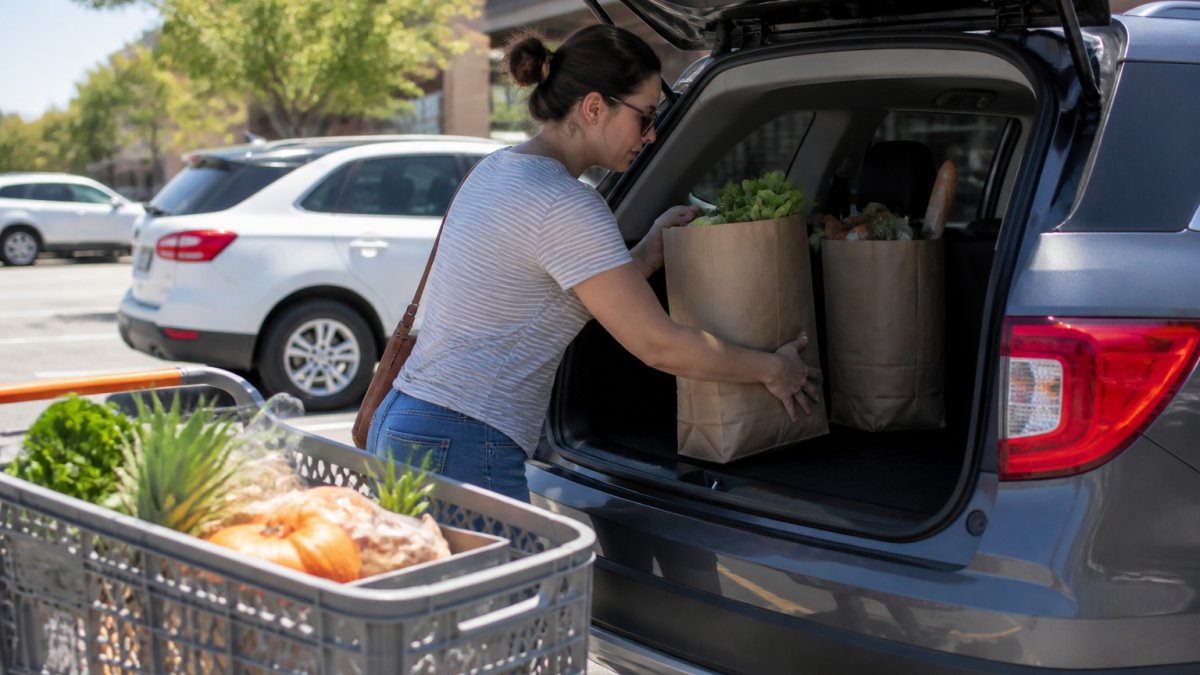
Curbside pickup eliminates the in-store experience: you order online, drive to the store, and staff load your car.
The trade-off is clear:
- In-store shopping: No fees, but requires your time and effort
- Curbside pickup: Adds a fee, but saves time and reduces impulse buying
Many shoppers find that skipping impulse purchases saves money overall, since you only buy what you planned, discipline that can offset the pickup fee.
Curbside Pickup vs. Grocery Delivery Cost: Which Saves More?
Delivery services like DoorDash, Instacart, and store-operated delivery bring groceries to your home. Curbside pickup requires you to drive to the store.
Delivery costs more. You typically pay:
- Delivery fee ($3-$10 per order)
- Service charge (often 5-10% of order total)
- Tip (usually 15-20% of order total)
Curbside pickup costs less because you provide the transportation instead of paying someone to drive to you.
Here's the real comparison:
| Service | Your Time | Total Cost | Best For |
|---|---|---|---|
| In-store shopping | 45-60 minutes | Item cost only | Budget-conscious, enjoy browsing |
| Curbside pickup | 15-20 minutes | Item cost + $2-$5 fee | Busy people, time-conscious |
| Delivery | 0 minutes | Item cost + $8-$15 fees | Mobility limited, convenience priority |
For most households, curbside pickup sits in the middle: more than in-store, far less than delivery.
The break-even point comes down to your hourly value: if your time is worth $30 per hour or more, curbside pickup likely saves you money; if less, in-store shopping remains cheaper.
Stores with Free Grocery Pickup Options
Some retailers offer free curbside pickup. This changes the financial equation completely.
Whole Foods Market offers free pickup on orders of any size at most locations.
Target's Drive Up service is free with no minimum order. Amazon Fresh provides free pickup for Prime members in select locations.
Before assuming free pickup is available, check your specific store's policy. Fees and thresholds vary by location and change frequently.
Understanding Curbside Grocery Pickup Fees and Hidden Charges
Pickup fees are the visible part of the cost; the invisible part is everything stacked on top. To answer whether pickup is worth it, add up the whole order, not just the line item labeled "pickup."
The full cost stack, in the order it hits your receipt:
- Pickup or personal-shopper fee: A flat per-order charge, commonly $1-$5, though some retailers charge more and some waive it entirely above a minimum.
- Percentage-based service charge: Some retailers add a fee calculated as a share of your subtotal rather than a flat amount. This is more common on delivery, but it appears on pickup at some chains.
- Item markups: Online prices can exceed in-store shelf prices on certain products. This is the charge shoppers most often miss because it is spread across dozens of items instead of shown as one number.
A worked cost-per-order example
Here is the math for a typical weekly grocery run. Use your own numbers, because the point is the method, not the figures.
Assume a $100 order at a store with a $4.95 pickup fee and no minimum:
| Cost line | In-store | Curbside pickup |
|---|---|---|
| Groceries | $100.00 | $100.00 |
| Pickup fee | $0.00 | $4.95 |
| Item markups (if any) | $0.00 | $0.00-$10.00 |
| Fuel (round trip) | $2.00-$4.00 | $2.00-$4.00 |
| Your time | 45-60 min | 15-20 min |
| Out-of-pocket total | $102-$104 | $107-$119 |
The out-of-pocket gap is roughly $5-$15 per order; the time gap is roughly 30-40 minutes. Whether that trade is worth it depends on what those minutes are worth to you.
Break-even by order size and frequency
Pickup rarely costs the same percentage of your bill at every order size: a flat $5 fee is 10% of a $50 order and 2.5% of a $200 order. That fact drives most of the decision:
- Small orders (under $35): A flat fee plus a minimum-order requirement usually makes pickup the most expensive way to buy a few items. In-store wins unless the trip itself is difficult for you.
- Weekly mid-size orders ($75-$150): This is the range where pickup most often breaks even. The fee is a small share of the total, and the time saved repeats every week.
- Bulk or monthly stock-up orders ($200+): The fee becomes negligible as a percentage of the bill, and free-pickup thresholds are easy to clear. Pickup is usually the clear winner here on cost per item.
A simple break-even test: divide your pickup fee by the minutes saved. A $5 fee saving 35 minutes is about 14 cents per minute saved, compare that to what an hour of your time is worth.
What actually drives the hidden charges
Markups and substitutions cluster around specific categories:
- Produce and meat: Priced by weight, so a picker's selection can shift the total up or down without any listed price change.
- Sale and clearance items: In-store-only promotions frequently do not carry over to online pickup pricing.
- Third-party marketplaces: When a retailer fulfills pickup through a partner platform, the partner's markup and service fee can stack on top of the store's own pricing.
How to audit your own order
Before deciding whether pickup is worth it for your household, run this check once:
- Build your normal cart online and note the pickup subtotal.
- Note the pickup fee and any service charge at checkout.
- Compare five to ten of those items against the in-store shelf price, either from a recent receipt or a store visit.
- Add your round-trip fuel cost.
- Divide the total extra cost by the minutes you saved.
That number, dollars per minute saved, is the only figure that lets you compare pickup against in-store honestly, and it tells you which store's policy fits your order size, since the same fee can be a bargain on a $200 order and a bad deal on a $30 one.
How to Save Money on Grocery Pickup
Several strategies can reduce your curbside pickup costs.
Consolidate orders. Place one large order instead of multiple small ones.
Use loyalty programs. Many stores offer free or discounted pickup for loyalty members.
Shop during off-peak times. Some stores charge higher fees during busy periods.
Compare stores. Different retailers have different fee structures.
Avoid impulse items. Online shopping reduces impulse purchases. Stick to your list.
Check for promotions. Stores frequently offer free pickup promotions or discounts for new customers.
When Curbside Pickup Makes Financial Sense
Is curbside pickup worth the cost? For most households the honest answer is: it depends on your order size, how often you shop, and what the saved time is actually worth to you. Here is how to decide with numbers instead of vibes.
The break-even framework
Pickup pays for itself when the value of what you save exceeds the fee plus any markups. Two variables do almost all the work:
- Order size: A flat fee shrinks as a share of your bill. The larger the order, the easier pickup is to justify.
- Frequency: Per-order fees compound. Weekly pickup at $5 is about $260 a year; three times a week is closer to $780.
Run your own numbers: multiply your pickup fee by your annual number of orders, add any markups you have observed, then compare that total to the value you place on the hours you get back. If the fee total is smaller than the value of the time saved, pickup is the better deal for you. If it is larger, in-store shopping wins.
Who gets the most value
The financial case is strongest for specific situations, not for shoppers in general:
- Caregivers and parents of young children: Loading and unloading children for a full store trip is a real time and stress cost that pickup removes. The fee often buys back more than just minutes.
- People with disabilities or mobility limitations: Pickup can replace a trip that is difficult or impossible to make independently, which changes the value calculation entirely, the comparison is not pickup versus in-store, it is pickup versus going without or arranging help.
- Shoppers with limited transportation: If you rely on a ride, borrow a car, or take transit, a single planned pickup trip can be cheaper and easier than a spontaneous in-store run.
Who should skip it
Pickup is usually the wrong call when:
- You shop infrequently, so per-order fees never amortize.
- Your typical order falls below the store's minimum, forcing you to pad the cart or pay a shortfall fee.
- You live close to the store, so the fuel and time savings are small.
The trade-offs competitors leave out
Two costs rarely appear in pickup comparisons but affect the real value:
Order accuracy and quality. A picker chooses your produce, meat, and dairy. Selection quality varies, and substitutions can change both the price and whether the item is what you wanted. Stores generally allow you to decline substitutions in the app and to request refunds for unsatisfactory items, but that takes time and attention, and a refund you have to chase is a cost the fee line does not show. Review your order on arrival and report problems promptly.
Labor and packaging. Someone is walking the aisles and staging your order, and that work is built into the fee or the markup. Pickup also tends to generate more bags and containers than carrying items out yourself. These are not reasons to avoid pickup, but they are part of the full picture if you are weighing it against in-store shopping on more than price alone.
A practical decision checklist
Work through these in order:
- Does your typical order clear the store's minimum and, if applicable, its free-pickup threshold?
- Is the pickup fee small relative to your average order total?
- Do you shop often enough that the saved time repeats, but not so often that fees multiply?
- Have you checked whether online prices match in-store prices on the items you buy most?
- Does your household situation, caregiving, mobility, transportation, schedule, make the saved trip especially valuable?
If you answer yes to most of these, pickup is likely worth the cost for you. If you answer no to the first two, in-store shopping is probably cheaper.
Frequently Asked Questions
Do grocery stores charge extra for curbside pickup?
Most major grocery retailers charge a pickup fee, typically between $0 and $5 per order, though some stores waive fees for loyalty members or orders above a minimum threshold. Some chains offer free curbside pickup as a standard service to compete with delivery options. Check your local store's policy directly, as fees vary by location and chain. Prices on items themselves may also differ from in-store prices when ordered through the online shopping app.
Is curbside grocery pickup more expensive than shopping in-store?
Curbside pickup can cost more when you factor in pickup fees and potential online markups on individual items. However, the real financial impact depends on your shopping habits. If curbside pickup reduces impulse purchases or helps you stick to a list, it may offset the fee. For small orders, the fee represents a larger percentage of your total cost, making it less worthwhile. Larger orders spread the fee across more items, improving value.
How can I avoid curbside pickup fees?
Several strategies reduce or eliminate pickup costs: shop at stores with free curbside pickup options, meet minimum order thresholds that waive fees, join loyalty programs offering free pickup benefits, or combine multiple shopping trips into one larger order. Some retailers offer free pickup on orders over $35 or $50. Timing matters too; shopping during promotional periods when fees are waived can lower your total cost significantly.
How much time does curbside grocery pickup save?
Curbside pickup typically saves 30 to 60 minutes compared to in-store shopping, depending on store size and crowd levels. You avoid parking, browsing aisles, standing in checkout lines, and loading your car yourself. The time savings increase for larger shopping trips or during busy shopping hours. However, you must spend time placing your order online beforehand and waiting for your order slot, so the actual time benefit varies by household and shopping frequency.