 ultimate-guide
What Items Are Prohibited in Dumpsters: 2026 Guide
Table of Contents
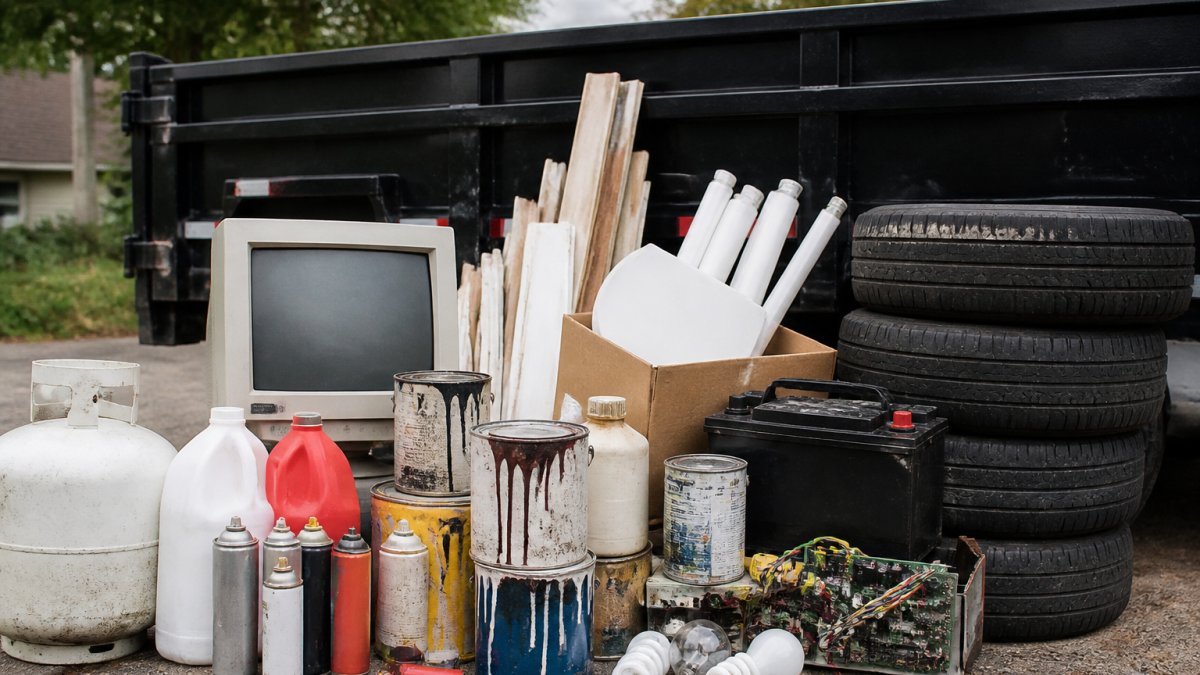
- Prohibited Dumpster Items: The Quick List
- Hazardous Waste Disposal: Chemicals, Solvents, and Pesticides
- How to Dispose of Paint and Other Liquids
- Can You Put Appliances in a Dumpster? Refrigerants and Freon Rules
- How to Dispose of Batteries, E-Waste, and Tires
- What Happens If You Put Prohibited Items in a Dumpster
- Frequently Asked Questions
Last Updated: October 16, 2026
Prohibited Dumpster Items: The Quick List
Knowing what items are prohibited in dumpsters before you rent one saves you money, time, and a rejected load at the curb. Federal law bans several materials outright, and every landfill and hauler adds its own restrictions on top.
Here's the short version: if it's hazardous, pressurized, liquid, or contains a refrigerant, it cannot go in a dumpster.
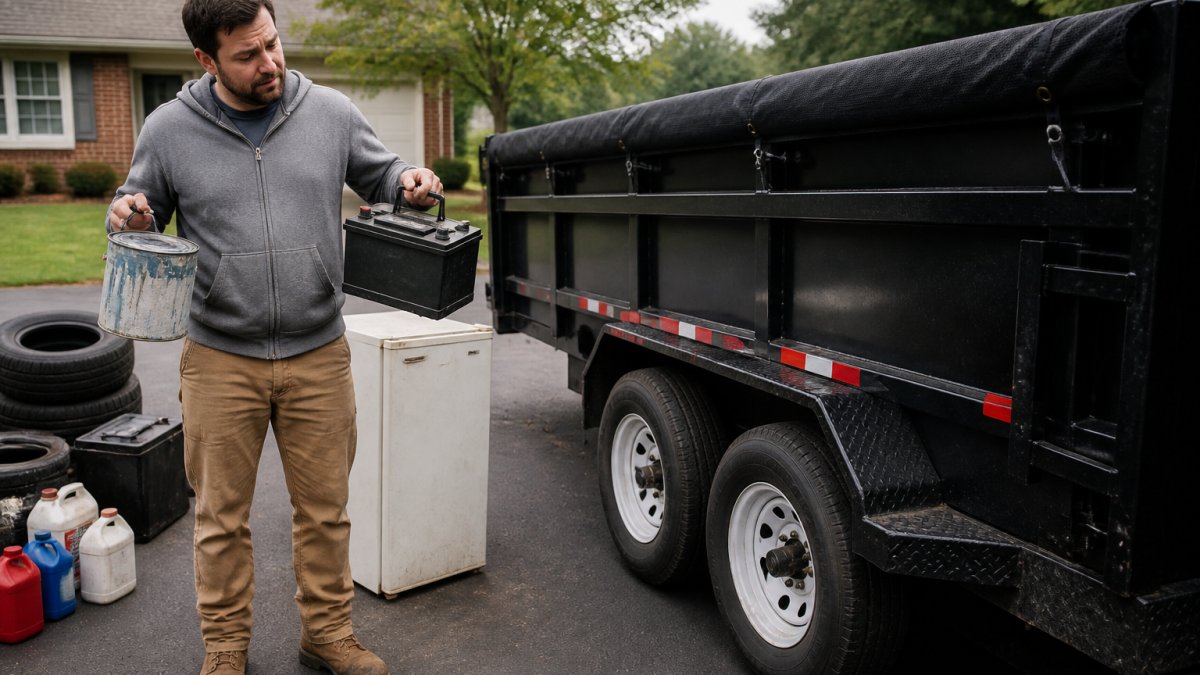
Federally Regulated Bans
Federal rules govern the most dangerous materials, and haulers cannot accept them regardless of local policy. The EPA hazardous waste regulations classify materials as hazardous when they are ignitable, corrosive, reactive, or toxic. That covers solvents, many pesticides, and oil-based finishes. Asbestos and medical waste fall under separate federal rules with their own handling requirements.
Landfill and Hauler Restrictions
Landfills and haulers add their own lists on top of federal bans. A landfill may refuse a load containing tires or appliances even when federal law permits them, because the site lacks the equipment to process them. Local regulations vary widely, so what a hauler accepts in one service area may be rejected in the next. Always confirm the restricted list with your specific hauler before loading.
Item-by-Item Disposal Decision Guide
Use this table as a working checklist. The "Why It's Banned" column tells you the mechanism behind the restriction, and the "Correct Disposal Route" column tells you where the item actually goes.
| Item | Why It's Banned | Correct Disposal Route |
|---|---|---|
| Oil-based paint, solvents, varnish, stain | Ignitable and toxic; can leach into groundwater | Household hazardous waste (HHW) event or permanent HHW facility |
| Latex paint (liquid) | Liquid leaks and contaminates other loads | Dry out fully, then place the open, hardened can in the dumpster if your hauler allows it |
| Pesticides, herbicides, pool chemicals | Toxic to soil, water, and collection workers | HHW event or permanent HHW facility |
| Refrigerators, freezers, AC units | Refrigerant must be recovered before scrapping | Appliance recycler or utility/retailer pickup program |
| Batteries (lead-acid, lithium, rechargeable) | Fire risk when shorted against metal in trucks and landfills | Retail drop-off (auto parts store, big-box store) or HHW site |
| Tires | Banned from most landfills; trap methane and create fire risk | Tire retailer or tire recycler |
| Propane tanks, helium tanks, aerosol cans under pressure | Explosion risk when crushed in a compactor | Supplier exchange program or HHW site |
| Motor oil, antifreeze, transmission fluid | Toxic and flammable; contaminates loads | Auto parts store or HHW site |
| Electronics (TVs, monitors, computers, printers) | Heavy metals and recoverable material | E-waste drop-off event or retailer take-back program |
| Medical waste, sharps, syringes | Biohazard; regulated separately from household trash | Medical waste collection or pharmacy sharps program |
| Asbestos-containing material | Airborne fibers; separate federal handling rules | Licensed asbestos abatement contractor |
| Treated wood (pressure-treated, creosote) | Chemical preservatives; restricted at many landfills | Construction and demolition (C&D) facility that accepts treated wood |
| Mattresses | Bulky; many landfills charge a separate fee or ban them | Mattress recycler or retailer take-back program |
| Food waste (large volumes) | Odor, pests, and weight; some haulers restrict it | Compost program or municipal organics collection |
How to Verify the Rules for Your Specific Rental
Because federal, state, and local rules stack on top of each other, the only reliable answer for your rental is the one your hauler gives you in writing. A practical verification workflow:
- Ask the hauler for their prohibited-items list before delivery. Most provide it as a PDF or on their website. If they don't have one, ask them to email you the restricted categories.
- Confirm the destination landfill or transfer station. The hauler's rules usually mirror the receiving facility's rules, so knowing the destination tells you which local restrictions apply.
- Check your state environmental agency's page on solid waste and household hazardous waste. These pages list banned-from-landfill items (tires, appliances, yard waste, and electronics are common examples) and point to HHW collection sites.
- Ask about fees for restricted items. Some haulers will accept a mattress, tire, or appliance for an added charge rather than reject the load. Knowing the fee up front is cheaper than a rejected pickup.
- Get the answer in writing. A text or email from the hauler is your protection if a driver later refuses the load.
Special Cases and Ambiguous Items
Some items sit in a gray zone, and acceptance varies by hauler and landfill:
- Empty vs. partly full paint cans. An empty, dry latex can is usually fine. A can with liquid paint is not.
- Small appliances. A toaster or microwave usually goes in the dumpster; a mini-fridge does not, because of the refrigerant.
- Treated wood. Pressure-treated lumber is restricted at many landfills because of the preservatives; untreated lumber is generally accepted.
When an item falls into one of these gray zones, treat it as prohibited until your hauler confirms otherwise.
Hazardous Waste Disposal: Chemicals, Solvents, and Pesticides
Household hazardous waste is any household product that is corrosive, flammable, reactive, or toxic, and it never belongs in a dumpster. The EPA household hazardous waste guidance explains that these materials require separate collection because they can leach into groundwater or injure collection workers.
The list includes solvents, paint thinners, pool chemicals, pesticides, herbicides, adhesives, and aerosols. Most communities run periodic collection events or maintain a permanent drop-off facility for these materials. Store them in their original containers until you can deliver them.
How to Dispose of Paint and Other Liquids
Paint disposal depends entirely on the type. Latex paint is not classified as hazardous in most areas, but liquid of any kind is banned from dumpsters because it leaks and contaminates other loads.
For latex paint, many haulers and municipalities accept cans once the paint is fully dried out.
Other liquids follow the same logic: motor oil, antifreeze, and cleaning chemicals all need a dedicated drop-off. Never place a sealed container of unknown liquid in a dumpster.
Can You Put Appliances in a Dumpster? Refrigerants and Freon Rules
You cannot put refrigerators, freezers, or air conditioners in a dumpster. These appliances contain refrigerant, and federal law requires certified recovery of that refrigerant before the unit is scrapped. The EPA refrigerant management requirements prohibit venting refrigerant to the atmosphere, and crushing an appliance in a dumpster does exactly that.
Why Refrigerant Appliances Are Banned
Refrigerants are ozone-depleting or high-global-warming substances. When an appliance is crushed in a dumpster or compactor, the refrigerant escapes into the air.
The recovery step is not optional. A certified technician uses recovery equipment to pull the refrigerant into a container, and the appliance is then safe to scrap. Appliance recyclers, utility pickup programs, and many retailers that sell new appliances have this equipment on hand.
Appliances With Refrigerant vs. Without
| Appliance | Contains Refrigerant? | Dumpster OK? |
|---|---|---|
| Refrigerator, freezer | Yes | No |
| Window AC, central AC unit | Yes | No |
| Dehumidifier | Yes | No |
| Water cooler (compressor type) | Yes | No |
| Stove, oven, range | No | Usually yes |
| Water heater | No | Usually yes, but some haulers charge a fee |
| Washing machine, dryer | No | Usually yes |
| Dishwasher | No | Usually yes |
| Microwave | No | Usually yes |
Even for the "usually yes" appliances, confirm with your hauler. Some charge a separate fee for white goods, and some landfills ban them from the general waste stream.
Disposal Routes for Refrigerant Appliances
- Appliance recycler. A dedicated recycler recovers the refrigerant, then strips the metal for scrap. Many offer curbside pickup for a fee.
- Utility or retailer pickup program. Many utilities and retailers that sell appliances offer free or low-cost removal, and some pay a rebate for a working unit. Ask before you scrap it.
- Municipal recycling program. Some cities and counties run appliance collection as part of bulky-item pickup. Check your local solid waste department's page.
- Scrap yard. A scrap yard that is certified to recover refrigerant will accept the unit; one that is not cannot legally take it.
What About the Freon in Older Units?
Older refrigerators and freezers may use chlorofluorocarbon (CFC) refrigerants such as R-12, which are the most strictly regulated. Newer units typically use hydrofluorocarbons (HFCs) or blends. Either way, the recovery requirement is the same: a certified technician must pull the charge before the unit is scrapped. Do not cut the lines yourself to "let the Freon out", that is the exact practice the federal rules prohibit, and it can carry civil penalties.
Fees and Practicalities
Expect to pay something for proper appliance disposal, though the amount varies by hauler, recycler, and municipality. Common patterns:
- A utility or retailer pickup program may remove the unit for free or for a modest fee.
- A municipal bulky-item pickup may include appliances at no extra charge, or may require a sticker purchased from the city.
- A private appliance recycler may charge a per-unit fee, or may accept the unit for free if the scrap metal value covers the labor.
Because rates and programs change, confirm the current fee and pickup window with the specific program before you schedule. And never place a refrigerant appliance in a dumpster on the assumption that the hauler will sort it out, a rejected load costs more than the disposal fee you were trying to avoid.
How to Dispose of Batteries, E-Waste, and Tires
Batteries, electronics, and tires are the three items most likely to get your load rejected. Each has a dedicated disposal channel, and mixing them into a dumpster creates real hazards.
Batteries cause truck and landfill fires when they short against metal. Retailers that sell batteries often accept them back for recycling.
Automotive parts need a quick check before disposal. Oil filters, for instance, hold residual oil and are restricted in many areas.
What Happens If You Put Prohibited Items in a Dumpster
A rejected load is the most common consequence, and it costs you twice: the disposal fee plus the labor of unloading the prohibited items.
Fines are possible when prohibited materials reach the landfill. Local regulations often place the penalty on the party who generated the waste, not just the hauler.
The practical fix is a sort before you load. Separate restricted materials first, stage them for their proper disposal route, and load only accepted debris.
Frequently Asked Questions
Can I put paint cans in a dumpster?
Latex paint cans that are completely dried out can often be placed in a dumpster, but only if your hauler and local facility allow it. Oil-based paint, wet paint of any kind, and paint thinners are prohibited dumpster items in most areas because they are flammable and classified as household hazardous waste. To dispose of paint properly, check with your municipal household hazardous waste program for drop-off days. Never pour liquid paint down a drain or into the trash.
Are appliances allowed in dumpsters?
It depends on the appliance. A dishwasher, washing machine, or stove can often go into a dumpster after all doors and cords are removed. Refrigerators, freezers, air conditioners, and dehumidifiers contain refrigerants and are restricted under federal rules, so they require certified refrigerant recovery before disposal. Check with your hauler first. Many landfills charge extra for appliances, and some will reject the entire load if an unprocessed refrigerant appliance is found.
Can you throw batteries in a dumpster?
No. Batteries are prohibited dumpster items in essentially every U.S. jurisdiction. Lithium-ion and lead-acid batteries can spark fires in trucks and at landfills, and many states classify them as universal waste. Dispose of batteries through a retailer take-back program, a municipal household hazardous waste event, or a certified recycling center. This applies to AA, AAA, button cells, power tool batteries, and car batteries.
What happens if prohibited items are found in your dumpster?
The hauler can reject the entire load at the landfill and return it to you. You will typically be charged a rejected load fee, plus additional transportation and disposal costs. In some cases, local regulations impose fines for illegal dumping of hazardous waste. The financial hit can be several times the original rental cost, and you still have to dispose of the material correctly. Sorting items before loading is the cheapest way to avoid this.
Can you put tires in a dumpster?
Tires are restricted in most dumpster rentals. Many landfills ban whole tires because they trap methane, create fire hazards, and do not compact. Some haulers allow a small number of tires for an extra fee, but you must ask first. For proper disposal, take tires to a tire retailer that accepts them for recycling, or to a municipal tire amnesty event. Never cut or shred tires yourself.
Is hazardous waste allowed in a dumpster?
No. Hazardous waste disposal is handled separately from regular dumpster service. Items like pesticides, herbicides, solvents, oil-based paint, antifreeze, motor oil, and pool chemicals must go to a household hazardous waste facility or a certified drop-off event. Putting them in a dumpster risks contaminating the whole load, triggering a rejected load, and potentially violating federal and state environmental regulations.
How do I dispose of items that are not allowed in a dumpster?
Route each item to its correct channel. Household hazardous waste goes to a local collection event or facility. Batteries and e-waste go to retailer take-back programs or certified recyclers. Refrigerant appliances need certified recovery before scrap. Tires go to a tire recycler or retailer. Medical waste goes to a pharmacy take-back or a medical waste service. For everything else, confirm with your hauler before loading.
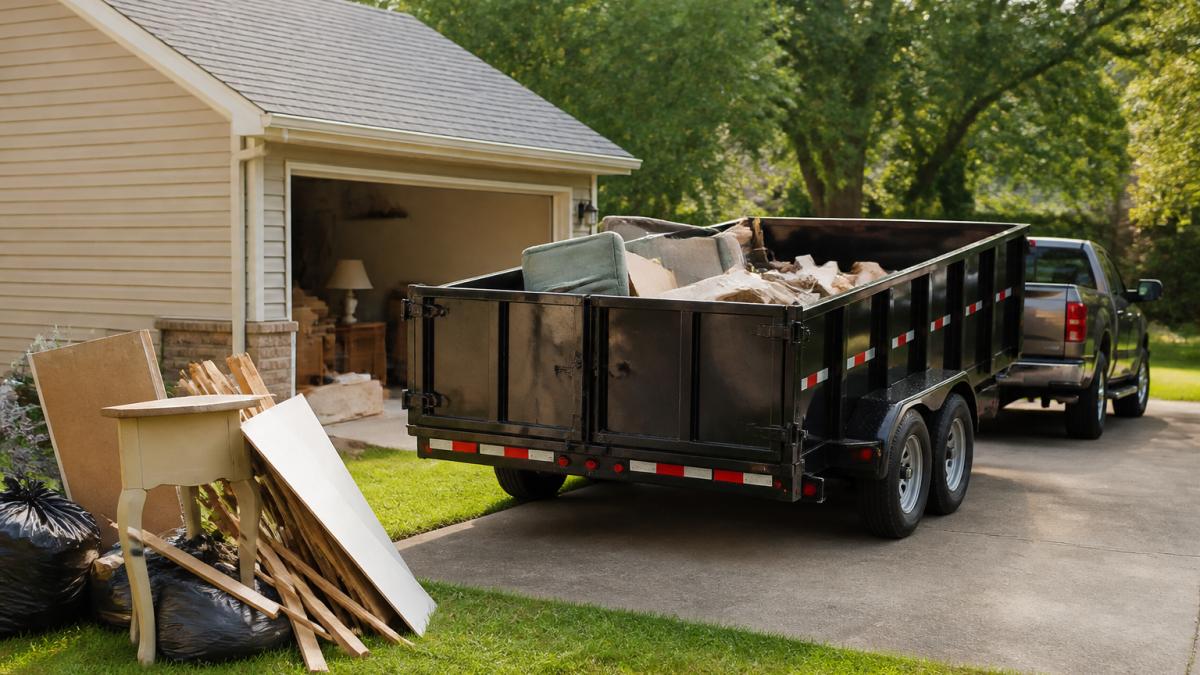
Sorting prohibited items before you load is the difference between a smooth cleanup and a rejected trailer sitting in your driveway. Fill and Dump Trailers makes the process simple with driveway-safe 12-yard trailers, a three-day loading window, and the first ton of disposal included in every rental. When you're ready to clear out the garage, basement, or job site, submit a request and we'll handle delivery and pickup.