 ultimate-guide
Safe Ways to Transport Vehicle Trailers: A Complete Guide
Table of Contents
- Choosing the Right Trailer and Tow Vehicle for Safe Transport
- How to Load a Car Onto a Trailer Safely
- How to Secure a Car on a Car Hauler Trailer
- Trailer Weight Distribution and Tongue Weight Explained
- Vehicle Trailer Towing Safety Checklist Before You Drive
- Transport Methods: DIY Towing, Professional Shipping, and Enclosed Carriers
- Transporting Special Vehicle Types: Low-Clearance Cars, Motorcycles, and EVs
- What to Do If a Strap Loosens or Emergency Occurs During Transport
- Frequently Asked Questions
Last Updated: October 17, 2026
Choosing the Right Trailer and Tow Vehicle for Safe Transport
Selecting the right tow vehicle and transport vehicle trailers is the foundation of safe transport.
Before purchasing or renting, verify your tow vehicle's maximum towing capacity in the owner's manual, the total weight it can safely pull, including trailer and load. Exceeding it compromises braking performance, steering control, and suspension stability.
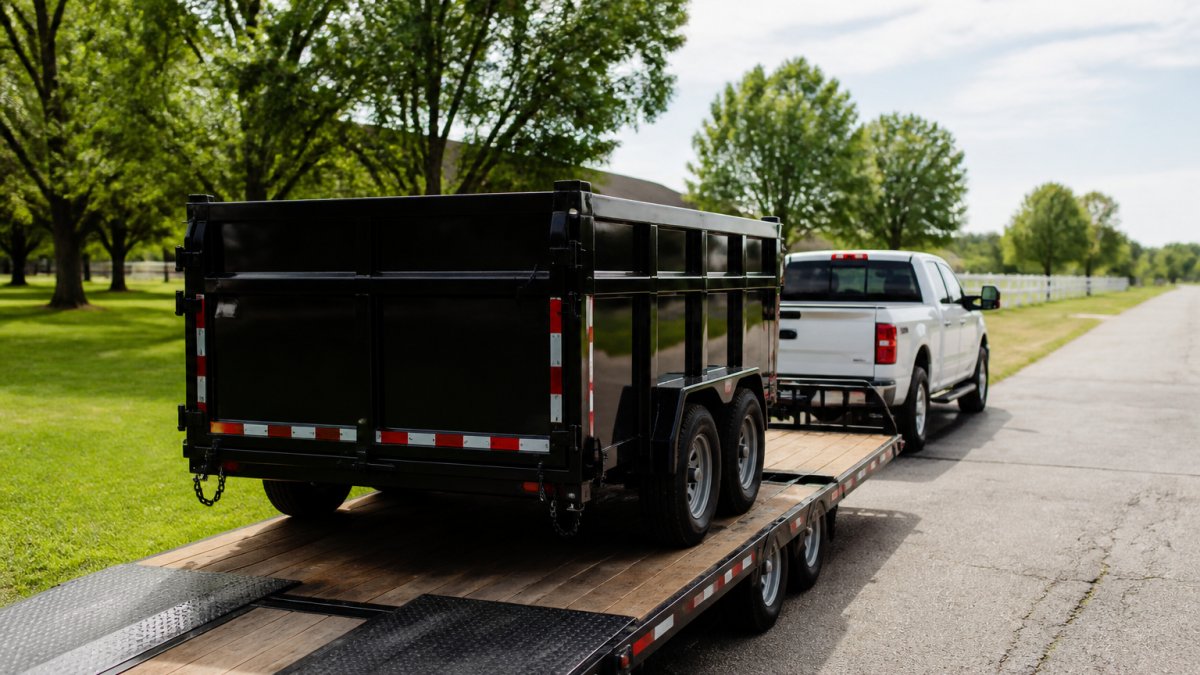
You'll encounter three main trailer types: open trailers, enclosed carriers, and specialty flatbed units.
When evaluating a car hauler trailer, check payload capacity (maximum weight it can carry), tongue weight (downward force on your hitch), and axle ratings.
How to Load a Car Onto a Trailer Safely
Loading a vehicle requires deliberate positioning, proper ramp use, and clear communication with any helper. Rushing this step is where most accidents happen. The process has three critical phases: positioning the ramps, centering the vehicle, and securing it before movement.
Positioning and Centering the Vehicle
The vehicle must be centered on the trailer to prevent weight imbalance and trailer sway. Begin by aligning the trailer perpendicular to the vehicle's direction of travel, ensuring adequate space on both sides.
Before driving on, mark the center point visually, many experienced transporters place tape or chalk on the trailer deck to guide alignment.
Once fully on the trailer, the vehicle should sit with approximately equal weight on each side. Confirm it isn't tilted, uneven weight distribution creates dangerous handling and increases the risk of load shift during transit.
Using Ramps Correctly
Ramps are often overlooked, but improper use causes suspension damage, bent frames, and safety hazards. Before loading, inspect them for cracks, bent edges, or loose components, and place them firmly against the trailer deck.
Drive up no faster than walking speed, sudden acceleration can cause wheels to slip on the ramp surface and lose control.
Some trailers include safety chains or guides on the ramps to help with alignment, use them. After loading, carefully remove the ramps and secure them to the trailer frame to prevent shifting during transport.
How to Secure a Car on a Car Hauler Trailer
Proper securement prevents load shift, the leading cause of accidents during vehicle transport. This section covers anchor points, tie-down straps, and tension checks before you drive.
Selecting Tie-Down Points and Anchor Points
Identify four solid anchor points on the vehicle, typically the frame or suspension attachment points. Never use door handles, bumpers, or trim pieces, they fail under load.
The trailer's anchor points or D-rings are rated for specific working loads, usually marked in the trailer documentation. Match the anchor point rating to your tie-down strap rating, both must exceed the force generated by the vehicle's weight and road conditions.
For a standard car weighing around 3,500 pounds, use at least four tie-down straps rated for 5,000 pounds or higher working load limit each. This provides redundancy and safety margin.
Applying Wheel Straps and Axle Straps Correctly
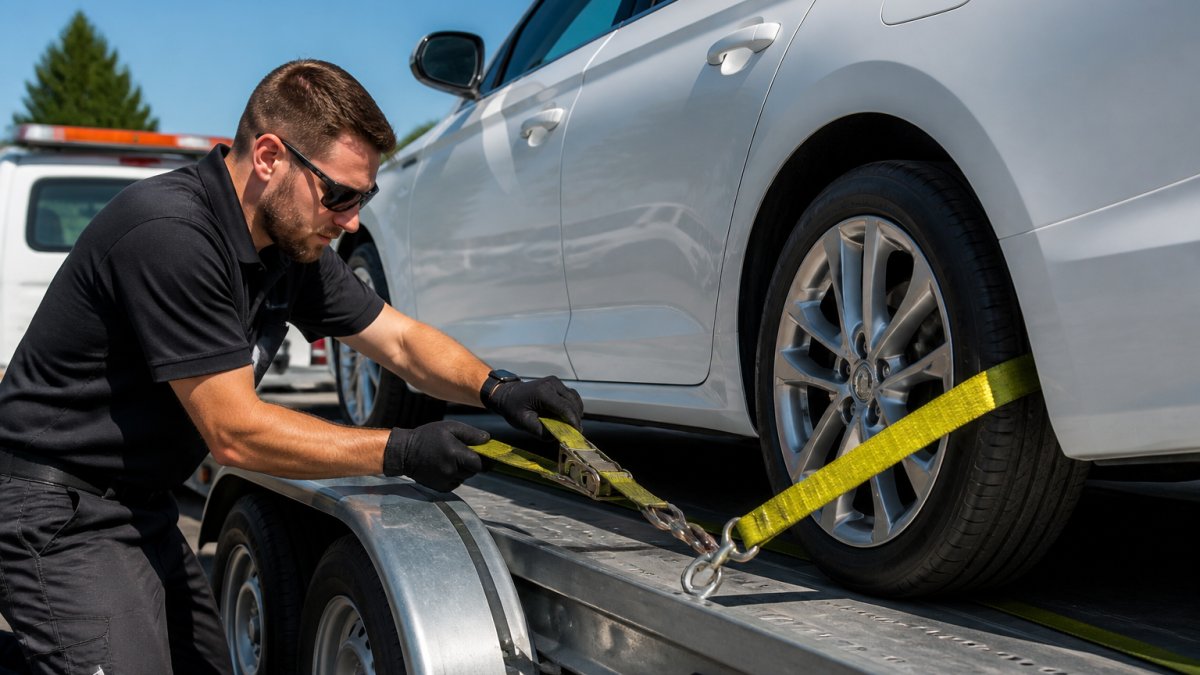
Wheel straps wrap around the tire and wheel assembly, then connect to trailer anchor points. Position each so it contacts the tire sidewall and rim equally, and tighten gradually, alternating between straps for balanced tension.
Axle straps connect directly to the axle housing or suspension components.
Tighten each strap firmly but don't over-tighten, the goal is snug contact without deforming the wheel or damaging the undercarriage. A properly tensioned strap resists moderate hand pressure without requiring extreme force.
Trailer Weight Distribution and Tongue Weight Explained
Weight distribution directly affects towing safety and handling.
Distribute the loaded vehicle's weight to keep tongue weight within range. Positioned too far forward, tongue weight increases, potentially exceeding your tow vehicle's capacity and overloading the rear axle.
Calculate total weight before transport: trailer plus vehicle plus any cargo. Ensure it doesn't exceed your tow vehicle's maximum towing capacity, discovering an overload mid-trip leaves no safe way to adjust.
For trailers rented from providers, the rental agreement typically includes weight specifications. Review these carefully. Exceeding stated limits voids insurance coverage and creates liability for any accidents or damage resulting from overweight conditions.
Vehicle Trailer Towing Safety Checklist Before You Drive
A comprehensive pre-trip inspection prevents roadside emergencies. This checklist covers both the tow vehicle and the loaded trailer.
Tow Vehicle Inspection
Check tire pressure and condition on all four wheels, underinflation reduces braking effectiveness and increases fuel consumption. Inspect the hitch connection, ensuring the coupler is fully seated and the safety pin is in place.
Test the brakes with firm pressure at low speed, the vehicle should stop smoothly without pulling left or right. If brake feel is soft or it pulls, do not transport.
Adjust your mirrors for visibility of the trailer and road behind.
Trailer and Load Inspection
Inspect the trailer frame for cracks, rust, or damage that could compromise structural integrity. Check that tail lights, brake lights, and turn signals work, and test the trailer's brakes (if equipped) at low speed.
Inspect all tie-down straps for fraying, cuts, or damage and replace any compromised ones. Verify the vehicle is still centered and hasn't shifted since loading, and check wheel straps for proper tension, they should resist moderate hand pressure without being over-tightened.
Confirm that the trailer's tongue weight is within your tow vehicle's capacity. If you have a tongue weight scale, use it.
| Inspection Item | Check | Status |
|---|---|---|
| Tow vehicle tire pressure | All four wheels | ✓ |
| Hitch connection | Coupler seated, safety pin in place | ✓ |
| Vehicle lights | Headlights, brakes, trailer lights functional | ✓ |
| Brake system | Soft pedal, pulling, or fluid leaks | ✓ |
| Trailer frame | Cracks, rust, structural damage | ✓ |
| Tie-down straps | Fraying, cuts, proper tension | ✓ |
| Vehicle centering | Equal weight distribution on trailer | ✓ |
| Tongue weight | Within tow vehicle capacity | ✓ |
Transport Methods: DIY Towing, Professional Shipping, and Enclosed Carriers
Three primary options exist for transport vehicle trailers, each with distinct trade-offs. Understanding them helps you choose the approach that matches your needs, budget, and comfort level.
DIY towing using an open trailer gives you maximum control and flexibility. You load, drive, and manage the entire process.
Professional auto transport services handle pickup, loading, transport, and delivery. They carry insurance covering the vehicle in transit and employ trained drivers.
Enclosed carriers load vehicles into a fully enclosed trailer, protecting them from road debris, weather, and theft.
Transporting Special Vehicle Types: Low-Clearance Cars, Motorcycles, and EVs
Different vehicle types present unique transport challenges. Low-clearance sports cars risk undercarriage damage on standard ramps. Motorcycles require specialized securing techniques.
Low-clearance vehicles need shallower ramp angles than standard cars. Some transporters use drive-on trailers with minimal height differential, allowing these vehicles to load with less risk of scraping.
Motorcycles require wheel chocks or specialized motorcycle tie-down systems. Standard car tie-down straps can damage fairings or frames.
Electric vehicles present weight distribution challenges. Most EVs have heavy battery packs mounted low in the chassis, creating a lower center of gravity but changing how weight distributes on the trailer.
What to Do If a Strap Loosens or Emergency Occurs During Transport
Despite careful preparation, emergencies happen.
If you notice a strap has loosened while driving, exit the highway at the nearest safe location.
If the tow vehicle experiences brake failure, steering problems, or engine trouble, pull over safely and call for roadside assistance.
If the loaded vehicle shifts or the trailer begins to sway, reduce speed gradually and maintain a straight line.
For emergencies involving other vehicles or property damage, document the scene with photos, exchange information with other parties, and contact your insurance provider.
Safe transport of vehicle trailers depends on thorough preparation, proper technique, and honest assessment of your equipment's capabilities. At Fill and Dump Trailers, we understand that safe transport begins with the right equipment and clear guidance, whether you're managing a single vehicle move or planning a larger project. The National Highway Traffic Safety Administration provides detailed guidance on trailer safety standards.
Frequently Asked Questions
What is the 60/40 rule for trailers?
The 60/40 rule refers to weight distribution on a trailer: 60% of the load should be toward the front half of the trailer (closer to the hitch), and 40% toward the rear. This distribution helps maintain stable handling and prevents trailer sway. For vehicle transport, this means positioning the car so its weight is centered and slightly forward on the trailer bed to keep tongue weight within safe limits.
How do you safely load a vehicle onto a trailer?
Start by aligning the vehicle with the trailer's center line using the ramps. Drive slowly up the ramps at a steady pace without stopping. Position the vehicle so it's centered front-to-back and side-to-side on the trailer bed. Once positioned, engage the parking brake and turn off the engine. Use wheel chocks or blocks behind the wheels for additional security before applying tie-down straps.
What should you inspect before towing a vehicle trailer?
Conduct a vehicle trailer towing safety checklist covering: tow vehicle brakes, tire condition, hitch connection, safety chains, trailer lights, trailer tires, and brake function. Verify the trailer hitch is properly rated for the combined weight. Check that all tie-down straps are intact and rated for the load. Confirm the load is balanced and secured. Inspect the trailer frame for cracks or damage. Ensure your vehicle's towing capacity is not exceeded.
How do you calculate proper tongue weight for a trailer?
Tongue weight is the downward force exerted on the hitch by the trailer. It should be 10-15% of the total trailer weight. For example, if your loaded trailer weighs 6,000 pounds, the tongue weight should be 600-900 pounds. Check your vehicle's owner manual for maximum tongue weight capacity. Use a tongue weight scale to verify. Proper tongue weight prevents trailer sway and maintains tow vehicle stability during transport.
What is the 80% rule when towing?
The 80% rule states that your vehicle should not tow a load exceeding 80% of its gross vehicle weight rating (GVWR). This safety margin accounts for driver weight, passengers, fuel, and cargo. For example, if your tow vehicle has a GVWR of 5,000 pounds, the maximum safe trailer weight is 4,000 pounds. Staying within this limit improves braking performance, handling, and reduces wear on the transmission and engine.
How do you secure a car on a car hauler to prevent shifting?
Use at least four tie-down straps rated for the vehicle's weight, typically with a working load limit of 1,500-2,000 pounds each. Attach straps to solid anchor points on the trailer frame and to the vehicle's frame or suspension attachment points. Tighten straps evenly to maintain tension without over-tightening. Cross straps diagonally for added stability. Check strap tension every 50 miles during transport and before each leg of the journey to ensure nothing has loosened.
Can I transport a low-clearance car on an open trailer?
Low-clearance vehicles like sports cars or lowered vehicles may not fit safely on standard open trailers due to height restrictions under bridges and overpasses. Enclosed trailers provide clearance protection and weather protection. If using an open trailer, plan your route to avoid low-clearance areas and verify the vehicle's height clearance before loading. Consider professional enclosed transport for vehicles with ground clearance under 5 inches.
What tie-down straps should I use for vehicle transport?
Use car tie-down straps with a working load limit of at least 1,500 pounds per strap. Look for ratchet-style or cam-buckle straps with reinforced webbing rated for automotive use. Avoid using rope or chain alone, as they lack the necessary elasticity and grip. Ensure snap hooks are rated for the load and are not damaged. Replace any frayed, torn, or discolored straps before transport. Four straps minimum are recommended for safe vehicle securement.