 comparison
What Does Construction Debris Removal Cost in 2026?
Last Updated: October 30, 2026
Quick Summary
The debris removal cost in 2026 runs most homeowners between $300 and $1,000 for a whole project, while volume-based pricing puts the basic rate at $70.51 to $82.61 per cubic yard. The gap reflects two different ways of measuring the same job, so ask every bidder what unit they are pricing.
- Angi reports a typical professional range of $300 to $800 for 2026 removal work.
- Homewyse prices by volume at roughly $71 to $83 per cubic yard.
- A typical tipping bill includes a gate minimum, per-ton rate, sorting surcharge, and special-handling charges.
- Full-service removal is the highest price option, while trailer rental is the lowest when you load it yourself.
- Ask for the unit priced, included weight, overage rate, and whether disposal fees are included, all in writing.
Table of Contents
- Construction Debris Removal Cost in 2026: What You'll Pay
- Pricing by Load Size: Small Load, Full-Truck, and Trailer Load Rates
- Construction Waste Disposal Fees: Landfill, Transfer Station, and Dump Fees
- Construction Dumpster Rental Cost vs. Other Removal Options
- How to Get an Accurate Construction Debris Removal Estimate
- The Cheapest Way to Remove Construction Debris Without Cutting Corners
- What Drives the Price Up: Weight, Material, Access, and Labor
- Renting a Dump Trailer for Your Next Cleanout
- Frequently Asked Questions
Construction Debris Removal Cost in 2026: What You'll Pay
Removing construction debris costs most homeowners somewhere between $300 and $1,000, according to CountBricks' 2026 construction debris removal cost guide, while volume-based estimates from Homewyse's May 2026 pricing data put the basic rate at $70.51 to $82.61 per cubic yard. The gap between those numbers is not a pricing error. It reflects two different ways of measuring the same job, and understanding which one applies to your project is the difference between a realistic budget and a nasty surprise at pickup.
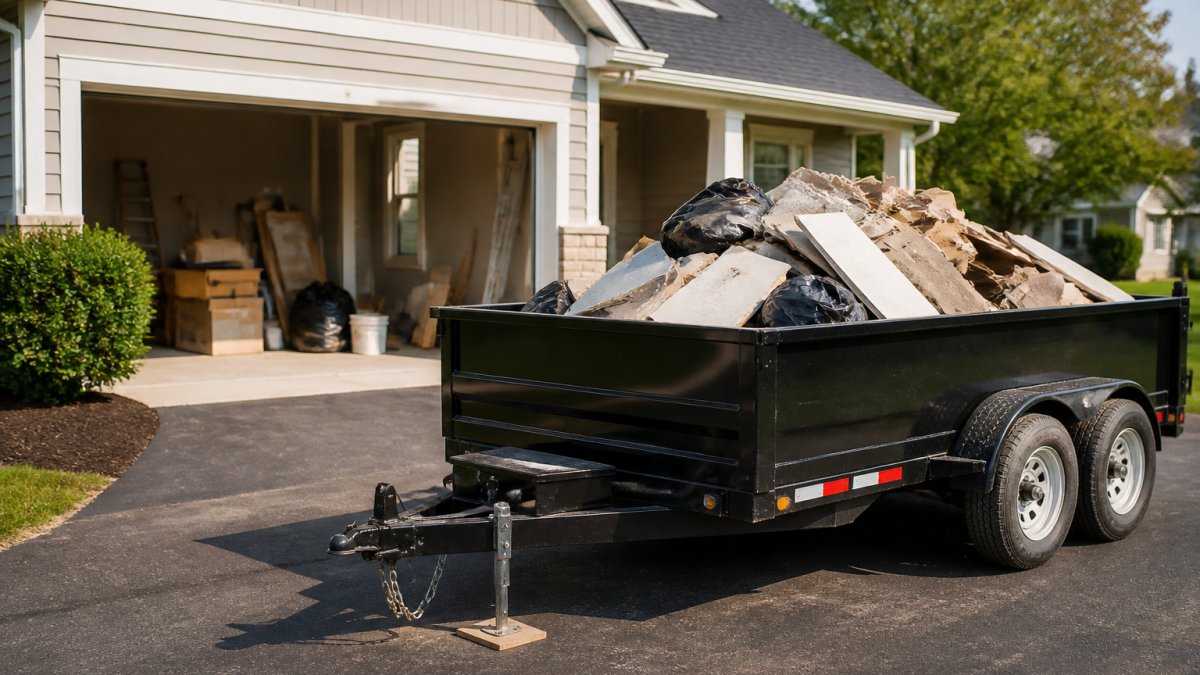
At Fill and Dump Trailers, we rent 12-yard dump trailers for exactly this kind of work. Below, we break down the fees that shape a debris removal bill and how to get an estimate that holds up.
The 2026 Price Ranges, Side by Side
Three published estimates for 2026 tell you how much the answer depends on the question. Angi's 2026 removal cost data reports a typical professional range of $300 to $800. CountBricks reports $300 to $1,000 for the same service. Homewyse prices by volume instead, at roughly $71 to $83 per cubic yard.
Neither is wrong. Angi and CountBricks price a whole project; Homewyse prices a unit of debris. A small bathroom teardown might land near the bottom of the project range, while a full kitchen gut sits at the top.
For a deeper walkthrough of what those figures cover, see The Complete Guide to Disposing of Construction Debris.
Why Every Quote You Get Looks Different
No two quotes match because no two contractors measure the same things. One prices by the truckload, another by weight at the scale house, a third by cubic yard with a minimum charge attached. Material matters too: a load of drywall and trim weighs far less than the same volume of concrete, and disposal fees follow weight.
Ask every bidder the same three questions: what unit are you pricing, what is the minimum charge, and are landfill fees included or added later. The answers make the quotes comparable.
Pricing by Load Size: Small Load, Full-Truck, and Trailer Load Rates
Load size is a major factor in the final bill. A small load, meaning a few cabinets and some flooring, may fall under a minimum charge that covers the trip regardless of volume, while larger loads are generally priced by volume or weight.
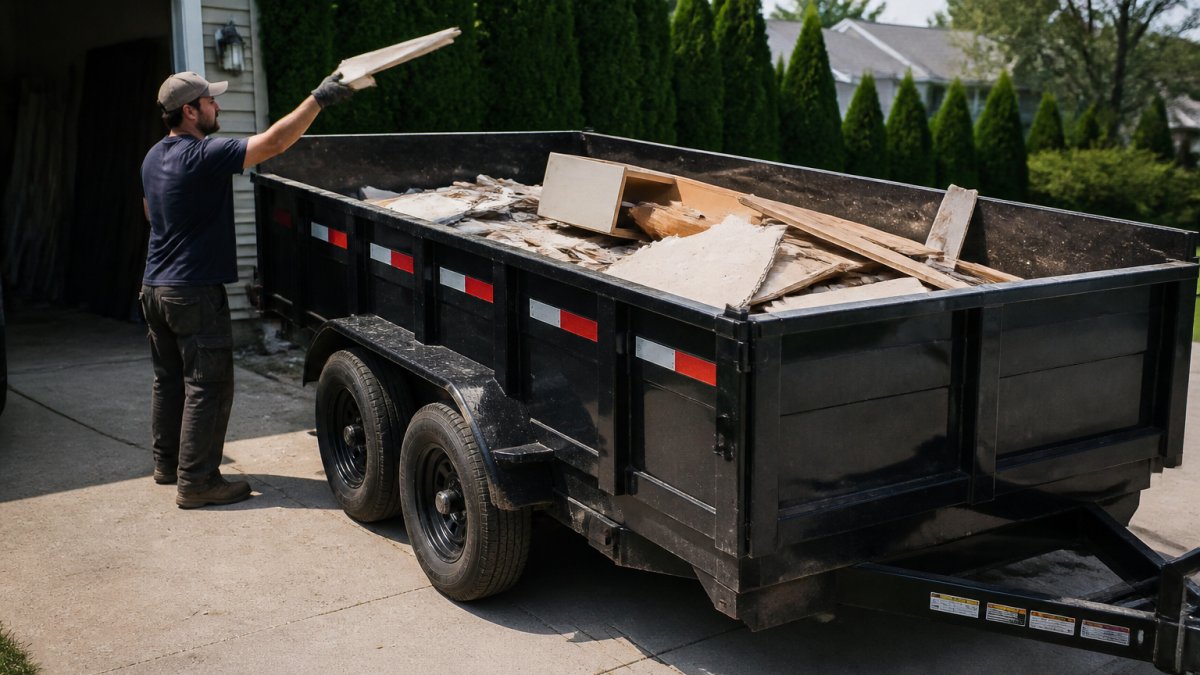
Here is how the three load sizes usually compare:
| Load Size | Typical Scope | How It's Priced |
|---|---|---|
| Small load | Few items, one room's trim | Minimum charge |
| Trailer load | Partial renovation, mixed debris | Per cubic yard or flat rate |
| Full-truck load | Whole-room gut or major cleanup | Per ton plus disposal fees |
Small loads can carry a higher cost per cubic yard because a minimum charge may not shrink with volume. Combining a garage cleanout with renovation debris in one haul can spread that fixed cost across more material.
Construction Waste Disposal Fees: Landfill, Transfer Station, and Dump Fees
Construction waste disposal fees are the pass-through costs a hauler pays to tip your debris, and they are usually the least transparent line on a quote.
1. The gate or minimum fee. Many landfills and transfer stations set a minimum charge regardless of weight, so a light load may still pay a minimum price.
2. The per-ton rate. Above the minimum, facilities bill by weight at the scale house.
3. Sorting and separation surcharges. Transfer stations that sort mixed debris charge more per ton than facilities that accept source-separated loads.
4. Special-handling and restricted-item charges. Treated wood, asbestos-containing materials, lead-painted debris, and anything containing liquid are restricted or surcharged.
Here is how the two facility types compare on the same load:
| Facility Type | How It Bills | Typical Extra Charges | Best For |
|---|---|---|---|
| Landfill | Per ton at the scale, with a one-ton minimum | Restricted-item surcharges, cover material fees | Heavy, bulky debris; large volumes |
| Transfer station | Gate fee plus per-ton rate for sorting and onward hauling | Mixed-load surcharge, separation fees | Small loads, mixed renovation debris, convenient drop-off |
Those fees vary by facility and by material.
Recycling separated materials, such as clean cardboard, scrap metal, and untreated lumber, can reduce what you pay at the gate. It also takes sorting time, which is why many haulers charge more for mixed debris, the labor of separation has to be paid somewhere, either by you before pickup or by the hauler at the transfer station.
Construction Dumpster Rental Cost vs. Other Removal Options
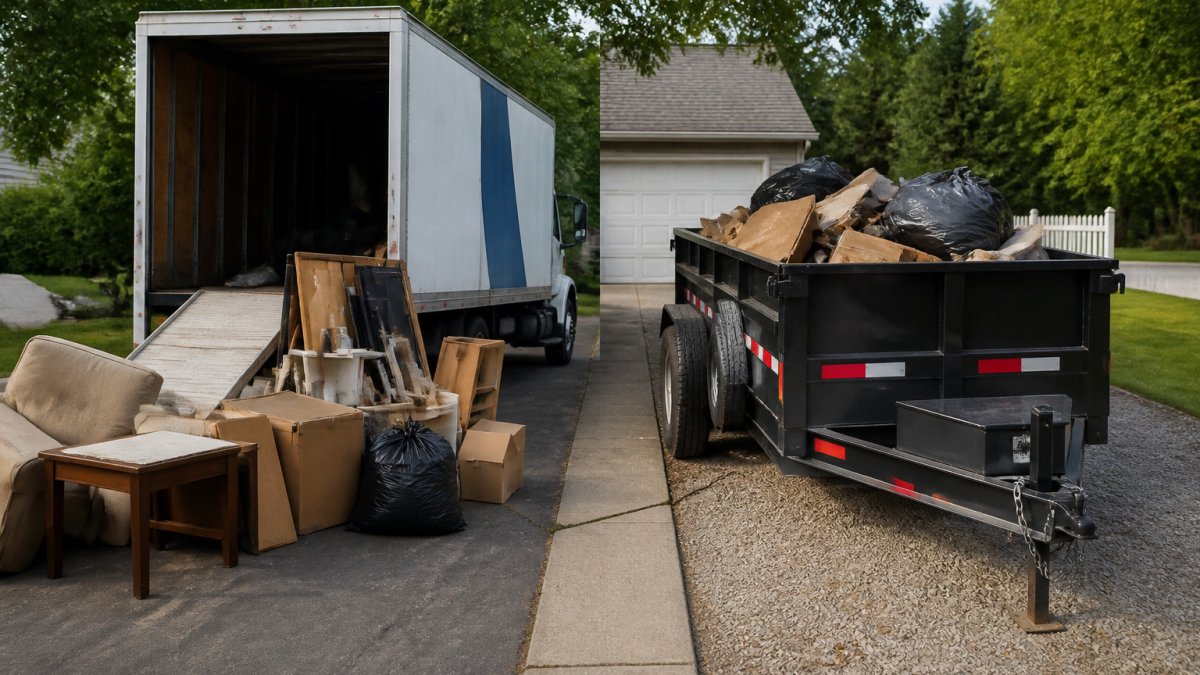
Construction dumpster rental cost varies, and weight overage risk can increase the final price. Full-service junk removal typically includes labor, loading, and hauling in one bundle. Trailer rental is generally lower in cost when you do the loading yourself.
Comparing them fairly means comparing what each includes:
- Full-service removal: highest price, zero physical work, fast scheduling.
- Dumpster rental: mid-range price, you load it, weight limits apply, permit may be needed for street placement.
- Trailer rental: lowest price, you load and tow or have it delivered, weight limits still apply.
If you are weighing a towable trailer against a roll-off container, our comparison of dump trailer vs roll-off dumpster covers driveway space, weight limits, and scheduling differences side by side.
How to Get an Accurate Construction Debris Removal Estimate
An accurate construction debris removal estimate starts with a realistic weight and volume figure, not a guess. Walk the site, list each material type, and estimate volume in cubic yards.
Weight depends heavily on material mix. Drywall and trim are light, while tile, vanities, and similar items are heavy.
The four line items behind every final bill. A quote that holds up itemizes these, and a quote that hides them is where overruns come from:
- Loading and labor. Priced by the hour or bundled into a flat rate. This is the largest single line in a full-service quote and the one DIY eliminates.
- Travel and delivery. A trip charge or mileage fee, especially for deliveries outside a hauler's core service area.
- Minimum and weight-limit fees. The one-ton gate minimum, plus overage charges if the load exceeds the container or trailer rating.
- Disposal and surcharges. The tipping fee at the facility, plus any restricted-item or mixed-load surcharge.
Photo quotes and their limits. Haulers often price from photos of the pile, but photos cannot show what is underneath.
Get it in writing. Ask for four items spelled out: the unit being priced, the included weight or volume, the overage rate, and whether disposal fees are inside the number. If a hauler will not put those in writing, keep calling.
If you want to estimate your own tonnage before you call anyone, our guide to calculating waste weight for dumpsters walks through the conversion.
The Cheapest Way to Remove Construction Debris Without Cutting Corners
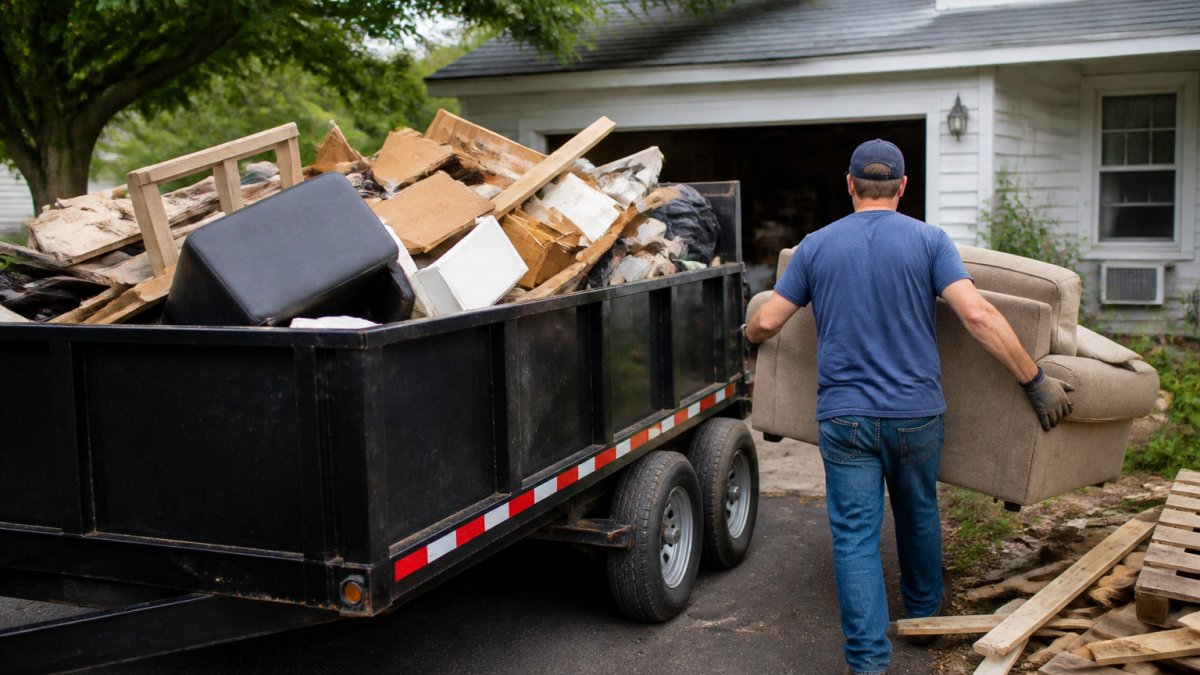
Doing the loading yourself can reduce cost because it removes the labor charge, which is a major line in full-service quotes. The trade-off is your time and physical effort.
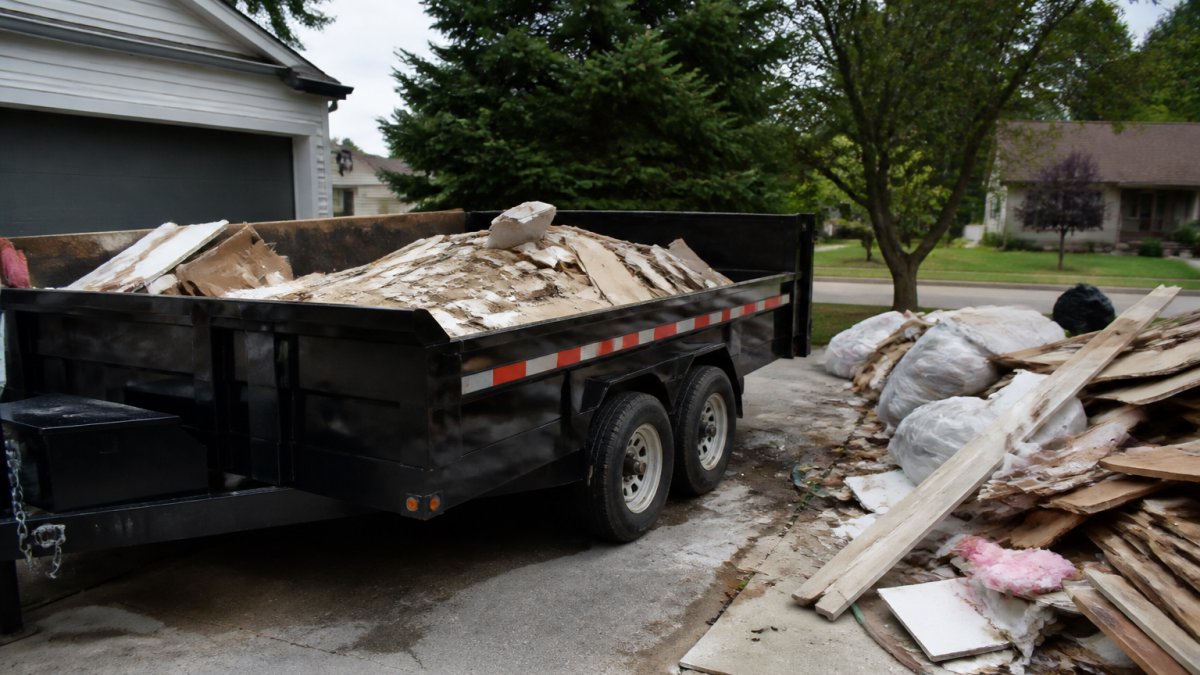
Sort before you load. Separating clean lumber, metal, and cardboard can cut disposal fees and may let you divert material from the landfill entirely. Stack flat items like drywall and flooring tightly to use the full volume of the container rather than paying for air.
If you are deciding between hauling it yourself and paying someone to take it, our breakdown of dump trailer rental vs junk removal compares the real all-in numbers for both.
Compare quotes carefully, since some exclude disposal fees and the final bill after weighing can differ from the initial estimate.
What Drives the Price Up: Weight, Material, Access, and Labor
Weight is often a major cost factor. Disposal is commonly priced per ton at the facility, so heavy materials like concrete, brick, tile, and soil can cost more to remove than the same volume of lighter debris.
Material type matters beyond weight. Some facilities restrict or surcharge certain items, and mixed debris usually costs more to tip than separated materials.
Labor is the line item that DIY loading avoids. Loading, carrying, and sweeping up is what a crew charges for, and that labor is often priced by the hour or bundled into a flat rate.
If you want to estimate your own tonnage before you call anyone, our guide to calculating waste weight for dumpsters walks through the conversion.
Renting a Dump Trailer for Your Next Cleanout
A dump trailer rental puts the loading schedule in your hands, which is the part most homeowners underrate. Three days of loading time means you can work evenings and weekends instead of racing a crew through the house in one afternoon.
Weight limits are the one number to understand before you book. Every trailer has a rated capacity, and overloading it creates both a safety problem and an overage charge at the scale. Our explainer on dump trailer rental weight limits covers how the ratings work in plain terms.
Fill and Dump Trailers rents driveway-safe 12-yard dump trailers with the first ton of disposal included and a three-day loading window.
Frequently Asked Questions
How much does construction debris removal cost in 2026?
Debris removal cost depends on volume, material weight, and how the waste is disposed of. Pricing varies by project and by provider, so request a quote for your specific job.
What is the cheapest way to remove construction debris?
Self-loading into a rented dump trailer or dumpster can reduce cost, because you skip the labor charges that full-service haulers build into their quotes. The trade-off is your own time and muscle. If you have heavy materials like concrete or shingles, compare the per-ton disposal fee before committing, since weight overages can erase the savings. Separating recyclable materials such as clean wood and metal can also lower construction waste disposal fees at some facilities.
Do junk removal companies charge by weight or volume?
Most junk removal companies price by volume, meaning they charge based on how much space your debris takes up in the truck, often with a minimum charge. Some add weight-based fees for heavy materials like concrete, dirt, or roofing shingles. That is why two quotes for the same pile can differ: one company may measure the load in cubic yards while another weighs it at the transfer station. Ask which method a hauler uses before you book.
Is it cheaper to rent a dumpster or hire a full-service removal company?
Dumpster rental and full-service removal are priced differently, and each may or may not include disposal fees, overage weight charges, permits, labor, or hauling. Compare what each quote includes. If you can load the debris yourself and stay under the weight limit, rental wins. If the debris is heavy or you cannot do the lifting, full-service removal can end up comparable once you add up every line item.
Construction debris adds up faster than most people expect, and the disposal bill is where renovation budgets quietly break. Fill and Dump Trailers takes the guesswork out of that last step with a 12-yard dump trailer delivered to your driveway, the first ton of disposal included, and three full days to load at your own pace. Get started with Fill and Dump Trailers and clear the site without renting a crew or guessing at landfill fees.