 how-to
Can Dump Trailers Damage Concrete Driveways?
Table of Contents
- Can Dump Trailers Damage Concrete Driveways?
- How Much Weight Can a Concrete Driveway Hold
- Assessing Your Driveway Before Delivery
- How to Protect a Driveway From a Dumpster
- Plywood Under a Dumpster: Does It Work?
- New Concrete Driveway Heavy Vehicle Damage
- Safe Dumping and Maneuvering Procedures
- What to Do If Your Driveway Is Damaged
- Frequently Asked Questions
Last Updated: October 18, 2026
Can Dump Trailers Damage Concrete Driveways?
Yes, dump trailers damage concrete driveways if the weight, load distribution, or driveway condition isn't properly assessed beforehand. The short answer is that most modern residential concrete can support a loaded dump trailer, but "most" isn't all, and preparation matters.
The real risk comes down to three factors: how much weight the trailer carries, how old and strong your concrete is, and whether the base beneath the concrete is solid.
This guide covers what you need to know before a dump trailer arrives at your property, how to assess your driveway's readiness, and what steps protect your concrete from unnecessary wear.
How Much Weight Can a Concrete Driveway Hold
Vehicle Weight and Axle Load Distribution
A standard residential concrete driveway, when properly installed, can typically support a loaded dump trailer.
The weight itself matters less than how that weight is distributed. A dump trailer concentrates load on two or three axles.
Key factors that affect load capacity:
- Axle weight distribution: A trailer with weight balanced across multiple axles applies less stress per tire than one with weight concentrated on a single axle
- Tire pressure: Under-inflated tires create a larger contact patch, spreading weight over more concrete surface
- Concrete thickness: Standard residential driveways are 4-6 inches thick; thicker slabs handle heavy loads better
- Load size and type: Five-yard loads of light materials (yard waste, household items) stress concrete less than five-yard loads of dense materials (soil, gravel, stone)
Most residential driveways built to current code can handle a loaded dump trailer without cracking, provided the driveway is in decent condition and the base is solid. The problem arises when one or more of those conditions isn't met.
Driveway Age and Concrete Curing
Concrete strength increases over time, but only for the first 28 days after it's poured. After that initial curing period, concrete reaches about 90% of its ultimate strength.
A driveway that's less than one year old is still developing its final strength. A driveway that's 15-20 years old has reached maximum strength but may have developed micro-cracks from freeze-thaw cycles, UV exposure, and traffic wear.
Age-related damage patterns:
- New driveways (under 1 year): Still curing; heavier loads increase cracking risk
- Young driveways (1-5 years): Near full strength; generally safe for dump trailers
- Mature driveways (5-20 years): Full strength but beginning surface wear; usually safe with assessment
- aging driveways (20+ years): Strength declining; freeze-thaw damage and joint separation common; higher risk
A concrete driveway doesn't have a hard expiration date, but one that's been through 25 winters in a freeze-thaw climate will have absorbed moisture and developed stress fractures.
Assessing Your Driveway Before Delivery
Concrete Condition and Existing Damage
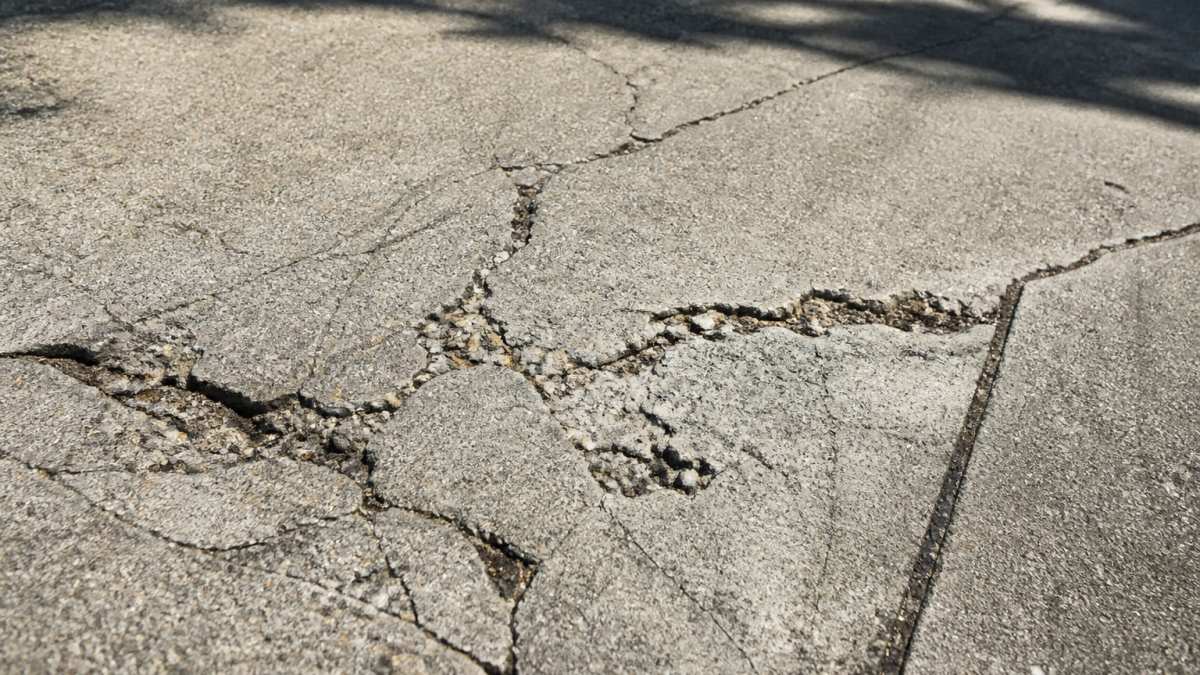
Before scheduling a dump trailer delivery, spend 15 minutes inspecting your driveway. Look for these warning signs:
Surface damage to watch for:
- Visible cracks wider than 1/8 inch
- Spalling (surface concrete flaking or peeling away)
- Sunken or heaving sections where the slab has shifted
- Potholes or deep gouges
- Discoloration or staining that suggests water damage underneath
What these signs mean:
Hairline cracks (thinner than a credit card) are normal and don't indicate structural failure. Cracks wider than 1/8 inch suggest the concrete is stressed.
The edge test:
Run your hand along the edges of your driveway where it meets the grass or landscape. Edges are the weakest part of any concrete slab because they lack the support of the base underneath.
Sub-Base and Gravel Foundation
What's underneath your concrete matters as much as the concrete itself. A driveway sits on a base layer, typically 4-6 inches of compacted gravel or crushed stone. This base distributes weight and allows water drainage.
Signs of base problems:
- Driveway surface is uneven or has sunken spots
- Cracks follow a pattern (often in a grid or along edges)
- Water pools on the driveway surface after rain
- The driveway flexes or feels soft when you walk on it
You can't see the base directly, but these surface signs indicate problems below. If your driveway is uneven or has settled in spots, the base has likely shifted or compacted unevenly.
The bounce test:
Walk across your driveway and pay attention to how it feels underfoot. A solid driveway feels rigid, no give, no flex.
How to Protect a Driveway From a Dumpster
Load Spreading and Weight Distribution
The most effective protection is spreading the trailer's weight across a larger surface area.
Practical protection methods:
- Plywood sheets: Lay down 3/4-inch exterior-grade plywood across the driveway where the trailer will sit. Plywood spreads weight across a larger area, reducing point load on any single spot
- Protective boards: Some contractors use heavy timber or composite boards designed for this purpose
- Load-spreading mats: Specialized rubber or plastic mats are made to distribute heavy vehicle weight
- Strategic positioning: Park the trailer where the driveway is strongest, typically toward the center, away from edges where support is weakest
How plywood works:
Plywood doesn't make a weak driveway strong, but it does reduce the stress on any single section. Instead of 10,000 pounds pressing down through two tire contact patches, that weight spreads across the entire plywood sheet.
The limitation: plywood works best on driveways that are already in decent condition. If your concrete is already cracked or the base is compromised, plywood helps but doesn't guarantee protection.
Plywood Under a Dumpster: Does It Work?
Plywood under a dump trailer reduces damage risk but doesn't eliminate it. Think of it as damage reduction, not damage prevention.
What plywood actually does:
- Spreads weight across a larger concrete surface
- Reduces point load on individual tire contact areas
- Protects the top concrete layer from direct tire contact
- Works best on solid, well-maintained driveways
What plywood doesn't do:
- Fix an already-damaged driveway
- Compensate for a weak or settled base
- Prevent damage if the concrete is actively deteriorating
- Protect against weight if the plywood itself breaks or shifts
Best practices for plywood protection:
Use 3/4-inch exterior-grade plywood (thinner plywood flexes too much and defeats the purpose). Lay sheets directly on the driveway surface, no gaps. Overlap sheets by at least 12 inches so weight doesn't fall between them.
The trade-off is that plywood can trap moisture against the concrete if left in place for days. If you're using a dump trailer for a three-day rental, moisture under plywood isn't usually a concern.
New Concrete Driveway Heavy Vehicle Damage
New concrete driveways, those less than one year old, are more vulnerable to heavy vehicle damage than mature driveways. The concrete hasn't reached full strength, and the base beneath may still be settling.
Why new concrete is at risk:
- Concrete is still curing and hardening during the first year
- The base layer may still be settling and compacting
- Freeze-thaw cycles haven't yet stressed the concrete
- The driveway hasn't been "proven" under typical use
If your driveway is brand new, the best approach is to wait before bringing a loaded dump trailer onto it. If you must use a dump trailer on new concrete, use plywood protection and keep loads as light as possible.
Timeline guidance:
- Under 1 month old: Avoid heavy vehicles entirely if possible; concrete is still in critical curing phase
- 1-6 months old: Use protection (plywood) and lighter loads; avoid multiple passes with heavy equipment
- 6-12 months old: Plywood protection recommended; standard precautions apply
- Over 1 year old: Standard assessment applies; concrete has reached near-full strength
A new driveway is an investment. Protecting it during its first year prevents problems that will cost thousands to repair later.
Safe Dumping and Maneuvering Procedures
How the trailer is positioned and unloaded matters as much as the weight itself. Reckless maneuvering can damage even a strong driveway.
Before the trailer arrives:
- Clear the driveway of obstacles (cars, debris, landscaping)
- Mark any soft or weak spots so the driver knows to avoid them
- Have plywood or protection materials ready if needed
- Identify the best parking position, typically centered, away from edges
During delivery and positioning:
- Direct the driver to minimize turning on the driveway; sharp turns concentrate weight on a small area
- Ask the driver to position the trailer straight, not at an angle
- Avoid multiple passes over the same spot
- If the driveway is sloped, position the trailer perpendicular to the slope to avoid sliding stress
During unloading:
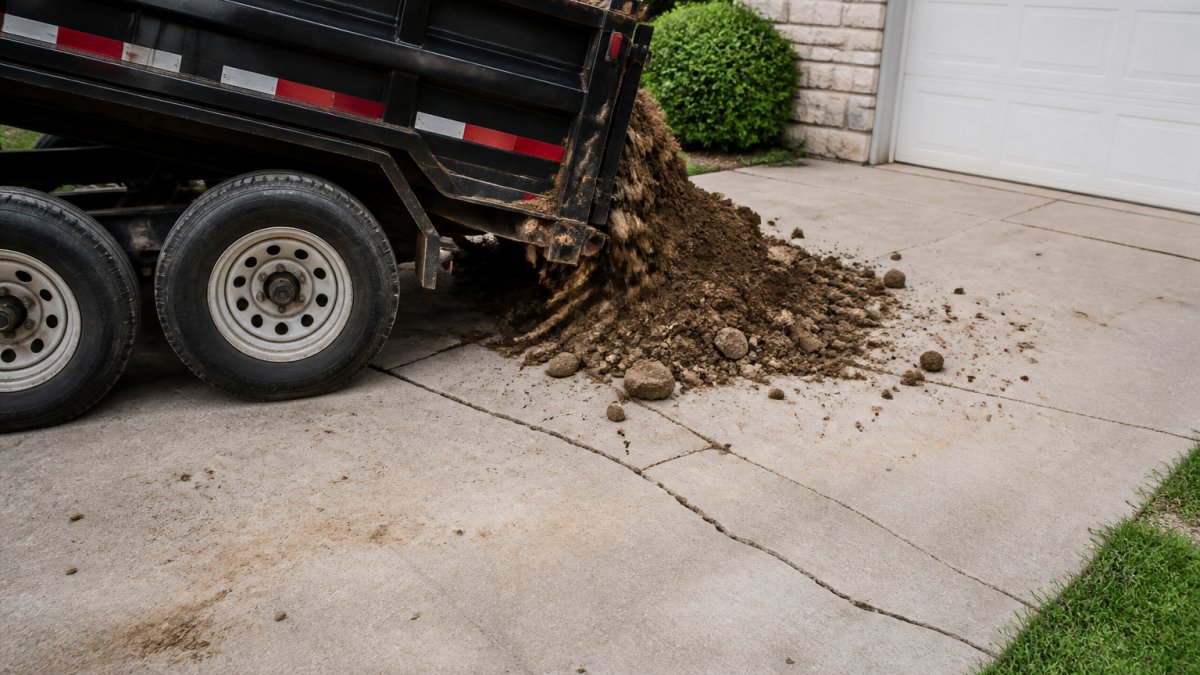
- Avoid dumping the entire load in one spot; spread material across the driveway or onto tarps
- Don't let material pile up on the concrete; move it off quickly
- Watch for spillage that could stain or damage the surface
After the trailer leaves:
- Sweep the driveway clean; debris can trap moisture
- Inspect for new cracks or damage
- If protection materials were used, remove them promptly
- Hose down the driveway to remove dust and debris
Communication with the driver is key. Most dump trailer operators understand driveway concerns and will take care if asked. A quick conversation about your driveway's condition and any soft spots can prevent unnecessary damage.
What to Do If Your Driveway Is Damaged
If a dump trailer caused visible damage to your driveway, document it immediately.
Steps to take:
- Take photos and video of the damage from multiple angles, with good lighting
- Note the date and time the damage occurred
- Measure cracks with a ruler; document width and length
- Contact the trailer rental company within 24-48 hours with photos and description
- Get a repair estimate from a concrete contractor; include this in any claim
Types of damage to report:
- New cracks that weren't present before
- Spalling or surface breaking
- Sections that have settled or heaved
- Edge separation or crumbling
What happens next:
Most dump trailer rental companies have liability insurance. If the damage is clearly caused by the trailer and was documented, the company's insurance may cover repair costs.
Repair options:
- Minor cracks (hairline to 1/8 inch): Concrete crack filler; DIY-friendly, costs under $50
- Moderate cracks (1/8 to 1/2 inch): Professional concrete repair; costs $200-500 depending on length
- Spalling or surface damage: Concrete patching; costs $300-800 for small areas
- Major damage (large cracks, settling, structural issues): Full section replacement; costs $1,000+
Addressing damage quickly prevents it from worsening. A small crack that's ignored can expand over winter when water freezes inside it.
Protecting your driveway from dump trailer damage comes down to preparation and smart choices.
Frequently Asked Questions
Can dump trailers crack a concrete driveway?
Yes, dump trailers can crack concrete driveways, especially older ones or those with existing damage. The risk depends on the trailer's axle weight, tire pressure, concrete age, and the quality of the sub-base beneath it. A trailer with concentrated point loads on weak concrete or poor gravel foundation is more likely to cause cracking. Newer concrete (less than 28 days old) is particularly vulnerable. Protection methods like plywood or timber mats significantly reduce cracking risk by spreading the load.
How much weight can a concrete driveway hold?
Standard residential concrete driveways typically support 4 to 6 inches of concrete over a prepared gravel base. Most can handle passenger vehicles (3,000 to 4,000 pounds) without issue. However, dump trailers and heavy trucks can exceed this capacity. A dump trailer fully loaded may weigh 10,000 to 15,000 pounds or more. The safe weight depends on concrete thickness, strength (typically 3,000 to 4,000 PSI), sub-base quality, and driveway age. Driveways under 5 years old with proper gravel bases handle loads better than older, thinner driveways.
Should I put plywood under a dump trailer?
Yes, plywood under a dump trailer is highly recommended for protecting your concrete driveway. Plywood spreads the trailer's weight across a larger surface area, reducing point-load stress on the concrete. Use at least 3/4-inch exterior-grade plywood or thicker timber mats. Lay plywood sheets in overlapping rows beneath all tire contact areas. This simple protective measure can prevent cracking and surface damage, especially on older driveways or those with weak sub-bases. Plywood is affordable and easy to position before trailer delivery.
Can a dump trailer damage a new concrete driveway?
New concrete driveways are actually at higher risk of damage from dump trailers than older, fully cured concrete. Concrete requires 28 days to reach full strength, though it can handle light traffic after 7 days. A dump trailer placed on concrete less than 28 days old can cause cracking, surface spalling, or joint failure. If you must use a dump trailer on new concrete, wait at least 28 days after pouring, use plywood protection, and keep the load as light as possible. Avoid heavy loads or repeated maneuvering on newly poured driveways.