 how-to
How to Choose the Right Size Dump Trailer
Last Updated: November 5, 2026
Quick Summary
To learn how to choose the right size dump trailer, start with what you're hauling and how heavy it is, not the bed dimensions. Match the load's weight to the trailer's payload capacity, then confirm your tow vehicle can handle the trailer's GVWR and tongue weight.
- A 12-yard trailer holds plenty of light debris but far less dirt or gravel before hitting its weight limit.
- Cubic yards measure volume, not weight: multiply length, width, and height in feet, then divide by 27.
- A 7x14 trailer with 2-foot sidewalls carries about 7.3 cubic yards in a level load.
- A 6x12 dump trailer suits most household cleanouts but hits weight limits fast with concrete.
- Tongue weight runs roughly 10 to 15 percent of loaded trailer weight and counts against truck payload.
Table of Contents
- Start With Your Hauling Needs, Not the Trailer
- Dump Trailer Size Chart: Matching Bed Size to Common Jobs
- Dump Trailer Sizes and Weights: What Each Class Can Carry
- 6x12 Dump Trailer Capacity: Is It Big Enough?
- Match Payload and GVWR to Your Tow Vehicle
- Dump Trailer Rental for a Home Cleanout: Sizing Your Project
- Safety Checks Before You Load
- Request Your Dump Trailer Size and Delivery Date
- Frequently Asked Questions
Start With Your Hauling Needs, Not the Trailer
Most people approach how to choose the right size dump trailer by eyeballing the pile in the garage. That's backwards.
A 12-yard trailer holds a lot of light debris. It holds far less dirt or gravel before it hits its weight limit. That difference decides your size.
So before you look at bed dimensions, write down three things:
- What material you're hauling (household junk, yard waste, concrete, soil)
- Roughly how much space it takes up
- Whether you can lift it yourself or need help loading
That last point matters more than people expect. A curbside pickup option changes the math on what you can handle alone.
If you're still deciding between equipment types, a dump trailer versus roll-off dumpster comparison can settle it before you commit to a size.
Dump Trailer Size Chart: Matching Bed Size to Common Jobs
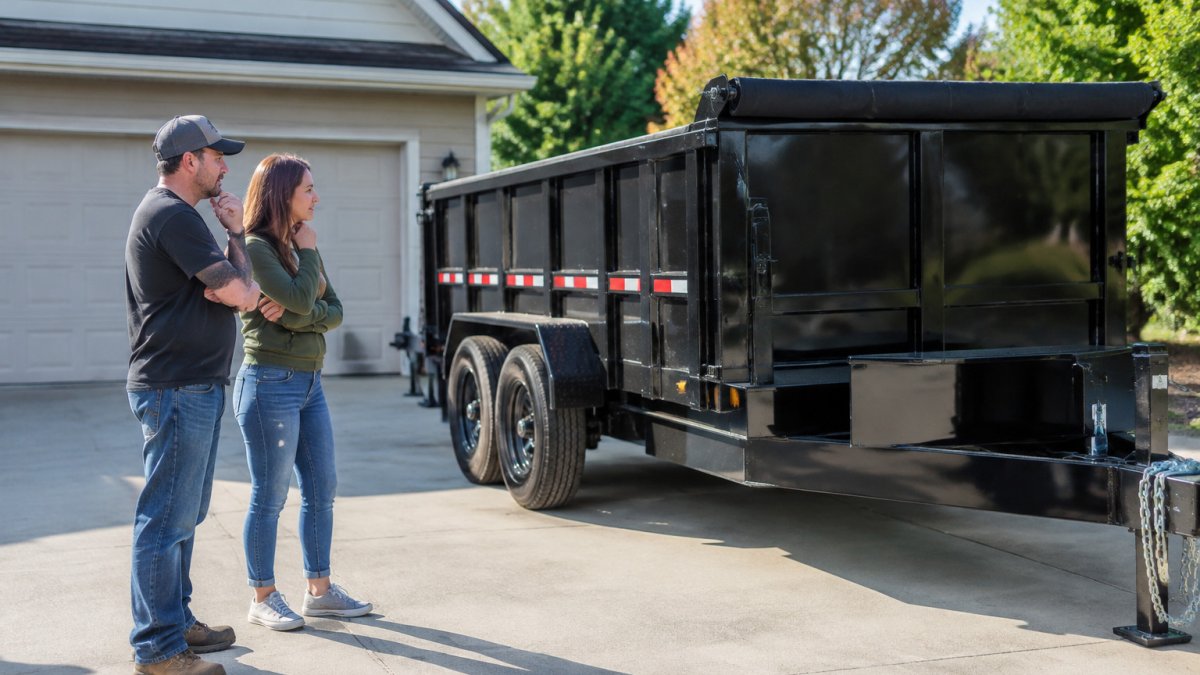
The fastest way to narrow your options is a dump trailer size chart that links bed size to real jobs. Use this as a starting point, then confirm against weight limits.
| Bed Size | Typical Capacity | Common Jobs | Watch Out For |
|---|---|---|---|
| 6x10 | Small loads | Garage cleanouts, small yard projects | Fills fast with heavy debris |
| 6x12 | Medium loads | Basement and attic cleanouts, light remodel debris | Weight limit hits before volume |
| 7x14 | Large loads | Whole-home decluttering, landscaping | Needs a capable tow vehicle |
| 7x16 | Extra large | Big renovations, multi-room demo | Harder to maneuver on tight driveways |
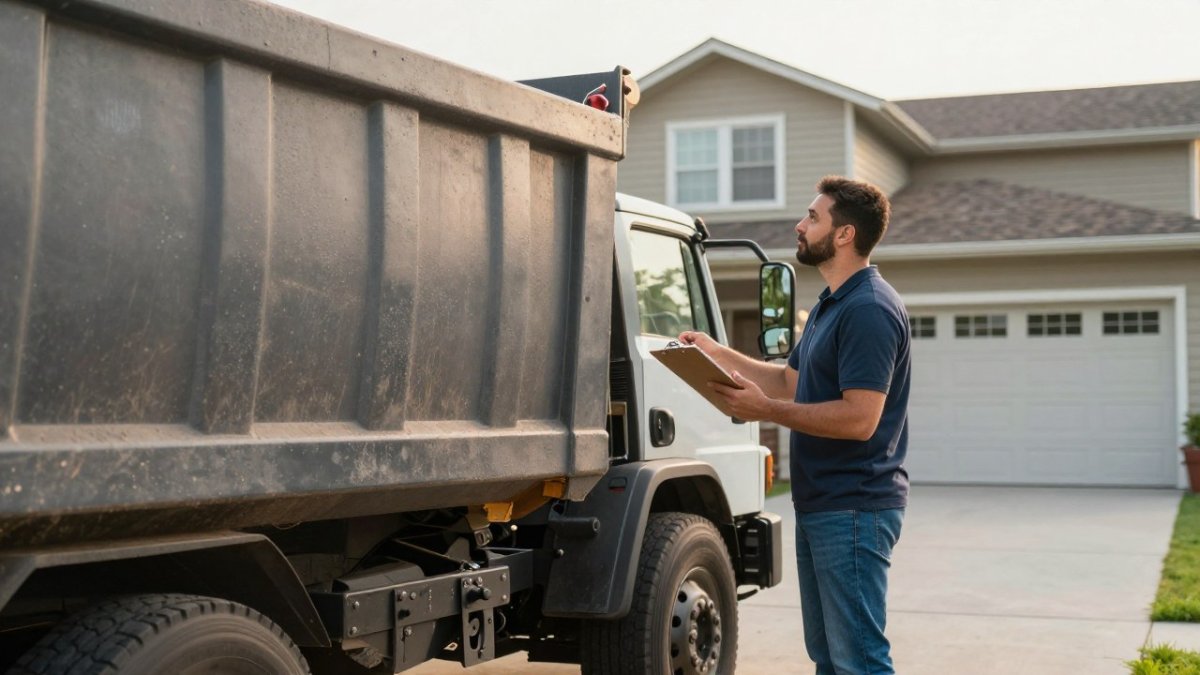
The chart is a shortcut, not a rule. Two jobs of the same size can need different trailers once material weight enters the picture.
Dump Trailer Sizes and Weights: What Each Class Can Carry
Bed size tells you volume. Weight ratings tell you what's safe. You need both, and this is where most sizing mistakes happen. A practical way to estimate a safe load is to convert the bed to cubic yards, estimate the material's weight, then compare that weight to the trailer's payload capacity.
Estimating Load Volume in Cubic Yards
Cubic yards measure volume, not weight. One cubic yard is a space 3 feet long, 3 feet wide, and 3 feet tall, 27 cubic feet. To estimate a load, measure length, width, and height in feet, multiply them, then divide by 27.
A level bed holds less than a heaped one. Sidewall height matters: a trailer loaded level to the top rail carries less than the same trailer with material mounded above it. Advertised dimensions usually describe the bed, not the usable volume once you account for sidewall height and a level load. Size for the level capacity unless you know the material is light.
Worked Example: From Bed Dimensions to a Safe Load
Take a 7x14 dump trailer with 2-foot sidewalls. The bed is 14 feet long and 7 feet wide, so a level load is 14 × 7 × 2 = 196 cubic feet, or about 7.3 cubic yards.
Now apply density. Material weights vary widely. Check the actual weight of your material and confirm limits with Fill and Dump Trailers before loading.
A level load of dense material such as dry soil can weigh far more than a light household load of the same volume, so weight limits can be reached long before the bed looks full.
Matching the Weight to Payload Capacity
Compare your calculated load weight to the trailer's payload capacity, not its GVWR. If the load exceeds payload, either reduce the volume or switch to a larger trailer with higher-rated axles.
Watch out: advertised cubic-yard capacity is a volume figure, not a payload guarantee. Dense material can exceed a trailer's weight rating long before the bed is full, so plan your load by weight as well as volume.
For a plain-language breakdown of what each trailer class can carry, see this explanation of dump trailer rental weight limits. If you're converting a pile into a weight estimate, this guide on calculating waste weight for dumpsters walks through the math.
6x12 Dump Trailer Capacity: Is It Big Enough?
For most household cleanouts, a 6x12 dump trailer is the practical middle ground. It handles garage, attic, and basement clearouts without demanding a heavy-duty truck.
The 6x12 size is suited to many household cleanouts. Confirm the right trailer for your project with Fill and Dump Trailers.
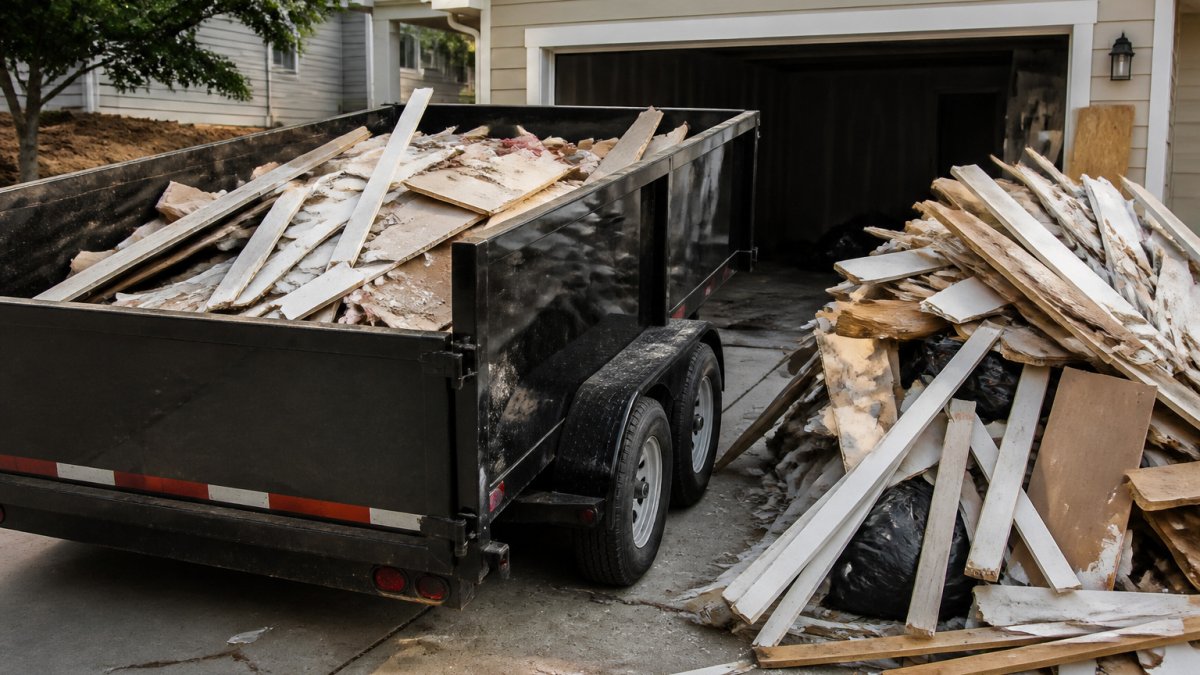
Where it falls short is heavy material. Load it with concrete chunks and you'll hit the weight limit long before the bed looks full.
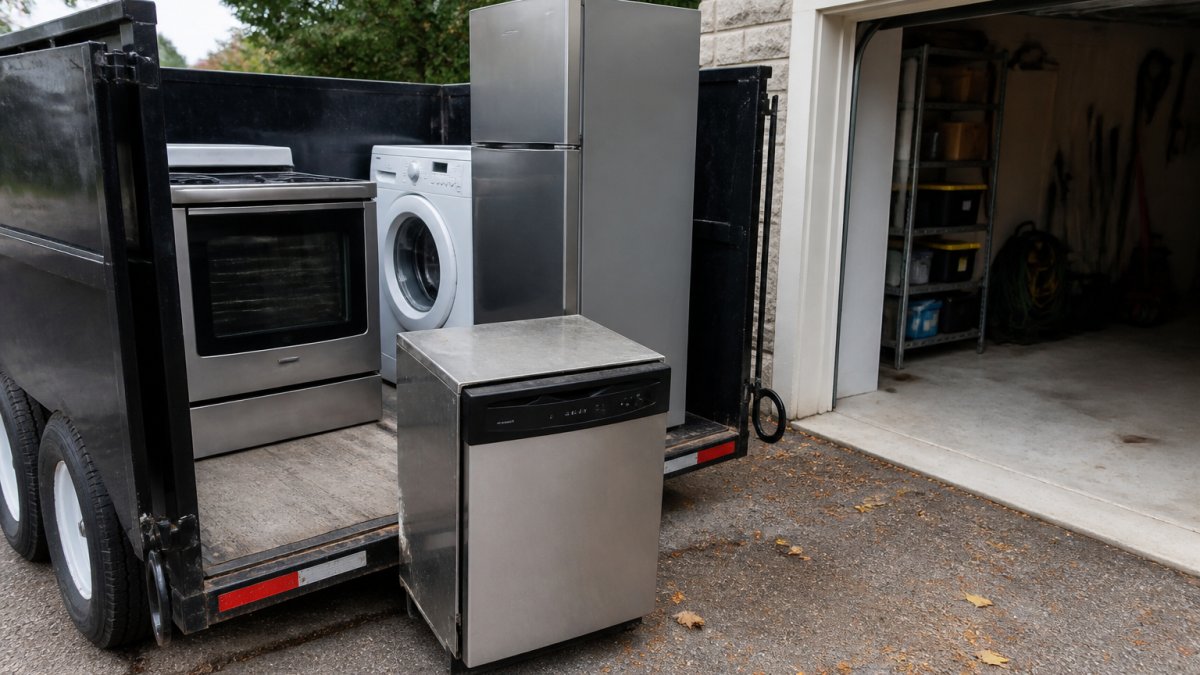
- Best for: furniture, appliances, boxed clutter, light remodel debris
- Skip if: you're hauling soil, gravel, or demolition concrete in volume
Match Payload and GVWR to Your Tow Vehicle
A trailer only works if your truck can pull it and stop it. Several limits have to be checked together: the trailer's GVWR, the trailer's axle ratings, your truck's towing capacity, and your truck's own payload rating. Checking only the towing number is the classic error.
The Four Numbers That Decide Compatibility
Trailer GVWR is the maximum the fully loaded trailer can weigh, including the trailer itself. Trailer payload capacity is GVWR minus the trailer's empty weight. Truck towing capacity is the maximum loaded trailer weight your truck is rated to pull. Truck payload capacity is the maximum weight your truck can carry, passengers, cargo, accessories, and the trailer's tongue weight all count against it.
A half-ton pickup may have a payload rating that is quickly used up by passengers, tools, and tongue weight. Run the math on paper before you hook up:
- Loaded trailer weight = trailer empty weight + material weight
- Tongue weight ≈ 10 to 15 percent of loaded trailer weight
- Truck payload used = tongue weight + passengers + cargo in the truck
If any of those exceeds the corresponding rating, step down a trailer size or move weight out of the truck.
Axle Ratings and Tandem-Axle Configurations
GVWR is a ceiling, but the axles are what actually carry the load. A tandem-axle trailer splits the weight across two axles, which is why most 7x14 and 7x16 dump trailers use tandem 5,200 lb or 7,000 lb axles. The axle rating is per axle, so a tandem setup with two 5,200 lb axles supports roughly 10,400 lb across the axles, but the GVWR may be lower than that sum, and the lower number governs.
Watch out: a trailer can be under its GVWR and still overload one axle if the load is biased toward the rear. Distribute weight evenly so the trailer tracks without sway.
Hitch, Brakes, and Tires
Compatibility is not just weight. Confirm these before you book:
- Hitch class and ball size match the trailer's coupler
- Hitch rating meets or exceeds the loaded trailer weight
- Brake controller is installed and working if the trailer has electric brakes
- Safety chains are rated and crossed under the coupler
- Trailer tires are rated for the load and inflated to the pressure on the sidewall
A truck that can pull a trailer but cannot control it is not compatible. If your truck's payload or hitch rating is marginal, size down rather than push the limit.
Dump Trailer Rental for a Home Cleanout: Sizing Your Project
A dump trailer rental for a home cleanout usually means one trailer, one delivery, and a few days to load at your own pace. The sizing question is whether one trailer covers the whole job.
Walk through the house and count by room. Attic, garage, basement, backyard. Then group the debris:
- Light and bulky: furniture, mattresses, boxes
- Heavy and dense: concrete, soil, tile, appliances
- Restricted items: paint, chemicals, tires (ask before loading)
If most of your load is light and bulky, a single 12-yard trailer handles a full cleanout. If heavy material dominates, plan for weight limits rather than volume. Fill and Dump Trailers includes the first ton of waste disposal in every rental.
Safety Checks Before You Load
Safety starts before the first item goes in. Run through this list every time:
- Park on level ground and set the tow vehicle's parking brake
- Confirm the trailer is rated for your total load weight
- Check tire pressure and tread on the trailer
- Verify lights, brakes, and safety chains
- Load heavy items low and toward the front
- Distribute weight evenly side to side
- Secure the load before towing
- Confirm local weight limits if you're hauling on residential roads
Watch out: overloading is the most common and most dangerous mistake. An overloaded trailer strains axles, tires, and brakes, and it can fail on the road. When in doubt, take two lighter loads.
For loading technique that keeps the trailer balanced, this guide on loading a dump trailer efficiently covers the practical steps.
Request Your Dump Trailer Size and Delivery Date
You've sized the job, checked your truck, and picked a trailer class. The last step is booking the right one and knowing what comes with it.
Fill and Dump Trailers rents driveway-safe 12-yard dump trailers with a flexible three-day loading period, so you can work at your own pace. Delivery and professional pickup are part of the service, and curbside pickup is available.
Before you request a size, review what's included in a dump trailer rental so there are no surprises on delivery day.
Frequently Asked Questions
What size dump trailer do I need for a home cleanout?
A 12-yard dump trailer handles most attic, garage, and basement cleanouts. It holds roughly 12 cubic yards level, which covers several rooms of furniture, appliances, and bagged debris. Smaller jobs may be covered by a smaller trailer, and larger whole-house or demolition projects may call for a bigger one. Confirm the right size with Fill and Dump Trailers. Match the trailer's payload rating to the material weight, not just the volume, because heavy debris like concrete fills a bed long before the volume limit.
How do I calculate how much a dump trailer can hold?
Multiply the interior bed length by width by sidewall height in feet, then divide by 27 to get cubic yards. A 6x12 bed with 2-foot sides holds about 5.3 cubic yards level, and heaped loads add roughly 20 to 30 percent. Then check weight by estimating the material's density. Compare that figure to the trailer's payload capacity and GVWR, and use whichever limit you hit first.
Is a 6x12 dump trailer big enough for a home renovation?
It depends on the debris. Smaller renovation debris may fit a smaller trailer, while full-gut renovations add volume quickly. Check the payload rating too, since demolition material is heavy and can reach the weight limit before the bed is full.
Should I rent or buy a dump trailer for a one-time project?
Rent for one-time projects. Buying a dump trailer means registration, insurance, storage, maintenance, and a tow vehicle rated for it, which rarely pays off for a single cleanout. A dump trailer rental for a home cleanout gives you the capacity without the ownership costs, and Fill and Dump Trailers includes a three-day loading period and the first ton of waste disposal in every rental. If you haul debris several times a month, buying starts to make sense. Otherwise, rent and put the savings toward disposal fees.
Sizing a dump trailer comes down to matching your material, its weight, and your tow vehicle, not just picking the biggest bed you can find. Get that match right and the cleanout runs smoothly from delivery to pickup.
Fill and Dump Trailers makes the process simple with driveway-safe 12-yard trailers, a three-day loading window, and the first ton of waste disposal included. Submit your request today and get the right trailer delivered for your project.