 how-to
How to Load a Dump Trailer Efficiently
Last Updated: November 2, 2026
Quick Summary
To load a dump trailer efficiently, park on firm, level ground, chock the wheels, and confirm the rated payload before the first bucket. Load from the rear of the bed toward the front, spreading material evenly across the full width in thin layers, and keep the weight centered over the axles with proper tongue weight.
- Payload capacity equals GVWR minus trailer curb weight, and both numbers are on the spec plate.
- Aim to stay 10 to 15% under the rated payload rather than loading right at it.
- Keep drop height low and spread each bucket instead of dumping it in one pile.
- Put heavy bulky items on the floor toward the front and fill voids with smaller debris.
- Cover loose material with a tarp and confirm the tailgate is latched before moving.
Table of Contents
- Start With a Level, Clear Loading Area
- Know Your Dump Trailer Load Capacity Before the First Bucket
- Dump Trailer Weight Distribution: Tongue Weight and Axle Balance
- Load From Rear to Front, Evenly Across the Bed
- Match Your Loading Method to the Material
- How to Load a Dump Trailer Safely Around People and Equipment
- Secure the Load and Run Your Dump Trailer Loading Checklist
- Book a Driveway-Safe Dump Trailer Rental
- Frequently Asked Questions
Start With a Level, Clear Loading Area
Loading a dump trailer efficiently starts before the first bucket of material leaves the ground. Park on firm, level ground, clear the area around the trailer, and chock the wheels before you load a dump trailer with a single pound.
Most avoidable loading problems trace back to a rushed setup.
Here is the setup that prevents them:
- Pick a flat, hard surface. Concrete or packed gravel beats soft turf every time.
- Set the tow vehicle in park and engage the parking brake.
- Chock both wheels on the trailer before loading.
Soft ground is the quiet killer. A loaded trailer can sink a jack stand or tilt on a slope, and that tilt shifts weight onto one axle.
Know Your Dump Trailer Load Capacity Before the First Bucket
Check the trailer's rated payload capacity and never exceed it. Payload capacity is the maximum weight of material the trailer can carry.
The math is simple once you know where to look:
Payload capacity = GVWR − trailer curb weight
Both numbers are on the trailer's spec plate, usually on the tongue or the front left of the frame. A trailer with a 10,000 lb GVWR and a 2,800 lb curb weight has a 7,200 lb payload rating.
Estimate Material Weight Before You Load
Most people guess at weight and guess wrong. A scoop of wet gravel weighs far more than the same volume of dry mulch. Volume fills the bed long before weight maxes out, or the reverse.
Bulk weights vary widely with moisture and compaction, so weigh your actual material when you can rather than relying on estimates.
Multiply the density by the volume you plan to load.
Account for Tongue Weight and the Tow Vehicle
Payload capacity is only half the limit. The weight on the tongue counts against your tow vehicle's payload and rear axle rating, and the total trailer weight counts against its tow rating. A common pattern is a trailer loaded to its payload limit that still overloads the truck because the tongue weight pushes the rear axle past its rating.
A few habits keep you under every limit:
- Weigh heavy loads at a certified scale if you are close to capacity. A public scale gives you axle weights, not just a total.
- Leave a margin. Aim to stay 10-15% under the rated payload, not right at it.
- Account for moisture. Wet soil and soaked debris weigh more than the same material dry. Rain during loading changes the math.
For a plain-language walkthrough of how weight limits work in practice, read our guide on dump trailer rental weight limits explained simply. It breaks down the numbers so you can load with confidence.
Dump Trailer Weight Distribution: Tongue Weight and Axle Balance
Good dump trailer weight distribution keeps the load centered over the axles and puts the right amount of weight on the tongue.
Think of the trailer bed as a seesaw.
A simple check: after loading, walk to the tongue and lift.
An unbalanced load can cause trailer sway and tire problems on the road, so fix the balance before you drive.
Load From Rear to Front, Evenly Across the Bed
Load from the rear of the bed toward the front, spreading material evenly across the full width as you go. Working rear to front keeps the load balanced as it builds and stops material from piling against the tailgate.
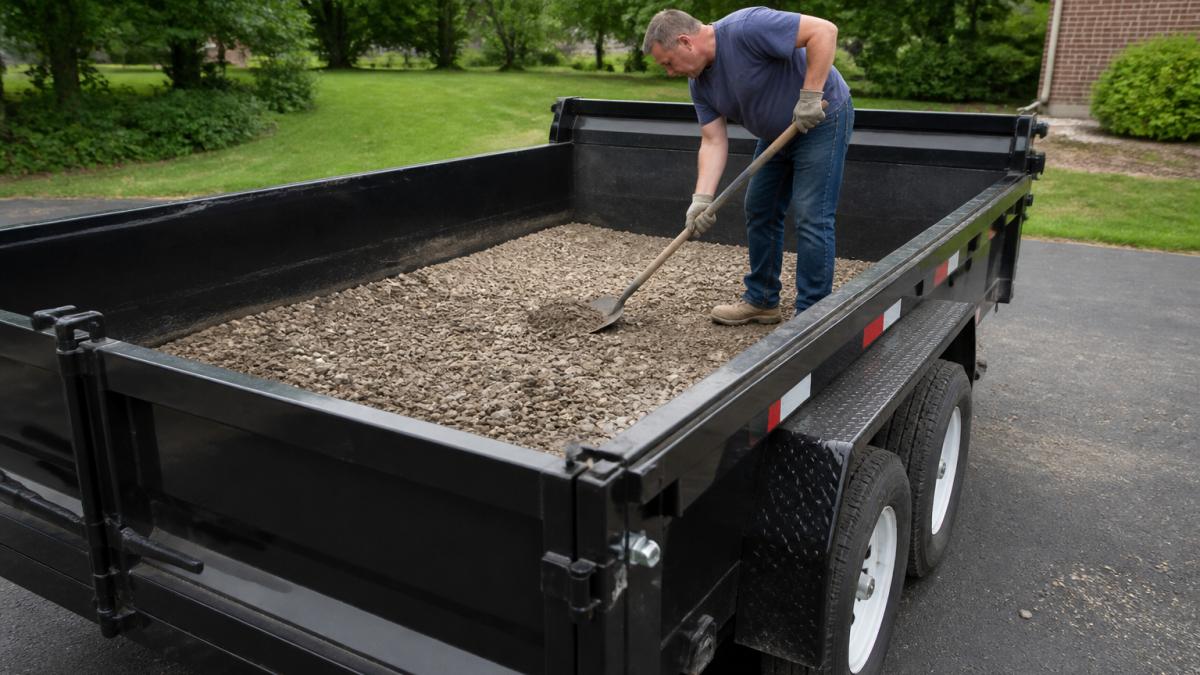
The rear-to-front method matters for a second reason: it makes unloading easier. A load packed tight against the tailgate can jam when you raise the bed. A load built in even layers releases cleanly.
Keep these rules in mind:
- Spread, don't dump. Never drop a full bucket in one spot.
- Keep drop height low to avoid shifting and dust.
- Level each layer before adding the next.
- Watch the sides. Material piled against one wall strains the panels.
Match Your Loading Method to the Material
Different materials need different loading methods. Gravel and soil load fast with equipment, while debris and bulky items need hand placement and care. The material also determines how the load behaves on the road: dense, free-flowing material settles and shifts, while bulky items interlock and stay put. Match your method to the material and you will load faster with less strain and a more stable load.
Loading Gravel, Soil, and Aggregate
Use a loader or bucket to place gravel, soil, and aggregate in thin, even layers. These dense materials pack weight quickly, so spread each bucket across the bed instead of dumping it in one pile. A controlled pour beats a heavy drop every time.
- Keep drop height low. Dropping a bucket from height shocks the bed, throws dust, and pushes material into one corner.
- Spread each bucket before the next. Two passes across the width beat one deep pile every time.
- Watch the sides. Material piled against one wall strains the panels and can bow them over time.
- Expect settling. Gravel and sand consolidate in transit, so a load that looks level at the yard may sit lower and looser at the dump site. Leave a little freeboard so it does not spill.
For heavy yard waste, our step-by-step guide on how to load heavy yard waste walks through the method in detail.
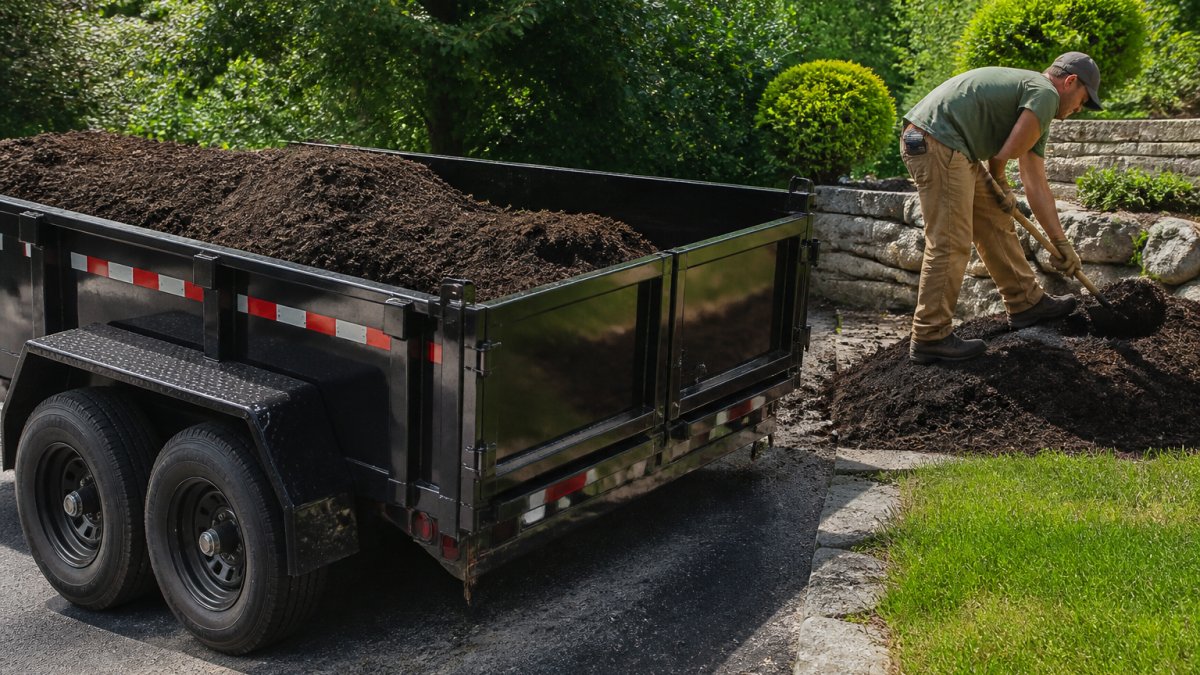
Loading Mulch, Hay, and Light Material
Mulch, hay, and insulation are light by volume but bulky, and wind is the enemy. Load them in layers and keep the drop height low so the material does not blow out of the bed. Because these materials are light, you will usually run out of volume before you run out of payload, but check the math anyway, since wet mulch is much heavier than dry.
- Load on a calm day or work from the upwind side.
- Pack light material down as you go so it does not shift at highway speed.
- Cover the load before you drive; light material blows out of an open bed.
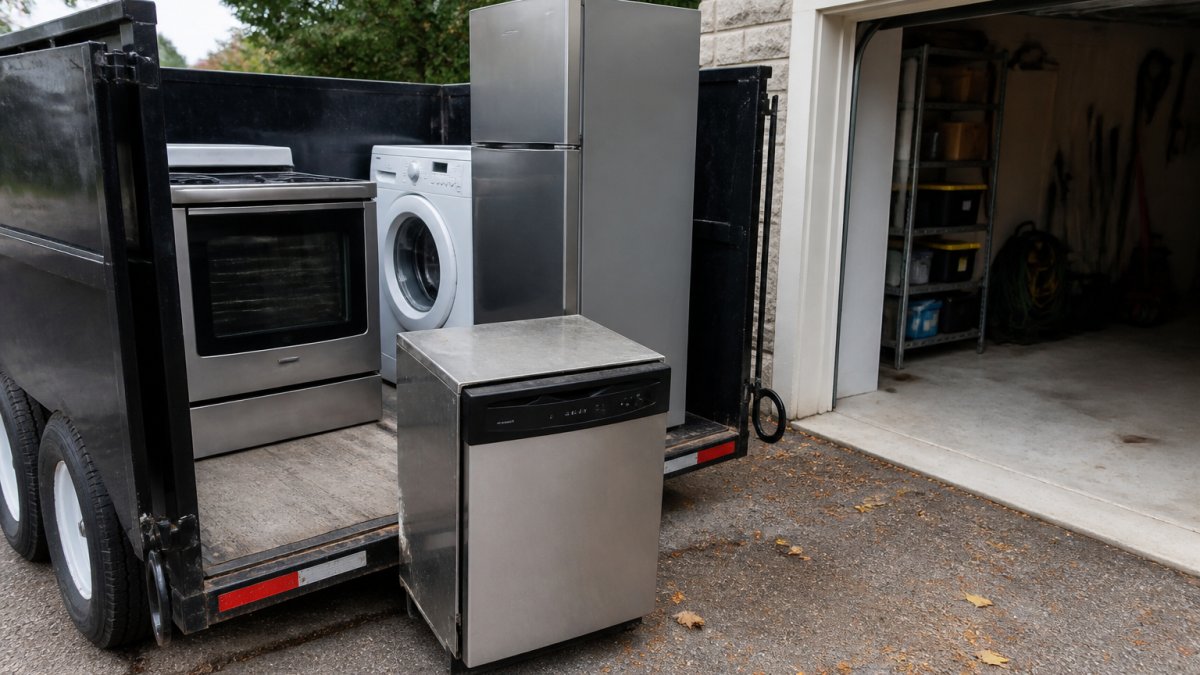
Loading Debris, Appliances, and Bulky Items
Place debris, appliances, and bulky items by hand, with heavy pieces low and toward the front. Break down large items where you can, and fill gaps with smaller debris so nothing shifts. Bulky items interlock, which helps stability, but they also leave voids that let the load settle and shift.
- Put heavy items on the floor, not on top of a pile.
- Fill the voids with smaller debris so the load cannot collapse into an empty space.
- Keep sharp or protruding items away from the sides so they do not puncture the panels or a tarp.
- Do not stack above the sides unless the trailer is designed for it; an over-height load is unstable and hard to cover.
If you are loading old appliances, our guide on how to dispose of old appliances covers what to do with them before and after the haul.
How to Load a Dump Trailer Safely Around People and Equipment
Safety around a loading zone comes down to three things: keep bystanders clear, keep equipment controlled, and keep the trailer stable. Most loading injuries happen when someone stands in the wrong place or a machine moves too fast.
Set a simple rule: nobody stands behind the trailer or inside the swing zone of a loader bucket. The operator should always see the spotter, and the spotter should stay out of the path of travel.
Protecting your driveway matters too. Our 7-step guide on how to protect your driveway from a dump trailer shows how to load and maneuver without leaving marks.
A quick safety checklist:
- Keep children and pets well back.
- Wear gloves and boots.
- Never stand in the path of a dumping load.
- Lower the bed fully before moving the trailer.
Secure the Load and Run Your Dump Trailer Loading Checklist
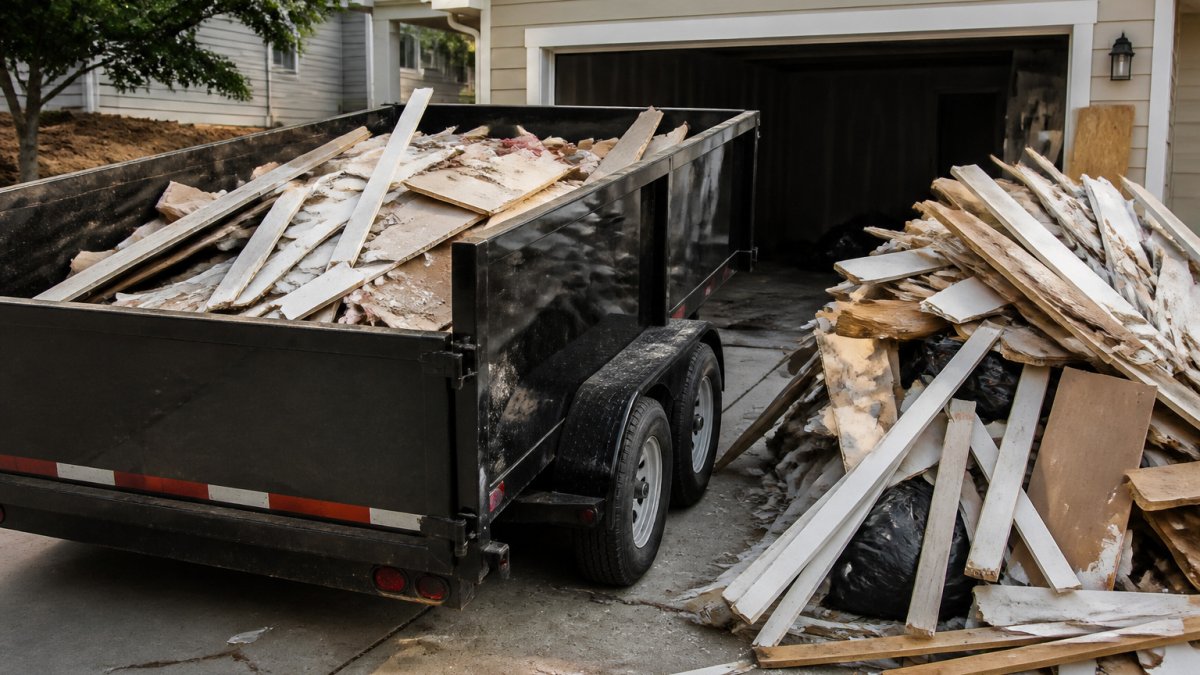
Secure the load before you move. Cover loose material with a tarp, tie down anything that could shift, and confirm the tailgate is latched. A dump trailer loading checklist catches the small misses that cause big problems on the road.
Here is the checklist we recommend running every time:
| Step | What to Check | Why It Matters |
|---|---|---|
| 1 | Load under rated payload | Prevents axle and tire failure |
| 2 | Weight balanced over axles | Stops sway and poor steering |
| 3 | Material spread evenly | Keeps the trailer stable |
| 4 | Tailgate latched | Stops spills on the road |
| 5 | Load covered or tied down | Meets road safety rules |
| 6 | Wheels chocked, then removed | Prevents roll during loading |
| 7 | Lights and hitch checked | Keeps you legal and visible |
Run the list top to bottom. It takes two minutes and saves hours of trouble.
Book a Driveway-Safe Dump Trailer Rental
A clean, efficient load starts with the right trailer and a plan for what happens to the waste.
Our driveway-safe 12-yard dump trailers let you clear out attics, garages, basements, and yards at your own pace with a flexible three-day loading period.
If you want to know exactly what comes with your rental before you book, see what's included in dump trailer rental.
Frequently Asked Questions
How do I know if I am overloading my dump trailer?
Check the trailer's payload rating and subtract the weight of your material before you start loading. A 12-yard trailer fills quickly with dense material like gravel or soil, so weigh the heaviest loads at a certified scale if you are unsure. Watch for the trailer squatting on the tow vehicle, tires bulging, or the bed riding lower than normal. Those are signs to stop and remove material before you tow. Fill and Dump Trailers includes the first ton of waste disposal in every rental, so going over that amount is a normal part of the process, not a failure.
What is the best way to load a dump trailer for weight distribution?
Keep the load centered over the axles, with enough weight on the tongue for stable towing without overloading the hitch. Load heavy items first, then fill gaps with lighter material. Keep the load level side to side, since an uneven load puts extra strain on one axle and makes towing unstable. Check tongue weight once the trailer is loaded and adjust before you hit the road.
How can I prevent a dump trailer load from shifting during transport?
Load from the rear of the bed forward, keep drop heights low, and stack bulky items so they cannot roll or slide. Fill gaps between large pieces with smaller material, and cover loose debris with a tarp if your trailer has one. Use tie-downs for appliances, mattresses, and anything that could catch wind. Drive a short distance, stop, and recheck the load before committing to the full trip.
What should be on a dump trailer loading checklist?
Before loading, confirm the trailer is on level ground with wheel chocks in place, the area is clear of bystanders, and you know your payload limit. During loading, work rear to front, keep the load even, and avoid dropping material from height. After loading, check tongue weight, secure the load with tie-downs or a tarp, and inspect the hitch and tires. A written checklist takes two minutes and catches the mistakes that cause most towing problems.
Ready to clear the clutter without the guesswork? Get started with Fill and Dump Trailers and load your rental with confidence, from delivery to pickup.