 listicle
5 Ways to Dispose of Renovation Debris Cheaply
Last Updated: November 4, 2026
Quick Summary
Self-hauling renovation debris to a local landfill or transfer station is the cheapest route if you have a truck or trailer, with disposal fees as low as $32 per ton. For small loads, recycling and donating reusable materials can cost nothing, while independent haulers charge $75 to $100.
- Most landfills bill by weight and apply a flat minimum charge to small loads.
- Clean lumber often goes to a recycling or mulch operation for little or nothing.
- Habitat for Humanity ReStore locations accept reusable building materials as donations.
- Professional construction debris removal typically costs between $300 and $1,000.
- Dumpster rental is commonly estimated at around $250, with overage charges for heavy loads.
Table of Contents
- Self-Hauling Renovation Debris to a Landfill or Transfer Station
- Local Landfill Disposal Fees and What Drives Your Bill
- Recycling and Donating Reusable Building Materials
- How to Dispose of Drywall and Lumber Without Overpaying
- Hiring a Junk Removal Service or Independent Hauler
- Dump Trailer Rental Cost vs. Dumpster Rental
- Hidden Costs and Local Rules That Change the Math
- Request a Trailer and Start Loading on Your Schedule
- Frequently Asked Questions
Self-Hauling Renovation Debris to a Landfill or Transfer Station
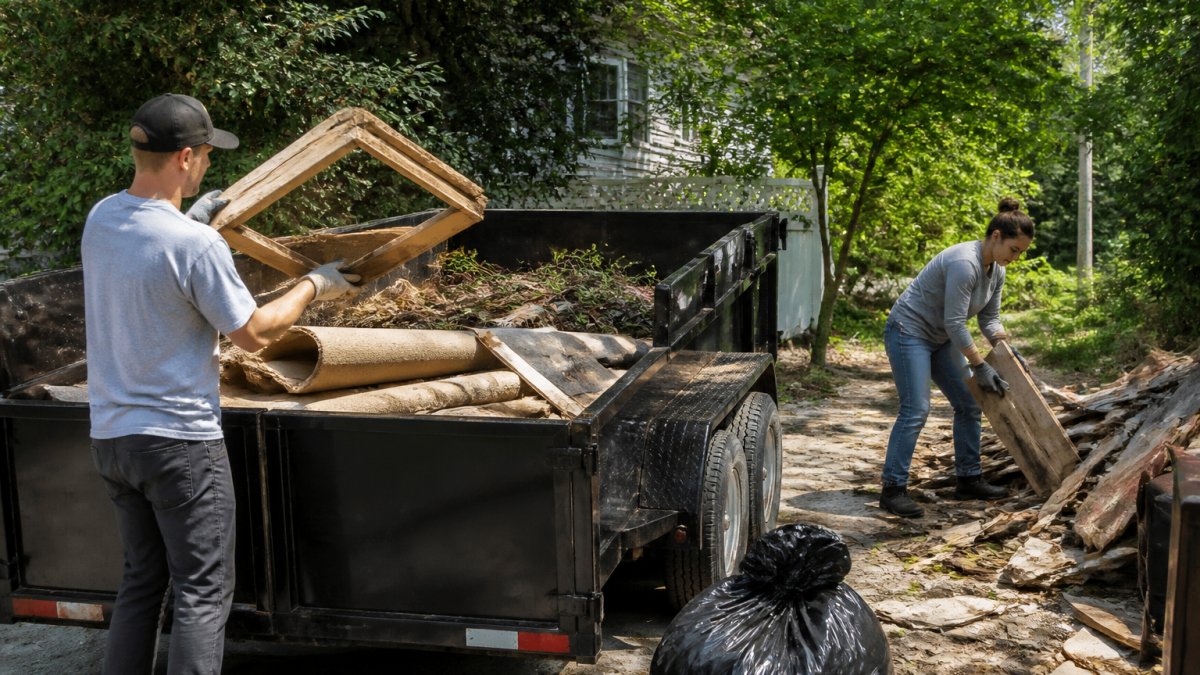
Self-hauling is the cheapest way to dispose of renovation debris if you already have a truck or trailer and a strong back. Disposal fees at local landfills can run as low as $32 per ton of debris, according to homeowner discussions on self-hauling construction debris, which undercuts every hauling service on this list by a wide margin.
The savings are real, but they only hold up when your load is small enough to move in one or two trips. For the full overview before you start hauling, read The Complete Guide to Disposing of Construction Debris.
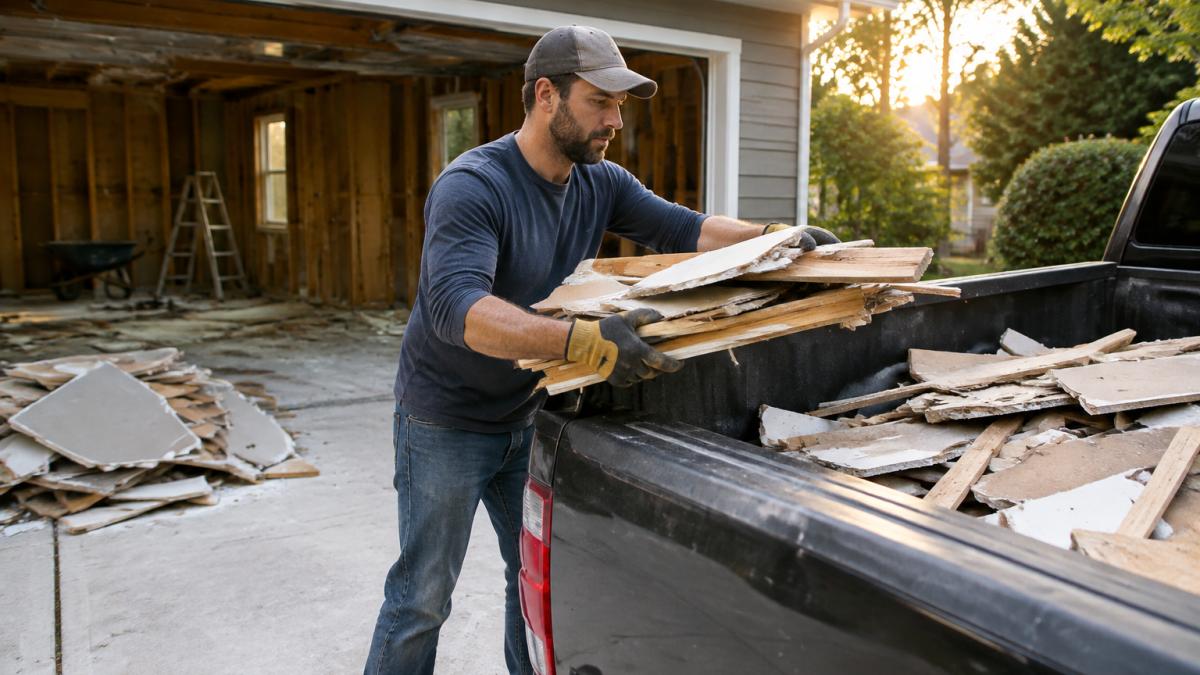
What You Need Before You Load
- A vehicle rated for the weight, not just the volume. A half-ton pickup maxes out fast on heavy debris like tile, concrete, or shingles.
- Tarps and tie-downs, since most transfer stations require covered loads.
- A plan for sorting: separate clean wood, metal, and cardboard before you leave the house.
- Cash or a card the facility accepts, plus proof of residency if your town charges lower rates to locals.
Local Landfill Disposal Fees and What Drives Your Bill
Local landfill disposal fees are generally billed by weight, not by how full your truck looks. A truck bed packed with old cabinets weighs far less than the same bed filled with broken concrete, and the bill follows the scale.
For a detailed breakdown of what a load actually costs in 2026, see our guide to what construction debris removal costs.
How the Scale House Math Works
Most facilities publish a per-ton tipping fee and then apply a minimum charge to small loads. A common pattern is a per-ton rate plus a flat minimum that covers the first few hundred pounds, so a single bag of tile can cost the same as several hundred pounds of mixed debris. That minimum is why self-hauling small loads is cheap in absolute terms but expensive per pound.
Three things move your bill the most:
- Weight: the dominant factor at almost every facility. Estimate weight before you load by material: concrete, tile, and shingles are heavy; cabinets, cardboard, and clean lumber are light for their volume.
- Material type: clean loads often cost less than mixed waste, and some facilities charge extra for bulky items or separate drywall.
- Residency: many towns charge non-residents a higher per-ton rate, and some restrict drop-off to residents with proof of address.
Realistic Total Costs by Load Size
A useful way to compare routes is to price three common load sizes, including fuel and your time, not just the gate fee:
- Small load (a few bags or a car trunk): the facility minimum charge usually applies, so the gate fee is small but the per-pound cost is high. Curbside collection or a neighbor's shared trip often beats a dedicated run.
- Pickup-truck load (roughly a half-ton to one ton): the per-ton fee dominates, and one or two trips usually undercut a hauling service. Fuel and time are the hidden costs, especially if the facility is far away.
- Large renovation (multiple tons): self-hauling stops being cheap once you need several trips or a trailer. At that volume, a dumpster or trailer rental with an included weight allowance is often comparable or cheaper once you count fuel, labor, and multiple gate fees.
Watch out: a low advertised per-ton rate can still produce a high bill if the facility applies a minimum charge, a mixed-waste surcharge, or a non-resident rate on top.
Questions to Ask Before You Drive Out
Call or check the facility's site for the current per-ton rate, the minimum charge, whether clean loads are priced differently, accepted materials, hours, and whether a resident permit or sticker is required. Confirm the payment method too, since some facilities are cash-only or card-only.
Recycling and Donating Reusable Building Materials
Recycling and donation are the only disposal routes that can cost you nothing and occasionally pay you back.
Donation is where the real win sits. Habitat for Humanity ReStore locations are a common option for donating reusable building materials, so check with your local store about what it accepts. If you are remodeling a kitchen, your old cabinets are not trash.
Where Salvage and Resale Beat the Landfill
Architectural salvage yards and online marketplaces will sometimes buy or accept vintage fixtures, solid wood doors, and period hardware. A clawfoot tub or a set of original built-ins can be worth more than the cost of hauling everything else. The environmental case for deconstruction over demolition makes the same point from a waste-reduction angle: recovering materials keeps them out of the C&D landfill and cuts your disposal volume at the same time.
How to Dispose of Drywall and Lumber Without Overpaying
Drywall and lumber need separate handling, and mixing them is how people overpay. Clean lumber can often go to a recycling or mulch operation for little or nothing.
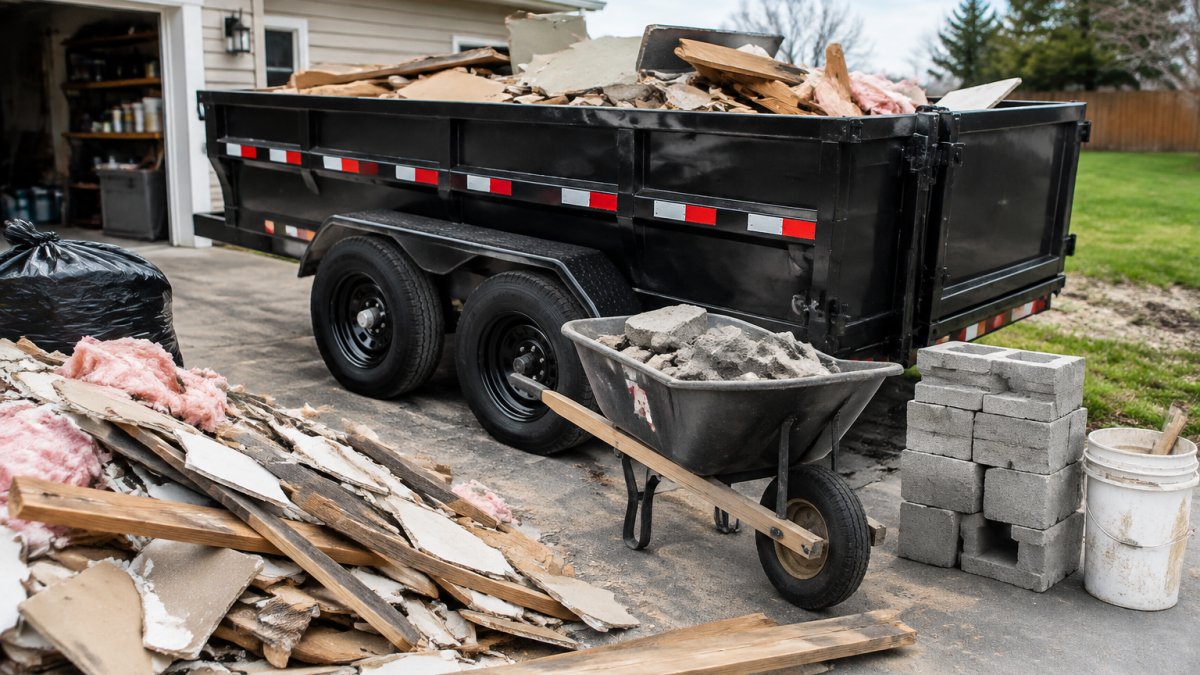
Sort before you load. Stack clean lumber on one side and drywall on the other, and keep treated or painted wood out of the clean pile. That one habit can cut your disposal fee and make the drop-off faster.
Hiring a Junk Removal Service or Independent Hauler
Professional construction debris removal typically costs between $300 and $1,000, according to CountBricks cost estimates, depending on the scope of the project.
Independent haulers found through classifieds platforms like Craigslist often charge between $75 and $100 for small loads, according to homeowner reports on independent haulers.
Weighing a rental against a hauling service? Our comparison of dump trailer rental versus junk removal lays out the trade-offs side by side.
Here is how the two hauling options compare on cost and reliability.
| Option | Typical cost | Key difference |
|---|---|---|
| Professional construction debris removal | $300 to $1,000 | Buys labor, loading, transport, and disposal in one shot |
| Independent hauler via classifieds | $75 to $100 for small loads | Real savings but high variance in reliability |
Dump Trailer Rental Cost vs. Dumpster Rental
Dump trailer rental and roll-off dumpster rental solve the same problem in different ways, and the cost difference usually comes down to weight limits and flexibility. Dumpster rental for a renovation project is commonly estimated at around $250, according to homeowner cost reports on dumpster rental, though overage charges for heavy loads can push that higher.
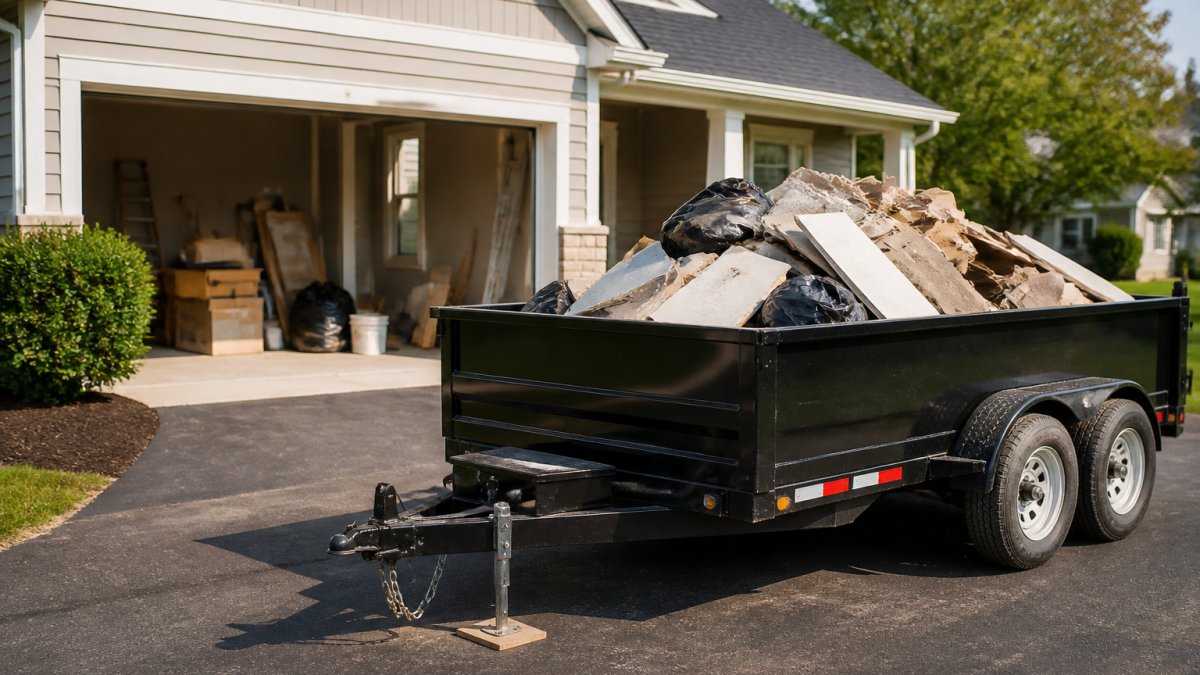
A dump trailer gives you a driveway-safe container you load at your own pace and tow or have delivered. For a full breakdown of how the two stack up, read our guide to dump trailers versus roll-off dumpsters.
Watch out: dumpster rentals often advertise a low base rate but charge per ton over an included allowance. Ask what weight is included before you book.
Hidden Costs and Local Rules That Change the Math
Hidden costs and local disposal rules are where cheap plans quietly get expensive. The base rate is rarely the whole bill, and the rules vary enough by town that a plan that works one county over may fail at your transfer station. This section covers the mechanisms behind the most common surprises and a practical checklist for confirming the rules before you commit.
The Hidden Costs, Explained
- Overage fees: dumpster and trailer rentals often include a weight allowance and then charge per ton above it. The mechanism is simple, heavy debris like concrete or tile blows through the allowance fast, so ask what weight is included and what the per-ton overage rate is before you book.
- Minimum charges: landfills and transfer stations frequently apply a flat minimum to small loads, which makes a light load cost more per pound than a heavy one.
- Mixed-waste surcharges: unsorted loads can be priced higher than separated clean wood, metal, or drywall. Sorting before you load is the cheapest fix.
- Prohibited items: tires, paint, asbestos, mattresses, and treated wood are commonly rejected or priced separately. Confirm accepted materials with the facility rather than assuming.
- Permits and stickers: some towns require a resident permit or vehicle sticker for drop-off, and non-residents may pay a higher rate or be turned away.
- Access limits: low wires, narrow gates, and soft driveways can block a dumpster or trailer delivery, forcing a second trip or a different drop location.
A Local-Rule Verification Checklist
Before you choose a route, confirm these with the facility or your municipal collection office:
- Accepted and prohibited materials, including whether drywall, treated wood, and bulky items are allowed.
- Current per-ton rate, minimum charge, and any mixed-waste or non-resident surcharge.
- Hours of operation and whether appointments are required.
- Permit, sticker, or proof-of-residency requirements.
- Payment methods accepted at the gate.
- Vehicle and load rules, such as covered-load requirements and weight limits.
- For rentals, the included weight allowance, overage rate, and delivery access requirements.
Changing your project plans mid-renovation is one of the biggest waste generators of all, since every design change turns ordered material into debris. Lock the scope before you demo, and verify the local rules before you book anything.
Request a Trailer and Start Loading on Your Schedule
If self-hauling appeals but your daily driver is not up to the job, a rented dump trailer closes the gap. Fill and Dump Trailers rents driveway-safe 12-yard dump trailers with a three-day loading period, and the first ton of waste disposal is included in every rental.
You can review dump trailer rental options and submit a request to get your project moving. Get started with Fill and Dump Trailers and clear your renovation debris without the landfill run.
Frequently Asked Questions
What is the cheapest way to dispose of renovation debris?
For small loads and anyone with a truck, self-hauling to a landfill or transfer station is often a low-cost route, since disposal fees vary by facility. The catch is transport, fuel, and your own labor. Once the load grows past a truck bed or two, a rented container or trailer often costs less overall because you avoid multiple trips and tipping fees add up fast.
Can I put renovation debris in my regular trash bin?
Rarely. Curbside collection is built for household garbage, and most municipal haulers reject construction debris, heavy materials, and bulky items. Small bagged amounts of certain materials may be accepted, but rules vary by hauler and are usually listed on your city's waste page. Check before you fill the bin, because overloaded carts can be left behind or fined. Larger renovation debris needs a dedicated route.
How much does dump trailer rental cost compared with a dumpster?
Dumpster rental costs vary by project, and independent haulers found through classifieds can offer lower prices with varying reliability. Dump trailer rental cost depends on rental dates, load size, and delivery distance, so request a quote for current pricing. Fill and Dump Trailers includes the first ton of waste disposal and a three-day loading period in every 12-yard rental.
How do I dispose of drywall and lumber cheaply?
Clean lumber in reusable lengths is one of the easier materials to divert: consider donating it to a local reuse store or listing it for salvage. Drywall is heavier and messier, so keep it dry, stack it flat, and haul it to a C&D landfill or transfer station that accepts it. Never mix drywall with yard waste or put it in curbside bins. Sorting lumber, drywall, and metal separately before pickup lowers disposal costs and speeds up the crew.
What materials are prohibited from standard construction dumpsters and trailers?
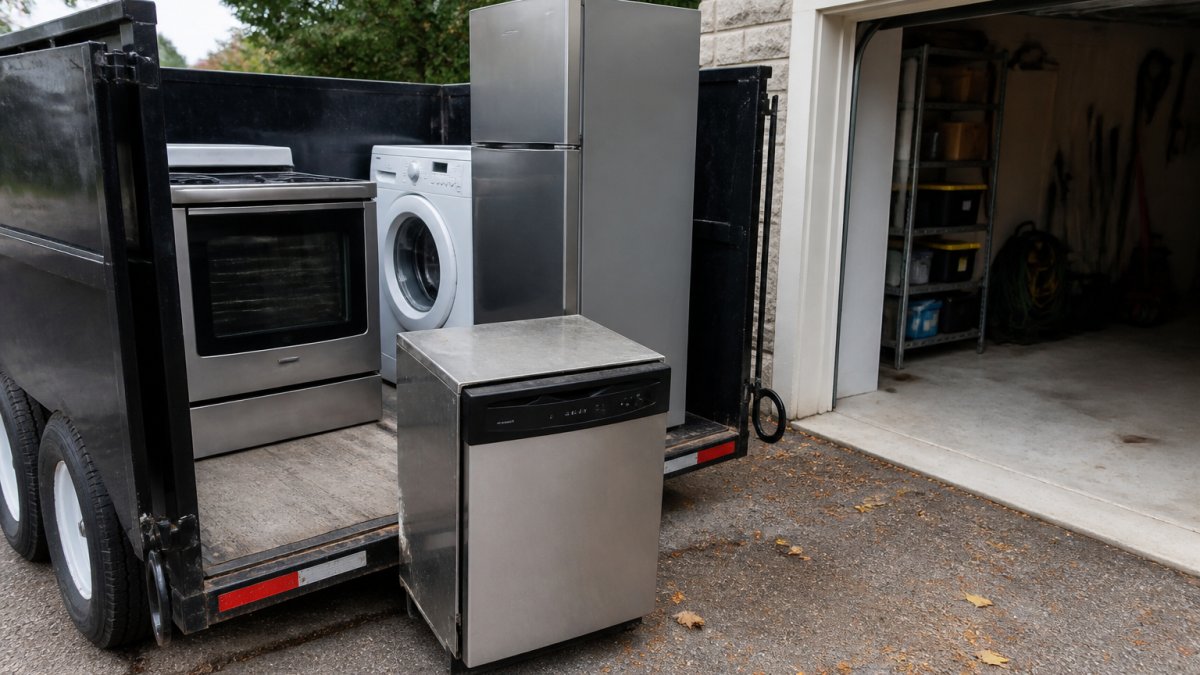
Hazardous materials are the usual exclusions: paint, solvents, asbestos, lead-containing debris, motor oil, and tires. Appliances with refrigerant, such as refrigerators and air conditioners, often need special handling too. Many facilities also limit concrete, dirt, and yard waste to separate containers because of weight. Ask about accepted materials before loading, since a rejected load means paying twice for the same debris.